Delivery Management Software: Features, ROI & Tools
By Joe SnyderSee how delivery management software cuts costs, optimizes routes, and improves the delivery experience—plus the key features and ROI to look for.

See how delivery management software cuts costs, optimizes routes, and improves the delivery experience—plus the key features and ROI to look for.
Fast, reliable delivery has become one of the clearest signals of whether a business is built to last. As same-day and next-day expectations spread from giant marketplaces to neighbourhood shops, the systems that move a product from your shelf to a customer's doorstep now matter as much as the product itself. That is exactly the gap delivery management software is built to close.
The numbers explain the urgency. The global last-mile delivery market was valued at roughly $167 billion in 2025 and is projected to roughly double by 2033, growing close to 10% a year. For small and mid-sized businesses doing their own local deliveries, that growth means more orders, higher customer expectations, and far less room for the inefficiencies that manual routing creates. This guide explains what delivery management software does, the features that actually move the needle, and how to tell whether it will pay for itself.

Delivery management software (DMS) automates the work of planning, dispatching, tracking, and communicating deliveries. Instead of stitching together a maps app, a spreadsheet, and a string of phone calls, you get a single system that builds optimized routes, hands drivers a clear task list, keeps customers updated in real time, and captures proof that each order arrived. Think of it as the control tower for your last-mile delivery operation — everything on one screen, everything on schedule.
The category spans everything from enterprise fleet platforms to lightweight tools designed for a single van. What they share is a goal: replace guesswork and manual data entry with automation, so a growing delivery operation does not require a proportional growth in staff, errors, or stress.
It's especially valuable for businesses where volume is high and accuracy is non-negotiable — grocery and produce delivery, meal kits and subscription boxes, florists, butchers, medical supplies, and any local retailer that has started fulfilling orders itself. In each of these, the difference between a smooth delivery and a missed one is measured in repeat customers, not just minutes. By centralizing the entire process, a DMS gives you visibility, control, and the ability to scale — the three things spreadsheets quietly take away as you grow.
Plenty of businesses still run deliveries on paper printouts, shared spreadsheets, and a map with pins. That can work for five stops a day. It falls apart fast at twenty, fifty, or a hundred — and the costs pile up in ways that are easy to miss:
For time-sensitive categories — fresh food, flowers, medical supplies — these aren't just inconveniences. A late or botched delivery doesn't only cost the redelivery; it costs the customer's trust, and trust is what drives repeat business.
The pressure only intensifies as expectations climb. Same-day and next-day options, normalized by the biggest marketplaces, have reset what local customers consider reasonable — a majority of younger shoppers now expect same-day delivery, and the option alone makes most consumers more likely to buy. Manual processes simply can't flex to meet that bar consistently. Every order added by hand is another chance for a transposed address, a forgotten time window, or a route that sends a driver across town and back.
Feature lists get long, but a few capabilities separate a genuine delivery management platform from a glorified maps app. These are the ones worth weighing when you compare options.
This is the engine. Free consumer mapping tools cap how many stops you can add and don't truly optimize the order of them — they ignore real-world factors like time windows, traffic patterns, and vehicle capacity. Purpose-built DMS uses route optimization algorithms to sequence dozens or hundreds of stops in seconds. The payoff is concrete: optimized routing can cut fuel use by roughly 20–25% while letting drivers complete more stops per shift. Good tools also let you fine-tune the result — setting average time per stop for sharper ETAs, splitting a large batch across multiple drivers, and adding last-minute orders without rebuilding everything from scratch.
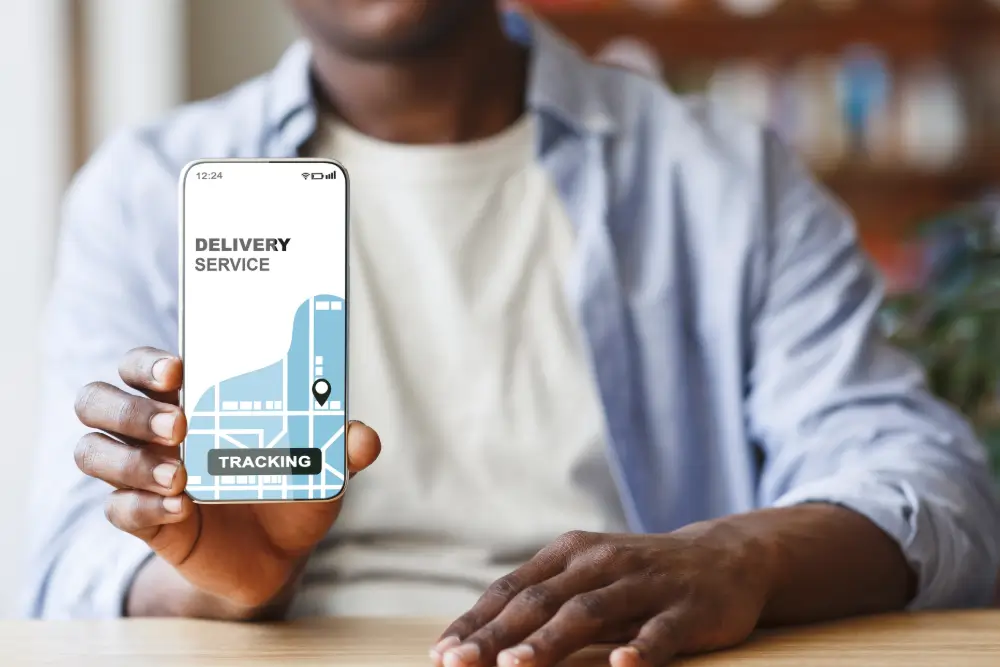
Transparency is now a baseline expectation rather than a perk. In recent consumer research, the vast majority of shoppers said they expect real-time tracking, and broken or missing updates rank among their biggest frustrations. A capable DMS shows dispatchers where every driver is against the planned route and sends customers automatic email or SMS updates — order on the way, delivered, or delayed — without anyone manning the phones.
With package theft and “I never got it” disputes on the rise, verifiable proof of delivery has shifted from nice-to-have to essential. Photo capture, signatures, and timestamped drop-off records protect both sides of the transaction. The operational upside is real too: visual delivery confirmation has been linked to sharply fewer delivery errors and higher customer satisfaction. For a deeper look at setting it up well, see our guide to proof of delivery benefits and implementation.
A strong platform gives drivers a simple mobile view of their stops, delivery instructions, and navigation hand-off to Google Maps, Apple Maps, or Waze — while giving managers tools to assign work, monitor progress, and keep service standards consistent. Good driver tooling turns the person behind the wheel into part of a connected system rather than an island with a paper list. Dispatchers can see the most recently completed stop and the live ETA for every remaining one, so when a customer calls, whoever answers the phone already has the answer in front of them.
Delivery doesn't happen in a vacuum. The best DMS plugs into the systems you already run — your e-commerce store, and often accounting or CRM tools — so orders flow in automatically and statuses sync back without manual exporting and importing. Tight integration is what keeps your packing lists current and your records clean.

You can't improve what you don't measure. Reporting on delivery times, on-time rates, miles driven, and driver performance turns daily operations into data you can act on — especially valuable for businesses with seasonal demand spikes. As routing grows more sophisticated, analytics also help you weigh the tradeoffs of AI-driven route optimization rather than treating automation as a black box.
Return on investment for delivery software isn't just subscription cost versus fuel saved. The fuller picture includes reclaimed planning time, more deliveries completed with the same fleet, fewer support tickets, and stronger retention.
Start with time. If you spend 90 minutes a day building routes by hand, that's nearly 400 hours a year — capacity you could redirect to growth. The right tool collapses that planning down to minutes. Then there's the fuel and mileage angle: because fuel can run a quarter of total transportation costs, the 20–25% efficiency gains from optimized routing flow straight to the bottom line. (Our breakdown of transportation costs shows where the money actually goes.)
The retention side may matter most of all. In a 2025 consumer survey, 76% of shoppers said a positive delivery experience influenced their decision to buy from a brand again — up from 72% a year earlier. That tracks with broader data showing 88% of consumers consider real-time tracking critical and 63% will switch retailers when shipping drags past two days. Fewer failed deliveries and clearer communication don't just cut costs; they compound into repeat revenue.
Put it together with a simple example. A business running two drivers and 40 daily stops might reclaim an hour of planning a day, trim 20% off fuel, cut redeliveries from failed drop-offs, and field noticeably fewer “where’s my order?” calls. None of those line items is dramatic on its own, but stacked across a year they routinely cover the software's cost several times over — which is why most operators who switch describe the spend as paying for itself rather than as an expense.
It also future-proofs the operation. The next wave of delivery is being shaped by AI-assisted logistics, greener routing that cuts both miles and emissions, and richer data analytics — and the businesses already running on a connected platform are the ones positioned to adopt those advances smoothly rather than scrambling to catch up.
Software isn't always the answer. If you're running a side operation with five orders a week, a spreadsheet may still do the job. But once delivery becomes a daily function, the math tips quickly. It's time to make the switch when:
The sooner the daily friction shows up, the sooner the right platform pays for itself.
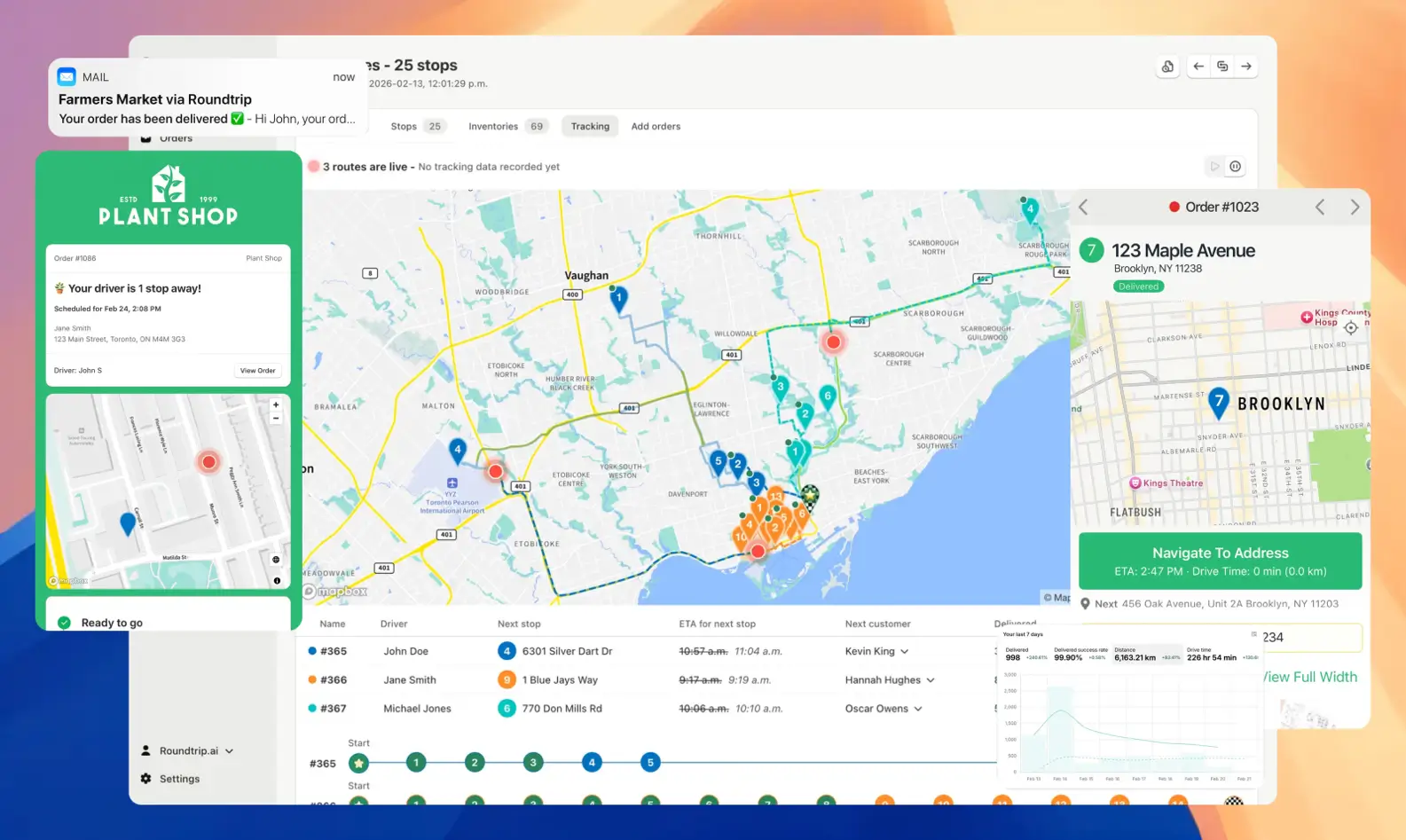
For merchants who want the benefits above without a steep learning curve, EasyRoutes brings the whole workflow together. It pulls your orders in directly, turns them into optimized local delivery routes in seconds, and gives drivers a clean mobile view with turn-by-turn hand-off to their preferred navigation app. Customers get automatic tracking notifications and live ETAs, and drivers capture photo proof of delivery that syncs straight back to your dashboard.
Because route planning, dispatching, customer communication, and proof of delivery live in one place — rather than across three or four disconnected apps — teams spend less time coordinating and more time actually delivering. Businesses from flower shops to grocery and meal-kit operations have used it to absorb order surges and expand their delivery range without expanding their payroll, which is the clearest sign that the automation is doing its job.
Delivery management software isn't just a tech upgrade; it's a strategic one. For small and mid-sized businesses, the right platform reduces hidden costs, reclaims hours every week, and turns the delivery experience into a reason customers come back. Whether you're running two vehicles or twenty, the returns from automation, efficiency, and better communication add up fast.
If you're ready to cut the planning chaos and scale deliveries without the overhead, EasyRoutes can help you unlock that ROI — and you can try it free today.
EasyRoutes optimizes deliveries using your selected orders, start & end locations, stop time intervals, time windows, and route limits. You can balance routes, respect capacities, and re‑optimize as plans change.
See: Route Options · EasyRoutes 101
Yes. Enable Real‑Time Tracking in Settings → Driver settings (Premium/Enterprise subscription plans) to view live driver location and progress in the Tracking tab of any route.
See: Real‑Time Tracking
Yes. With the Premium plan and above, fully customize email/SMS: add your logo and colors, edit copy/variables, and choose which events send. Works for Shopify orders and imported/manual stops.
EasyRoutes supports delivery photos, e‑signature, driver notes, and automatic timestamps (with GPS location when available) to provide a complete delivery record.
See: Proof of Delivery
Yes. New and updated Shopify orders flow into EasyRoutes automatically so your Orders page stays current for planning. If something looks off, refresh and check your date/location filters.
Delivery Analytics shows totals and trends for stops and routes, including completed vs. missed deliveries, average delivery time, per‑driver performance, and route metrics over a chosen period.
See: Delivery Analytics
EasyRoutes is the AI-native delivery operations platform trusted by 5,000+ businesses across 75+ countries. Plan routes in seconds, dispatch drivers automatically, and delight your customers — from Shopify or any order source. Experience delivery operations that run themselves. Rated 4.9 stars and certified Built for Shopify.
⭐⭐⭐⭐⭐ 4.9 stars • Trusted by 5,000+ Businesses