« Back to articles
Contactless Delivery: A Guide for Modern Businesses
Contactless delivery is now a standard, not a stopgap. Learn what it is, why it still matters, how to offer it, and the tech behind no-contact delivery.

Contactless delivery is now a standard, not a stopgap. Learn what it is, why it still matters, how to offer it, and the tech behind no-contact delivery.
Contactless delivery began as an emergency measure, but it never left. What started as a way to keep drivers and customers safe during a public-health crisis has settled into something more durable: a baseline expectation for how goods arrive at the door. Shoppers who tried no-contact drop-off during the pandemic kept choosing it for its speed and convenience, and businesses discovered it could streamline operations at the same time. Today, offering a smooth contactless option is less a differentiator and more table stakes — the global online food delivery market alone is now a multibillion-dollar industry built on the assumption that fast, contactless delivery is available.
This guide explains what contactless delivery is, why demand has held firm well beyond the pandemic, how to put it into practice, and how the right technology turns a no-contact handoff into a reliable, repeatable part of your delivery operation.
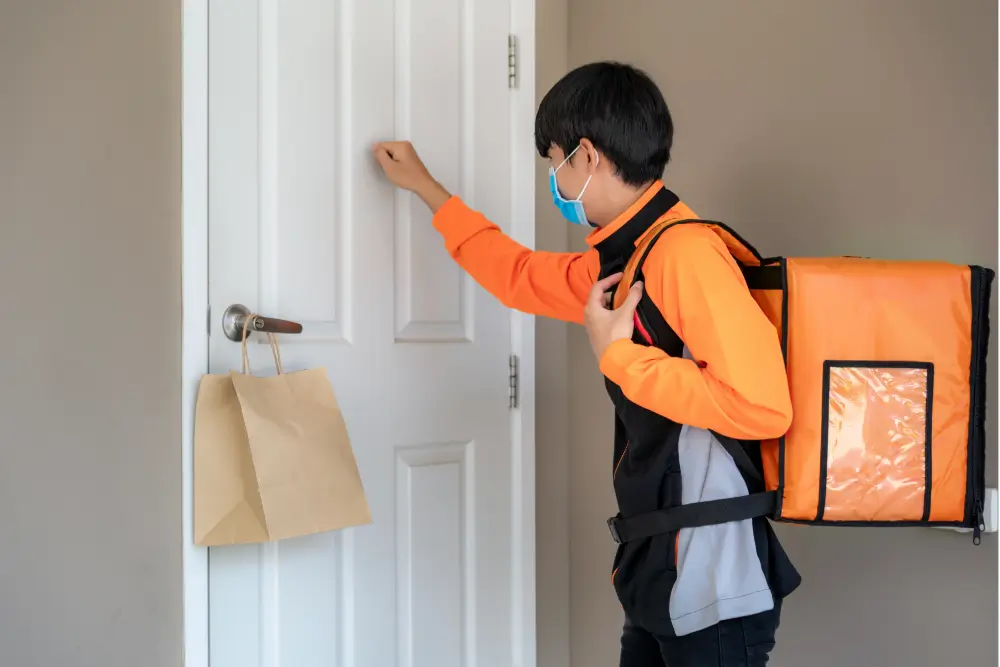
Contactless delivery — also called no-contact or contact-free delivery — is a method where a package or order is left at an agreed-upon spot, usually the customer’s doorstep, without any direct physical interaction between the driver and the recipient. Instead of a handoff and a signature, the driver confirms the drop-off digitally and the customer is notified by text, email, or an in-app alert, often with a photo of the delivered item.
The idea predates COVID-19, but the pandemic turned a niche convenience into a mainstream standard practically overnight. Restaurants, grocers, pharmacies, and e-commerce sellers all adopted it to keep serving customers while limiting close contact. What kept it around afterward is simple: it is faster for drivers, lower-friction for customers, and easy to document. For a deeper look at how no-contact handoffs fit into the broader picture, see our guide to what makes a great delivery experience.
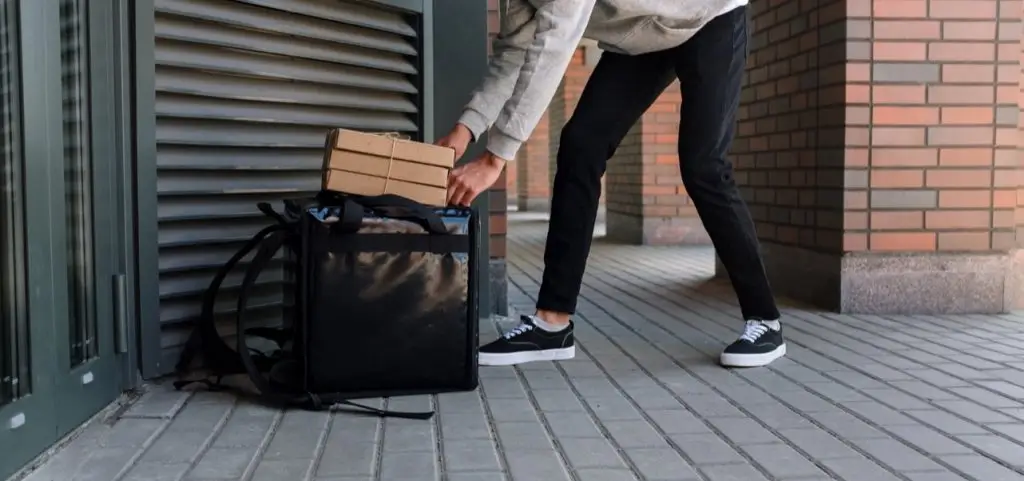
The clearest evidence that contactless delivery is here to stay is that adoption never reverted once restrictions lifted. Online grocery is a useful bellwether: roughly 148 million Americans now buy groceries online, and shopping has gone firmly omnichannel rather than snapping back to stores. An FMI and NielsenIQ study found that 93% of grocery shoppers in 2025 bought both online and in-store, with e-commerce driving the bulk of category growth.
Demand for the contactless model specifically has its own momentum. The market for dedicated contactless parcel delivery systems was valued at about $5 billion in 2025 and is projected to grow at roughly 15% a year, propelled by continued e-commerce expansion and a lasting preference for touch-free interactions. For most merchants, the question is no longer whether to offer it, but how to do it well.
That “how” increasingly happens on the most expensive and most scrutinized leg of the journey. Industry analysts at eMarketer describe last-mile delivery as the most expensive and strategically important phase of fulfillment, and it is exactly where contactless drop-off, accurate notifications, and proof of delivery come together. Getting it right protects both your margins and your reputation.
Standing up a dependable contactless option is less about any single tool and more about clear, consistent processes. A few fundamentals make the difference:
These steps are part of a wider discipline. Our overview of last-mile delivery best practices covers how training, communication, and proof of delivery reinforce one another across an entire operation.
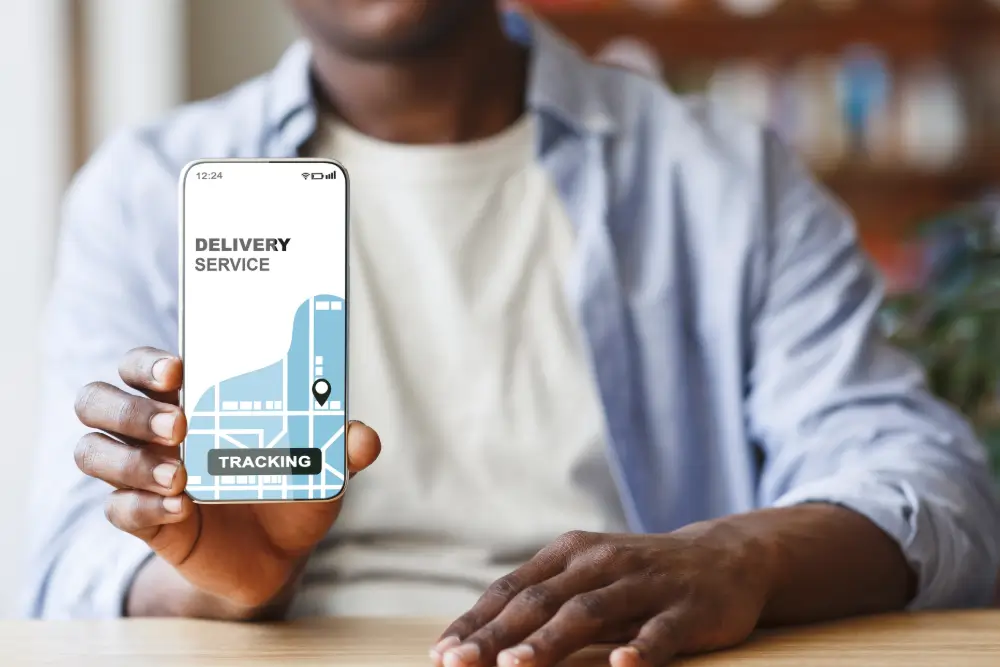
Contactless delivery works because technology fills the gap left by the in-person handoff. The most useful capabilities cluster into a handful of areas.
An online ordering system lets customers browse, order, and pay without anyone touching cash or a card terminal. Digital wallets and saved cards complete the transaction before the driver ever arrives, so the doorstep step is purely a drop-off. Removing payment from the handoff is what makes a delivery truly contact-free.
When customers cannot greet a driver, visibility becomes the reassurance. Automated status updates — order received, out for delivery, delivered — sent by SMS, email, or app keep people informed and cut down on “where is my order” inquiries. Live driver tracking and accurate arrival estimates let recipients plan to bring an order inside promptly. See our guide to real-time tracking that keeps customers informed for how visibility builds trust on no-contact deliveries.
Without a signature at the door, you still need to prove an order arrived. Photo proof of delivery — a quick picture of the package at the drop-off location, often with a GPS tag and timestamp — has become the standard substitute. It protects against disputes, reassures customers, and gives dispatchers a clear record. Our breakdown of proof of delivery benefits and implementation tips covers how to roll it out and when to keep a signature in the mix.
Letting customers pick a delivery window, then sharing an accurate ETA, reduces the time an order sits unattended on a doorstep and the friction of a missed delivery. Scheduling also helps you batch orders into efficient routes. Our guide to scheduled deliveries walks through time windows and the software features that support them.
Efficient routing shortens the time drivers spend on the road and, by extension, the time spent in any one stop. Faster, well-planned routes mean more completed deliveries per shift and lower fuel costs. Pair that with reporting on delivery times, completion rates, and customer feedback, and you can keep improving. Start with our primer on what route optimization is to understand the efficiency gains involved.

Done well, contactless delivery is not just safe — it is a better experience. Customers get convenience without having to be present or interact, clear communication at every step, and a documented arrival they can verify. Those qualities translate directly into loyalty: reliable, transparent delivery is one of the strongest drivers of repeat business, while a single bad delivery can send a customer to a competitor.
The flip side is that contactless raises the stakes on accuracy. A package left at the wrong door or a notification that never arrives is harder to recover from when there was no human handoff. That is why the operational fundamentals — precise addresses, dependable notifications, and solid proof of delivery — matter so much. They are the backbone of a great delivery experience in a no-contact world.
Many of the hygiene habits that came out of the pandemic have quietly become good operating practice for any delivery team. They protect drivers, reassure customers, and cost little to maintain:
None of this requires the elaborate measures of 2020. The point is simply that careful handling and minimal contact have proven to be sensible defaults, not temporary inconveniences.
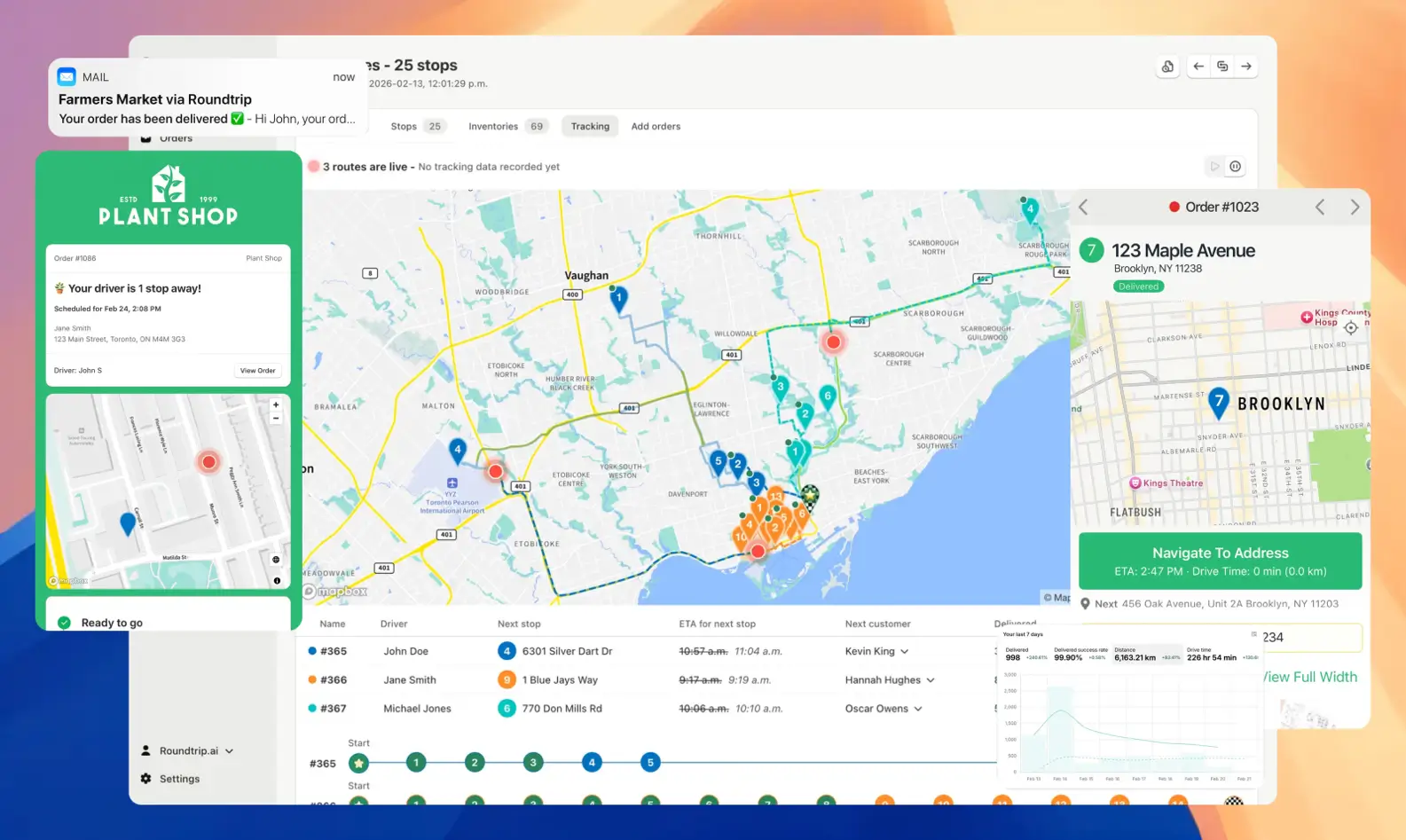
Pulling these pieces together is exactly what EasyRoutes is built for. It turns your orders into optimized delivery routes in seconds, then gives drivers and customers the tools a contactless operation depends on: branded SMS and email notifications, customer-facing tracking pages with live driver location and ETAs, and photo, signature, and note-based proof of delivery captured right in the driver app. Dispatchers get real-time visibility into every route, and reporting helps you spot what to improve.
For small and mid-sized businesses, that combination also makes it realistic to run deliveries in-house rather than handing margins to third-party couriers. Merchants can scale up delivery volume quickly, keep control of the customer relationship, and offer the kind of polished, no-contact experience customers now expect — without building a logistics team from scratch.
Contactless delivery has graduated from a crisis workaround to a permanent fixture of how people shop and receive goods. Customers value the convenience and the documented, transparent handoff; businesses value the speed and efficiency. The merchants who do it best are the ones who treat it as a real operational discipline — clear processes, dependable communication, and technology that ties the no-contact handoff together.
You can learn more about the EasyRoutes Delivery Management App on the EasyRoutes website, or start your free trial today by installing the app from the Shopify App Store, or creating an account on our standalone web app.
EasyRoutes is the AI-native delivery operations platform trusted by 5,000+ businesses across 75+ countries. Plan routes in seconds, dispatch drivers automatically, and delight your customers — from Shopify or any order source. Experience delivery operations that run themselves. Rated 4.8 stars and certified Built for Shopify.
⭐⭐⭐⭐⭐ 4.8 stars • Trusted by 5,000+ Businesses