How to Stop Porch Pirates & Package Theft in 2026
By Joe SnyderPorch pirates steal over 100 million packages a year. Learn how package theft hurts your store and how delivery tracking and proof of delivery cut the risk.
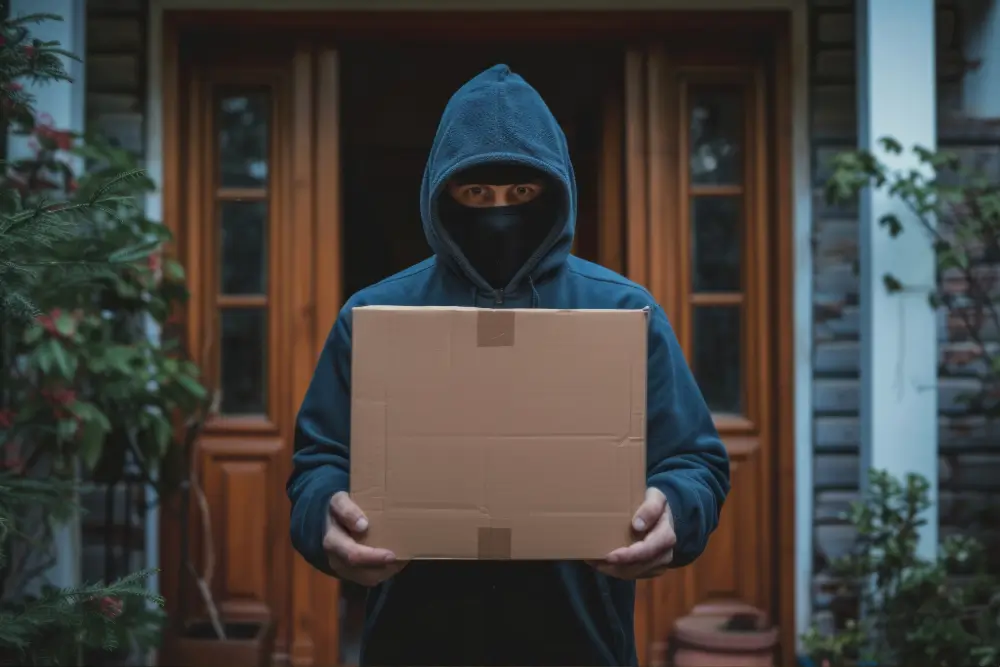
Porch pirates steal over 100 million packages a year. Learn how package theft hurts your store and how delivery tracking and proof of delivery cut the risk.
Online shopping has never been bigger, and neither has the opportunity for theft that comes with it. Every parcel left on a doorstep is a small, unattended package of value sitting in plain sight, and a growing class of opportunistic thieves has built a reputation around grabbing them. They are known as porch pirates, and for any business that ships to customers, they are far more than a nuisance.
When a package vanishes from a doorstep, the customer rarely blames the anonymous thief. They blame the brand they bought from. That makes porch piracy your problem to manage, not just the shopper’s. The good news is that the same last-mile technology you already use to run efficient deliveries can dramatically cut the odds that a parcel ever goes missing.
This guide breaks down what porch pirates are, how package theft quietly damages your business, and the practical steps—most of them powered by modern delivery software—that keep your deliveries safe.

A “porch pirate” is someone who steals packages left unattended at a home or business—usually right off the front step, often within minutes of the carrier pulling away. The term took off alongside the e-commerce boom, because a parcel sitting on a porch is easy to grab and easy to walk away with, without ever looking out of place.
The scale of the problem is staggering. An estimated 104 million packages were stolen across the United States in the most recent year measured, costing consumers roughly $15 billion and retailers about $22 billion. Around 31% of Americans report having had a package stolen in the past twelve months, and most victims have lost more than one. While the total number of thefts has actually dipped slightly year over year, theft remains a routine hazard of buying online—and the odds of a thief being caught are roughly one in seventeen.
It is tempting to picture porch pirates as professional criminals targeting obvious luxury goods, but the data tells a different story. Thieves overwhelmingly take everyday e-commerce orders left within easy reach; in one analysis, clothing, shoes, and jewelry were the single most-stolen category, well ahead of electronics. In other words, it is not just what people buy that attracts theft—it is how visible and accessible the package is once it lands at the door.
Theft also clusters in time. Thefts spike sharply in November and December, when delivery volume surges and parcels pile up faster than households can bring them inside. If you sell physical goods, the season when you make the most money is the same season when porch pirates are busiest.
Risk is uneven by place, too. Urban residents are victimized far more often than suburban ones—suburban shoppers are roughly a third less likely to lose a package than city dwellers—and apartment buildings without a mailroom or doorman are especially exposed. It is not only homes that are at risk: medical offices, salons, and small storefronts that receive deliveries outside business hours face the same problem with higher-value, time-sensitive shipments. Wherever your customers are, the common thread is a package sitting somewhere predictable, in the open, with no one watching it.
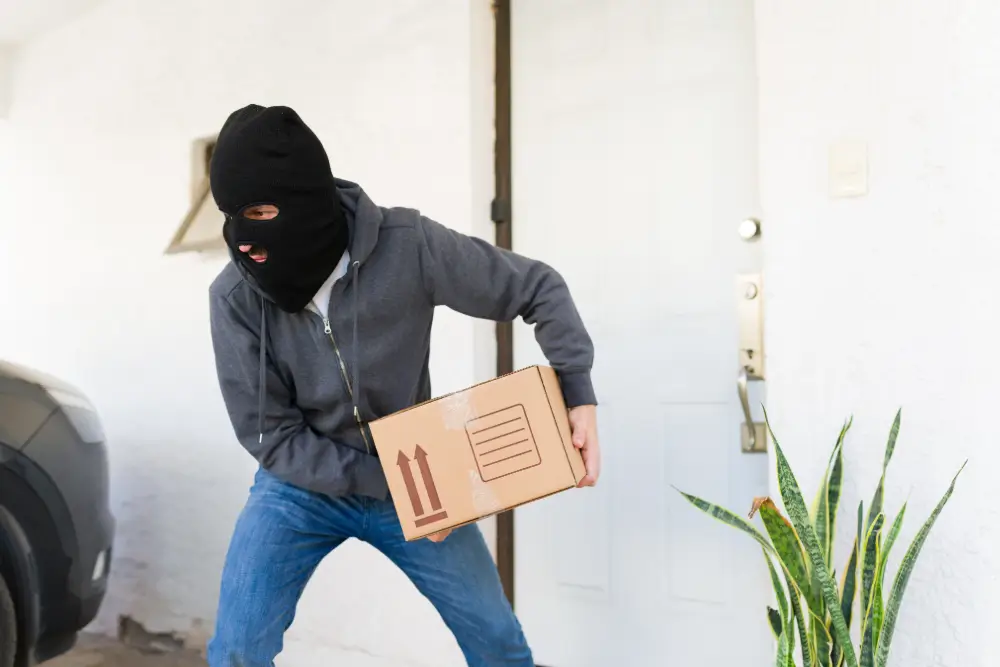
The financial damage of porch piracy does not stop with the shopper. The U.S. Postal Service’s own watchdog identifies the last mile as the most vulnerable point in the entire shipping process, noting that responsibility effectively shifts to the recipient the moment a parcel hits the porch—even though most homes were never designed to securely receive deliveries. For merchants, that vulnerability translates into two very real costs.
When a package disappears, customers expect you to make it right, and most of the time you do. Roughly 62% of theft victims report receiving a refund or a free replacement, and those resolutions are estimated to have cost retailers around $7.9 billion in a single year. Every replacement means shipping a second unit, absorbing the product cost, and paying to deliver it twice while collecting revenue only once. For a business operating on thin margins, a wave of stolen-package claims during the holidays can quietly erase a meaningful chunk of profit.
Customers feel a sense of ownership the moment they click “buy.” When that anticipated package never arrives, the disappointment attaches to your brand—and it changes behavior. After a theft, nearly a quarter of victims say they order online less often, and another 18% say they will only buy from retailers with easy refund policies going forward. A stolen parcel is rarely a one-time cost; it is a dent in the customer relationship that can quietly suppress lifetime value. That is exactly why theft prevention belongs in any serious conversation about customer retention for delivery businesses, not just loss prevention.
You cannot station a guard at every doorstep, but you can shrink the window of opportunity that porch pirates rely on. The single biggest lever is simple: the less time a package spends sitting unattended, the less likely it is to be stolen. Modern delivery technology makes that possible by keeping customers informed, giving them control over how and when they receive orders, and documenting every drop-off.
Think of it as three controls you actually own. Information shrinks the time a package sits exposed, because a customer who knows a delivery is minutes away is far more likely to meet it at the door. Choice moves the parcel to a safer time or place, whether that is a chosen window or a hidden drop spot. And documentation protects you when something does go wrong. None of these requires expensive new hardware on the customer’s end—they are operational habits you can switch on through the software you already use to run routes.
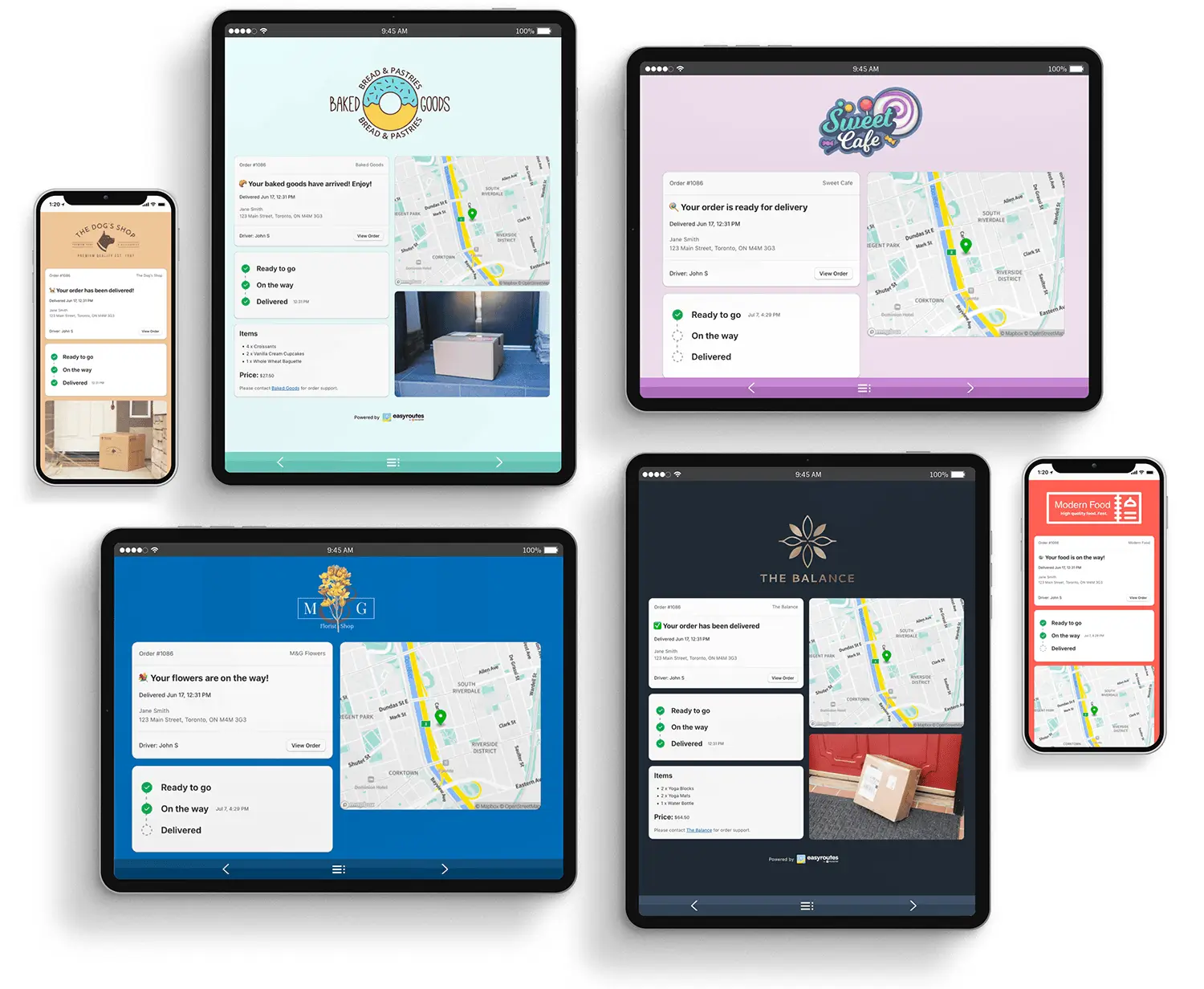
Most theft happens because shoppers do not know exactly when their package will land. Close that gap and you change the outcome. Real-time tracking has shifted from a nice-to-have to a baseline expectation: 73% of consumers want to track their orders throughout delivery, and when tracking is available, the vast majority use it. It pays off in loyalty, too—85% of consumers say they will buy again from a retailer that lets them follow a purchase from checkout to doorstep.
A live tracking page that shows how many stops remain before a customer’s delivery—paired with an accurate ETA—lets shoppers plan their day so they are home, or so a neighbor is, at the moment the driver arrives. That single change pulls packages off the porch and into the customer’s hands before a thief ever sees them. Done well, it also cuts down on anxious “where is my order” messages to your support team—inquiries that can cost roughly $5 each to resolve and add up fast during peak season. To get the mechanics right, see our guide to real-time tracking and keeping customers informed.
Timing and placement are the next line of defense. Letting customers choose a delivery window means parcels arrive when someone is around to receive them, rather than baking on the step all afternoon. And when a customer cannot be home, giving them a way to leave drop-off instructions—“place behind the planter,” “leave with the doorman”—keeps the package out of sight from the street, where the overwhelming majority of stolen parcels are visible. Notifications matter here as well: shoppers increasingly expect updates by text, and 56% prefer order updates via SMS even though most brands fail to deliver them. Building these habits into your operation is the heart of a good contactless delivery strategy, and it pairs naturally with offering scheduled deliveries that put the customer in control of timing.

Even with the best prevention, some disputes are inevitable—and that is where proof of delivery earns its keep. When your driver snaps a timestamped, geotagged photo of exactly where a package was left, you have an immediate, factual record. That record resolves “it never arrived” claims fairly, deters the small share of fraudulent ones, and reassures honest customers that their order really did make it to the right door. It matters because not every loss is a true theft: a meaningful share of “stolen package” claims are disputes or chargebacks where a parcel was in fact delivered, and a clear photo is often the difference between absorbing the cost and resolving it in seconds. Photo and signature capture turns a he-said-she-said standoff into a two-second answer. Our overview of proof of delivery benefits and implementation tips walks through how to roll it out across a driver team.
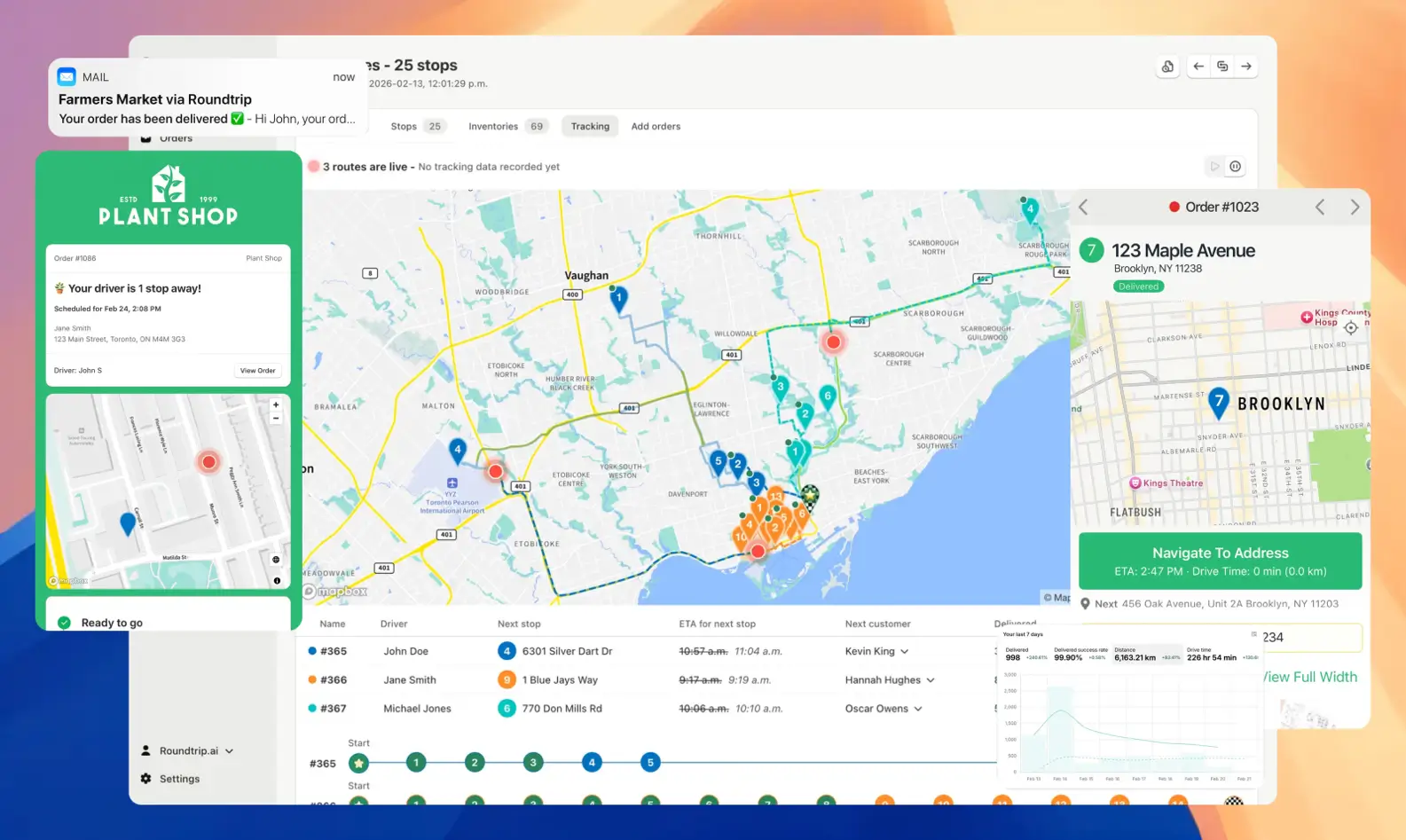
EasyRoutes is a cloud-based delivery management software platform built to make local and last-mile delivery faster, smoother, and far less vulnerable to theft. Instead of bolting on a separate tracking tool, EasyRoutes builds the anti-theft playbook directly into the way you already plan and run routes.
Every order can carry a branded customer tracking page and automated notifications by email or SMS, so shoppers know the moment a delivery is on its way and can be ready to grab it. Customers see a live ETA and how many stops remain, which means fewer parcels left waiting and fewer missed-delivery reshipments. When the driver completes a stop, EasyRoutes captures proof of delivery—photos, notes, and signatures—that you and your customer can both see, closing the door on disputes about whether an order ever showed up.
Because all of this runs on top of optimized, multi-stop routes, you are not trading efficiency for security—you get both. Drivers spend less time per stop, customers spend less time wondering, and packages spend less time exposed on a doorstep. Visit the EasyRoutes website to see how it fits your delivery operation.
Porch piracy is not going away—it scales right alongside e-commerce, and it peaks exactly when your sales do. But it is also one of the most preventable threats to your bottom line. Theft thrives on packages that sit unattended, out of mind, in plain view. Take away that window—with real-time tracking, accurate ETAs, flexible delivery timing, clear drop-off instructions, and ironclad proof of delivery—and you protect your margins, your reputation, and the customers who trusted you with their order. The tools to do it are already part of running a modern delivery business; the businesses that use them well are the ones porch pirates learn to skip.
EasyRoutes supports delivery photos, e‑signature, driver notes, and automatic timestamps (with GPS location when available) to provide a complete delivery record.
See: Proof of Delivery
Yes. You can show proof of delivery items (photos, e‑signature timestamp, and driver notes) on customer tracking pages and include links in email/SMS notifications. Configure this from your EasyRoutes Settings, in the Order Tracking and Customer Notifications tabs.
Yes. EasyRoutes Premium and Enterprise plans support branded SMS notifications with usage‑based pricing per message segment. Configure templates and funding in Settings.
Yes. With the Premium plan and above, fully customize email/SMS: add your logo and colors, edit copy/variables, and choose which events send. Works for Shopify orders and imported/manual stops.
Yes. When you fulfill through EasyRoutes, a tracking link is added to the Shopify fulfillment so customers can follow their delivery from their order status page.
Yes. You can set delivery time windows per stop or import them from supported third‑party date/time apps. EasyRoutes optimizes routes to meet these windows and calculates ETAs accordingly.
EasyRoutes is the AI-native delivery operations platform trusted by 5,000+ businesses across 75+ countries. Plan routes in seconds, dispatch drivers automatically, and delight your customers — from Shopify or any order source. Experience delivery operations that run themselves. Rated 4.8 stars and certified Built for Shopify.
⭐⭐⭐⭐⭐ 4.9 stars • Trusted by 5,000+ Businesses