Shipping vs Delivery: Differences & How to Optimize
By Joe SnyderShipping and delivery aren’t the same. See how each stage of fulfillment works in 2026 and how to optimize both for faster, more reliable orders.

Shipping and delivery aren’t the same. See how each stage of fulfillment works in 2026 and how to optimize both for faster, more reliable orders.
When you buy something online, two words show up again and again: shipping and delivery. They get used interchangeably, but they describe different stages of the journey a product takes from a seller to a customer’s door. Understanding where one ends and the other begins helps you set accurate expectations, troubleshoot the right part of your operation, and decide where to invest. The stakes are real: in 2026, 63% of consumers will choose a different retailer for their next purchase if shipping takes longer than two days. This guide breaks down what separates shipping from delivery, why the distinction matters, and how to optimize both stages of your fulfillment process.
[Image Placeholder: Hero image — a delivery van leaving a warehouse loading dock at sunrise, parcels visible inside]
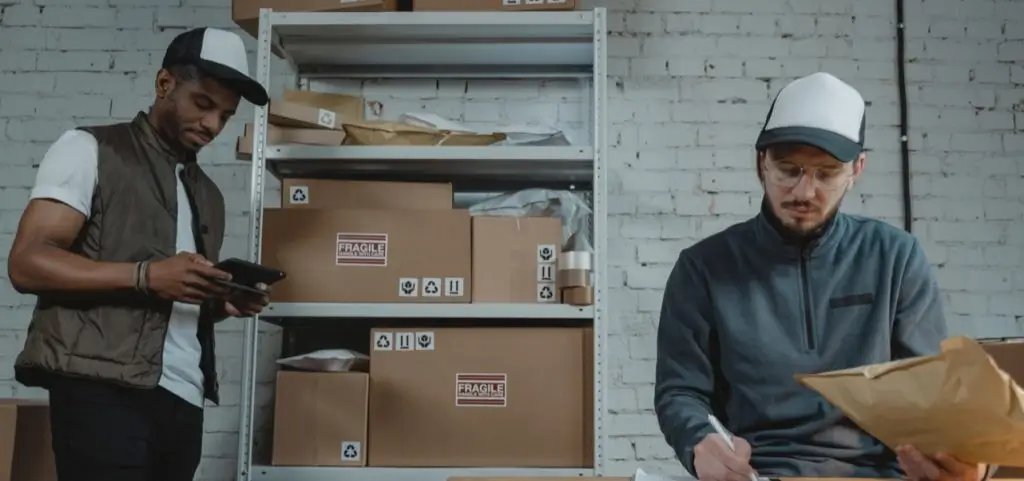
Shipping is the process of moving a product from the seller’s warehouse or storage facility to a carrier, who then transports it toward the customer’s address. It’s the opening phase of the order fulfillment process: the item is picked, packed, labeled, and handed off into the logistics network. In other words, shipping is the moment a product leaves the seller’s direct control and enters transit.
This stage is critical because it sets the tone for everything that follows. Accurate order processing, protective packaging, correct labeling, and the choice of a reliable carrier all happen here. Get shipping right and you reduce damage, lower costs, and create the conditions for an on-time arrival. Get it wrong — a mislabeled box, a slow carrier, a delayed dispatch — and the problems cascade downstream into the delivery phase, where they’re far more visible to the customer.
Effective shipping comes down to a handful of decisions made before a package ever moves. Which carrier offers the best balance of cost, speed, and reliability for this order? Is the packaging right-sized to avoid dimensional-weight surcharges and prevent damage in transit? Has the order been processed and dispatched quickly enough to hit the promised window? For businesses that run their own fleets, shipping also includes the dispatch step — grouping orders, assigning them to drivers, and sequencing stops before anyone leaves the depot. Decisions made in these first hours determine whether the rest of the journey runs smoothly or starts the clock on a late arrival.
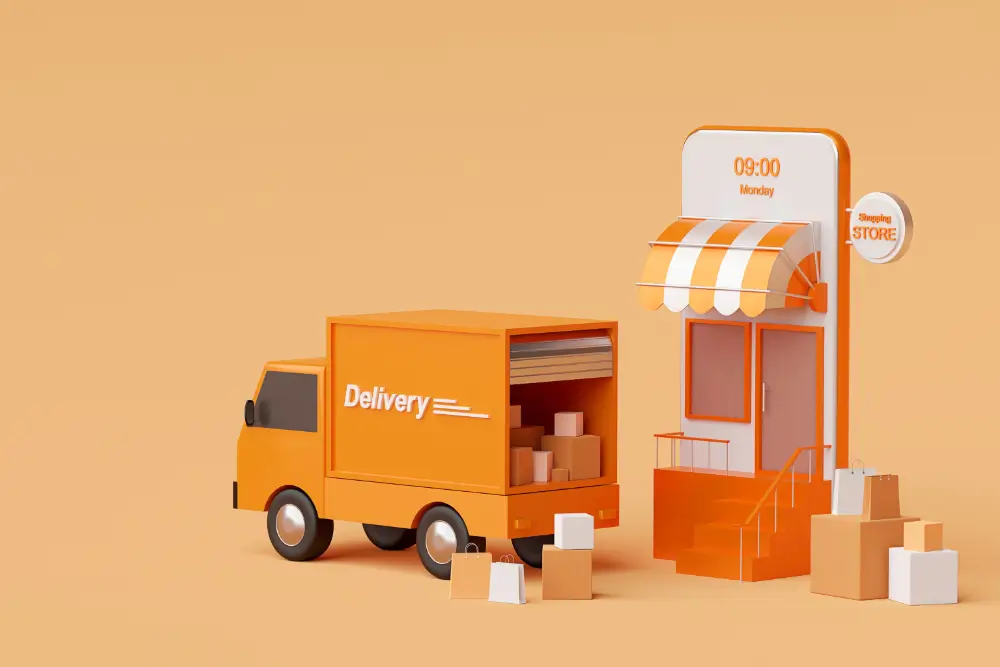
Delivery is the final phase, where the product travels from the carrier’s local distribution hub to the customer’s doorstep. This is the stage most people picture when they hear the word “delivery” — the moment the package actually arrives at the destination the customer specified at checkout.
It’s also the hardest and most expensive part of the journey. This last leg, known as last-mile delivery, now accounts for 53% of total shipping costs — the shortest distance in the supply chain consuming the majority of the budget. Dispersed residential stops, labor intensity, parking, and repeat delivery attempts all make the final mile uniquely costly. Delivery is where logistics promises meet physical reality, and it’s the stage that most directly shapes how a customer feels about the entire purchase.
Delivery is also unforgiving of mistakes. A failed first attempt means a second trip — doubling the labor and fuel for that order with zero added revenue — and a missed window can undo all the goodwill built earlier in the process. That’s why successful delivery depends on more than just handing a box to a driver. It requires careful planning: accurate addresses, realistic time windows, sensible stop sequencing, and a way to confirm the package actually reached the right person. When those pieces are in place, the final mile becomes a reliable, repeatable strength rather than a constant source of cost and complaints.

Shipping and delivery are both essential to fulfillment, but they differ in several meaningful ways:
These distinctions matter for setting expectations. When you quote an estimated arrival time, you’re accounting for both stages. They also shape customer service: a dispatch delay during shipping is handled very differently from a missed delivery window at the door.
A simple way to remember it: shipping is everything that happens to get a product moving, and delivery is everything that happens to get it arrived. Both have to work, but they fail in different ways and call for different fixes. Diagnosing a problem starts with knowing which stage it belongs to — an order stuck in the warehouse is a shipping issue, while an order circling the neighbourhood is a delivery issue.
Both stages are touchpoints in the customer journey, and both can make or break loyalty. A smooth, reliable process earns repeat business; delays or mishandling do lasting damage. According to Bringg’s 2026 Delivery Experience Survey, 50% of shoppers stopped buying from a brand after a single negative delivery experience. The front door is now where companies win or lose customers.
Here’s how each stage contributes:
Transparency ties the two together. Shoppers want to know where their order is and when it will arrive — in fact, 62% of consumers say an accurate estimated delivery date matters more to them than raw speed. Offering real-time order tracking and proactive notifications across both the shipping and delivery phases keeps customers informed, reduces “where is my order” support tickets, and turns a logistics function into a brand experience.
The practical takeaway is that you can’t treat shipping and delivery as separate silos. A blazing-fast dispatch means little if the final mile is chaotic, and a polished delivery experience can’t rescue an order that sat in the warehouse for three days. The brands that win on customer experience manage the handoff between the two stages deliberately — making sure the promise set at checkout is the same promise kept at the door.

To deliver a seamless experience, you need to optimize both ends of the process. A few high-leverage strategies:
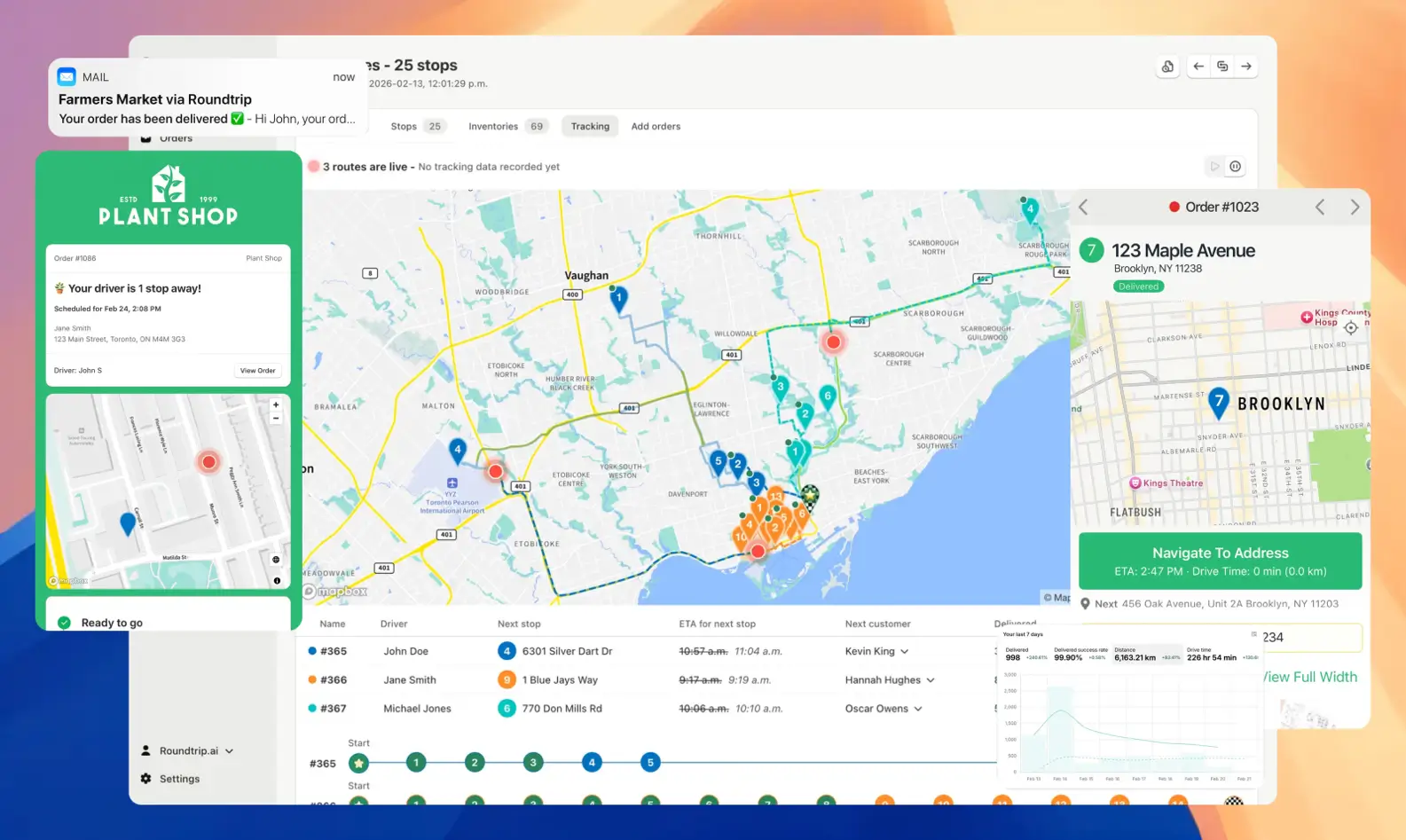
For businesses handling their own local and last-mile deliveries, EasyRoutes brings shipping and delivery together in one workflow. It pulls orders straight from your store, builds optimized multi-stop routes in seconds, and accounts for real-world constraints like vehicle capacity and delivery time windows — so drivers spend less time on the road and more packages arrive on schedule.
On the delivery side, EasyRoutes keeps customers in the loop with automated SMS and email notifications, live tracking links, and accurate ETAs, then closes the loop with photo and signature proof of delivery. The result is a unified experience: products move smoothly from the warehouse to the customer’s doorstep, and every stakeholder — dispatcher, driver, and recipient — stays informed at each step.
That single-workflow approach is what makes the shipping-to-delivery handoff seamless. Instead of stitching together a route planner, a notification tool, and a proof-of-delivery app, you manage the whole local fulfillment process in one place. Dispatchers see every route at a glance, drivers follow an optimized sequence with turn-by-turn navigation, and customers get the visibility they expect — all without the manual spreadsheet work that slows operations down and introduces errors.
The difference between shipping and delivery is more than semantics. Shipping moves a product into the logistics network; delivery completes the journey at the customer’s door. Each stage carries its own costs, responsibilities, and risks — and each shapes whether a customer comes back. Businesses that understand the distinction, then optimize both phases with the right technology, build the speed, reliability, and transparency that today’s shoppers expect. To see how route optimization and delivery management can tighten up your operation, explore the EasyRoutes website.
EasyRoutes optimizes deliveries using your selected orders, start & end locations, stop time intervals, time windows, and route limits. You can balance routes, respect capacities, and re‑optimize as plans change.
See: Route Options · EasyRoutes 101
Yes. You can set delivery time windows per stop or import them from supported third‑party date/time apps. EasyRoutes optimizes routes to meet these windows and calculates ETAs accordingly.
Yes. EasyRoutes Premium and Enterprise plans support branded SMS notifications with usage‑based pricing per message segment. Configure templates and funding in Settings.
Yes. Enable Real‑Time Tracking in Settings → Driver settings (Premium/Enterprise subscription plans) to view live driver location and progress in the Tracking tab of any route.
See: Real‑Time Tracking
Yes. Use the customizable Rescheduled notification (email/SMS) to explain delays, provide a new ETA/date, and include the tracking link.
EasyRoutes supports delivery photos, e‑signature, driver notes, and automatic timestamps (with GPS location when available) to provide a complete delivery record.
See: Proof of Delivery
EasyRoutes is the AI-native delivery operations platform trusted by 5,000+ businesses across 75+ countries. Plan routes in seconds, dispatch drivers automatically, and delight your customers — from Shopify or any order source. Experience delivery operations that run themselves. Rated 4.9 stars and certified Built for Shopify.
⭐⭐⭐⭐⭐ 4.9 stars • Trusted by 5,000+ Businesses