On-Demand & Crowdsourced Delivery Trends for 2026
By Joe SnyderExplore 2026 on-demand and crowdsourced delivery trends — from the gig workforce and same-day demand to EVs, automation, and route optimization.

Explore 2026 on-demand and crowdsourced delivery trends — from the gig workforce and same-day demand to EVs, automation, and route optimization.
From a ride across town to groceries, a restaurant meal, or a same-day parcel, the on-demand economy has reshaped what customers expect from delivery. Speed, flexibility, and visibility are no longer premium add-ons — they are the baseline. To meet that bar without building a giant fleet, more businesses are turning to on-demand and crowdsourced delivery models that scale up and down with demand. This guide explains what these models are, how they work, the benefits and trade-offs, and the trends shaping the space in 2026.
The momentum is real. The global last-mile delivery market was valued at roughly USD 167 billion in 2025 and is projected to reach about USD 349 billion by 2033, growing at close to a 10% annual rate as e-commerce and digital retail keep expanding. Crowdsourced models are riding that wave specifically: one industry forecast pegs crowdsourced logistics at around USD 12.5 billion in 2023, climbing toward USD 37.5 billion by 2032, driven by demand for on-demand and same-day service.

On-demand delivery gives customers what they want, when they want it — a ride, a meal, groceries, or a package delivered on a timeline measured in hours, not days. Crowdsourced delivery, also called crowdshipping, is one of the most popular ways to fulfill that promise. Instead of relying on a company-owned fleet, it connects businesses with a distributed network of independent, often non-professional couriers who deliver orders on routes they may already be traveling. Think of it as carpooling for parcels.
The two ideas are tightly linked: on-demand describes the customer expectation, and crowdsourcing is a flexible supply of drivers that helps businesses meet it. Both have gained traction in sectors that live and die by speed and freshness — food, retail, groceries, and pharmacy among them. For a deeper foundation on the final leg of the journey, see our last-mile delivery guide.
You have almost certainly used the model already. Uber Eats and DoorDash dispatch local couriers to deliver restaurant orders; Amazon Flex pays individuals to deliver packages in their own cars; and grocers and retailers increasingly tap services such as Roadie to cover same-day runs. What these examples share is a simple premise: rather than scaling a fixed fleet to match peak demand, they draw on a flexible pool of drivers that expands and contracts in real time. That elasticity is exactly why the model fits the on-demand era so well.
The concept is straightforward. When a business receives an order, it dispatches the details to a network of available drivers, who accept the job, pick up the item, and deliver it to the customer. The company offers delivery without directly owning vehicles or employing a permanent driver roster. Couriers typically use their own vehicles and are paid per delivery or per shift, so cost scales with actual volume rather than fixed overhead.
Technology is what makes this practical at scale. App-based platforms let drivers see available jobs, accept tasks, and navigate from their phones, while businesses coordinate assignments, route optimization, and real-time tracking from one dashboard. The same tools provide customer notifications, accurate ETAs, and contactless proof of delivery, keeping everyone in sync from order to doorstep.
Behind the scenes, the platform is doing constant matching — weighing where each driver is, how many stops they can carry, and which orders are most time-sensitive, then dispatching accordingly. For businesses running a hybrid model, the software decides in real time whether an order is best handled by an in-house driver or pushed to crowdsourced capacity. Done well, that orchestration is invisible to the customer, who simply sees an order accepted, a driver en route, and a delivery confirmed.
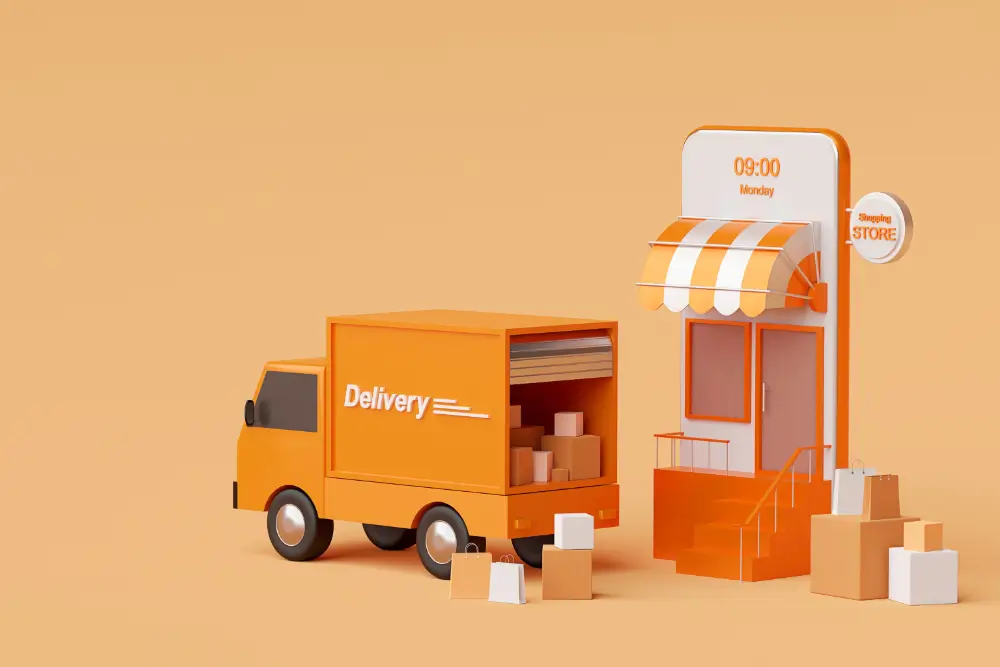
The advantages go well beyond convenience:
The model is not without friction, and planning for these issues separates reliable operators from the rest. None of them are dealbreakers, but each needs a deliberate answer before you scale:
The pool of independent couriers continues to expand. U.S. Census Bureau data shows that “Couriers and Messengers” counted more than 1.43 million individual proprietorships in 2023, one of the largest gig categories and up sharply from prior years. As platforms mature, expect more tools for onboarding, scheduling, and retaining this flexible workforce — and more attention to driver pay, utilization, and local minimum-pay rules that increasingly shape how the gig economy operates.
What began with food and rides now reaches pharmacy and healthcare, B2B and wholesale, returns, and white-glove delivery. Grocery is a standout: the global online grocery delivery market is on track for a projected volume of about USD 1.04 trillion in 2026, pulling more local retailers into hyperlocal, on-demand fulfillment.
Speed expectations keep ratcheting up. The same-day delivery market is forecast to reach roughly USD 67 billion by 2034, expanding at nearly 21% a year, with crowdsourced and gig-based couriers cited as a key way to add flexible capacity. Local fulfillment paired with smart routing is how smaller players match the giants without a giant budget. Increasingly, two-hour and even sub-hour windows are table stakes in dense markets, and customers who once tolerated multi-day shipping now abandon carts when delivery feels slow. Our same-day delivery service guide breaks down how to offer it profitably.
Subscription delivery is becoming a default loyalty play, turning one-time buyers into repeat customers with free shipping, member pricing, and predictable recurring drop-offs. For businesses, subscriptions smooth demand and surface useful data. If you are weighing this shift, see our guide on switching to a subscription model.
Sustainability and automation are reshaping the vehicle mix. Fleet electrification has moved from pilots to scale — by one estimate, more than 62% of urban delivery operators had adopted at least one electric commercial vehicle for last-mile work. Autonomous options are coming up fast too: the autonomous last-mile delivery market is projected to grow from about USD 1.6 billion in 2026 to USD 11.5 billion by 2035 as drones and sidewalk robots clear technical and regulatory hurdles. Operators looking to cut emissions and cost can start with our overview of green transportation.
Underpinning every other trend is software. Route optimization turns a tangle of stops into the most efficient path, saving fuel and fitting more deliveries into each shift — critical when a single 20-stop route has astronomically many possible orderings. Pair that with real-time tracking, automated notifications, and digital proof of delivery, and you get the seamless experience customers now expect. Contactless handoffs, popularized during the pandemic, have stuck around as a standard option; see our guide to contactless delivery.
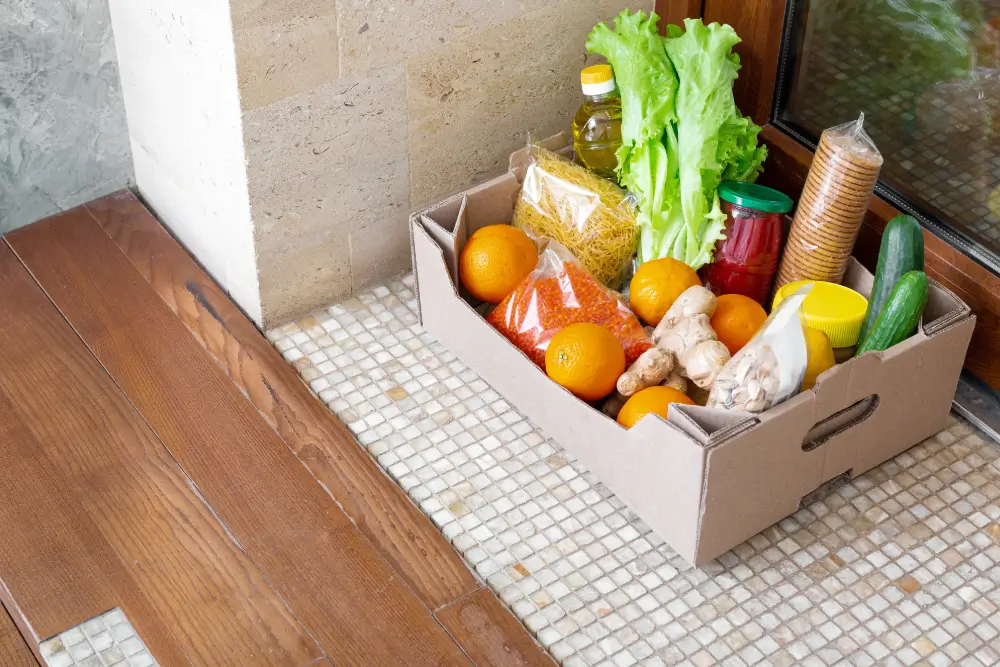
Adoption spans many sectors:
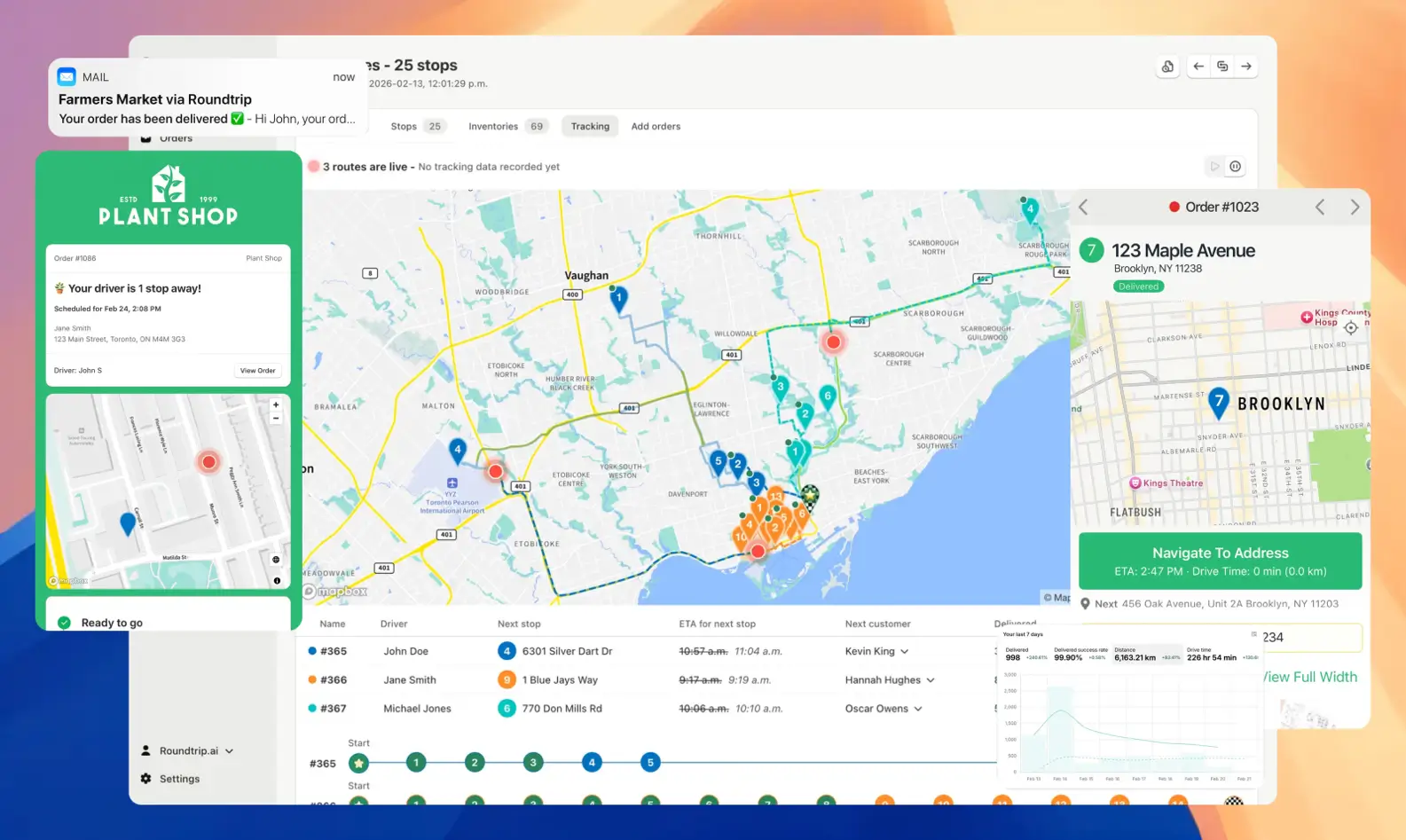
Whether you run your own drivers, lean on crowdsourced couriers, or blend both, the coordination layer is what makes on-demand delivery work. EasyRoutes, a route-optimization and last-mile delivery app, brings the essentials into one place: optimized multi-stop route planning, automatic dispatching, real-time driver tracking, branded customer notifications with accurate ETAs, and contactless proof of delivery. It also handles vehicle capacities, delivery time windows, multi-day and recurring routes, and same-day changes — the practical details that flexible, on-demand operations depend on. The result is faster routes, fewer failed deliveries, and a delivery experience customers actually trust.
Getting started does not require an all-or-nothing leap. Many businesses begin by evaluating demand and deciding which deliveries suit on-demand, same-day, or scheduled fulfillment, then layer in route-optimization software to run those deliveries efficiently. From there, it is straightforward to add crowdsourced capacity for peaks while keeping a core of in-house drivers for control and consistency. The key is choosing a platform that scales with you and keeps the customer experience seamless no matter who is behind the wheel.
On-demand and crowdsourced delivery have moved from novelty to expectation. The businesses that win in 2026 will be the ones that combine flexible capacity with the technology to coordinate it — meeting rising demands for speed and visibility while keeping costs in check. Whatever mix of owned and crowdsourced drivers you choose, the right software ties it together. EasyRoutes gives you the routing, tracking, and customer communication tools to deliver on the on-demand promise.
EasyRoutes optimizes deliveries using your selected orders, start & end locations, stop time intervals, time windows, and route limits. You can balance routes, respect capacities, and re‑optimize as plans change.
See: Route Options · EasyRoutes 101
Yes. Enable Real‑Time Tracking in Settings → Driver settings (Premium/Enterprise subscription plans) to view live driver location and progress in the Tracking tab of any route.
See: Real‑Time Tracking
Yes. EasyRoutes Premium and Enterprise plans support branded SMS notifications with usage‑based pricing per message segment. Configure templates and funding in Settings.
Yes. Create routes in minutes, add last‑minute stops, and re‑optimize during the day. Dispatch instantly to drivers with live tracking and customer notifications.
See: Re‑optimize · Dispatch
Yes. Schedule routes across multiple days with configured start times/locations and add an overnight driver break to maintain accurate ETAs.
See: Multi‑Day Scheduling
Yes. Automate with Workflows to create routes on a custom, recurring schedule, or duplicate prior routes and re‑use their settings/stops in just a few clicks.
See: Workflows · Duplicate routes
Yes. EasyRoutes supports Vehicle Profiles you can configure and assign to routes. EasyRoutes also supports capacity planning via item or weight limits per route. Use these with other options (like time windows, or custom start/end locations) to keep plans realistic and drivers on schedule.
See: Vehicle Profiles · Max items/weight per route · Commercial/GPX Export
EasyRoutes supports delivery photos, e‑signature, driver notes, and automatic timestamps (with GPS location when available) to provide a complete delivery record.
See: Proof of Delivery
Yes. You can set delivery time windows per stop or import them from supported third‑party date/time apps. EasyRoutes optimizes routes to meet these windows and calculates ETAs accordingly.
Yes. If a scheduled start time is set, routes can be auto‑assigned and dispatched to the selected driver when created.
See: Auto‑Dispatch
EasyRoutes is the AI-native delivery operations platform trusted by 5,000+ businesses across 75+ countries. Plan routes in seconds, dispatch drivers automatically, and delight your customers — from Shopify or any order source. Experience delivery operations that run themselves. Rated 4.9 stars and certified Built for Shopify.
⭐⭐⭐⭐⭐ 4.9 stars • Trusted by 5,000+ Businesses