In-House vs Third-Party Delivery: How to Decide
By Joe SnyderThird-party couriers vs. an in-house delivery fleet: compare costs, control, and customer experience to choose the right model for your business.

Third-party couriers vs. an in-house delivery fleet: compare costs, control, and customer experience to choose the right model for your business.
Deciding whether to hand deliveries to third-party couriers or build your own in-house team is one of the highest-stakes operational calls a growing business makes. It shapes your cost structure, the customer experience at the doorstep, and how easily you can scale. There is no universal right answer — only the model that fits your volume, margins, and how much of the last mile you want to own. This guide breaks down the real trade-offs, refreshes the numbers for today, and shows how the right software makes either path more manageable.
We'll cover what each model actually means, why the last mile carries so much weight in the decision, the honest costs and hidden costs on both sides, and a practical framework for choosing — plus how a tool like EasyRoutes lets a small team run deliveries like a national carrier.

The core distinction is simple. With an in-house (or self-delivery) model, your business owns the last mile end to end: you hire and train drivers, own or lease vehicles, and manage routing, dispatch, and customer communication yourself. With a third-party model, you hand some or all of that to an outside provider — whether a marketplace like DoorDash or Uber Eats, a white-label service such as Uber Direct, or a traditional carrier like FedEx or UPS — and pay per delivery or a commission.
Most businesses don't live at the extremes. A florist might run its own vans for same-day local orders while leaning on a carrier for out-of-town shipments; a grocer might keep produce runs in-house for quality control and outsource overflow during peak weeks. The right question isn't which model is better in the abstract — it's which variables (speed, cost, reliability, brand control) matter most for what you deliver, and to whom.
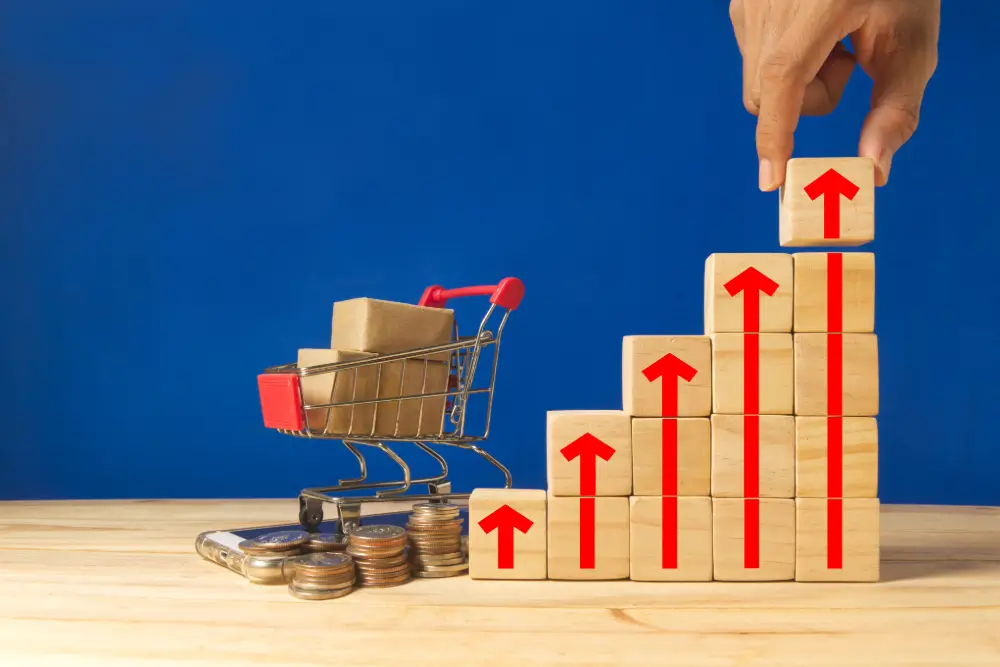
Whichever model you choose, the last mile is where the money is. The final leg from a local hub to the customer's door now accounts for roughly 53% of total shipping costs, up from about 41% in 2018, and the U.S. last-mile market sat near $201 billion in 2025 while growing at a double-digit annual rate. That cost concentration is exactly why the in-house-versus-outsourced question is worth getting right: small efficiency gains on the last mile compound into real margin, and the model you pick determines who captures that efficiency — you or your provider.
Because last-mile economics are so heavy, it helps to understand how those transportation costs break down before committing to either path. The cheapest option on paper is rarely the cheapest once every fee, surcharge, and inefficiency is counted.
Outsourcing is popular for good reasons, especially for businesses that are new to delivery, growing fast, or facing unpredictable demand.
Lower upfront cost. Partnering with a third party eliminates the need to buy vehicles, hire drivers, or stand up a logistics function. There's no payroll, fuel, insurance, or maintenance to carry — you pay for what you use, much like renting instead of buying. For a business testing whether delivery even makes sense, that low barrier to entry is hard to beat.
Instant scalability. Third-party networks flex with your volume. Launching a holiday catering pop-up or trying beverage delivery for the first time? Outsourcing gives you reach and capacity overnight, without adding headcount you'd have to justify in the slow season.
Speed to launch and built-in reach. Established providers come with their own driver pools, coverage areas, and in some cases a marketplace of hungry customers. For businesses expanding into new regions or lacking in-house logistics expertise, that infrastructure can be live in days rather than months.
The convenience of outsourcing comes with trade-offs that often surface only after you've scaled.
Fees that add up fast. Marketplace commissions usually look like 15% to 30% per order, but once promotions, processing, and peak-time surcharges are layered in, the effective cost frequently lands closer to 30%–40% of revenue. In a business with thin margins, that can turn a busy night into a break-even one.
Loss of control. When someone else delivers, you have limited say over timing, routing, and how a driver treats your customer. A late, damaged, or impersonal delivery still reflects on your brand — even though you didn't make it. Maintaining a consistent experience through a third party is genuinely hard.
Misaligned incentives and the data gap. Marketplaces optimize for their own platform, not your repeat business — and they typically own the customer relationship and the data that comes with it. That makes it harder to build loyalty, remarket, or even know who your buyers are. Many businesses bring delivery in-house specifically to reclaim that customer connection.
Reliability risk at the worst moments. During peak seasons, third-party capacity can tighten exactly when you need it most, leaving a flower shop scrambling on Valentine's Day. And for regulated or fragile goods — alcohol, cannabis, medical supplies, perishables — outside drivers may not handle age verification, cold chain, or careful delivery to your standard.
Running your own deliveries — sometimes as simple as one employee with a reliable car — flips the trade-offs. You take on more responsibility in exchange for control, margin, and a direct line to your customers.
Control over the whole experience. An in-house team can be trained to deliver packages — and experiences — exactly the way you want, from accurate ETAs to white-glove handling. That ownership is the foundation of a great delivery experience, and it's especially valuable for niche or high-touch goods where a careful, knowledgeable drop-off is part of the product.
Loyalty and lifetime value. The doorstep is increasingly where brands are won or lost. In a 2025 consumer survey, 76% of shoppers said a positive delivery experience influenced whether they'd buy again — up from 72% the year before — while nearly half said they stopped buying from a brand after a poor delivery. Owning the last mile lets you turn each delivery into a reason to come back.
Better margins over time. There's no middleman taking a cut of every order. Once the fixed costs are in place, every delivery you make yourself avoids a per-order fee, and route efficiency keeps improving your unit economics as volume grows.
Data and direct relationships. Because you own the transaction end to end, you keep the customer data, the feedback, and the opportunity to follow up with offers, rewards, and branded communication. Some customers even build a rapport with a familiar driver — a small thing that big platforms can't replicate.

In-house delivery isn't free, and going in clear-eyed about the costs is what separates a smart transition from an expensive one. The expenses fall into two buckets: upfront infrastructure and recurring operating costs.
Infrastructure. Vehicles are the big line item, but they're more affordable and flexible than many assume. Rather than a single large refrigerated truck, many businesses now run several smaller vans or cars on shorter routes; leasing a vehicle including maintenance often runs a few hundred to roughly a thousand dollars per month, and electric options keep getting cheaper. Delivery software, by contrast, is typically one of the smallest costs — often well under a dollar per delivery.
Labor and recurring costs. Labor is the dominant expense in last-mile delivery, generally around 60% of the total, with fuel, software, packaging, and miscellaneous items making up the rest. In the U.S., delivery drivers earn an average of roughly $19–$20 per hour, varying by region and whether you use employees or contractors (contractors cost less but bring more turnover and HR overhead).
The legal and insurance fine print. If you or your team use personal vehicles, standard personal auto policies usually exclude business use — you'll need commercial coverage, and possibly local permits. It's a small step that's easy to overlook and costly to ignore.
The right model usually reveals itself once you weigh a handful of questions honestly:
For many small and mid-sized businesses serving local or regional markets, the answer is in-house — but only because modern tools have erased the operational complexity that used to make it impractical. Pairing your own fleet with solid last-mile delivery best practices is what makes the model sustainable rather than chaotic.
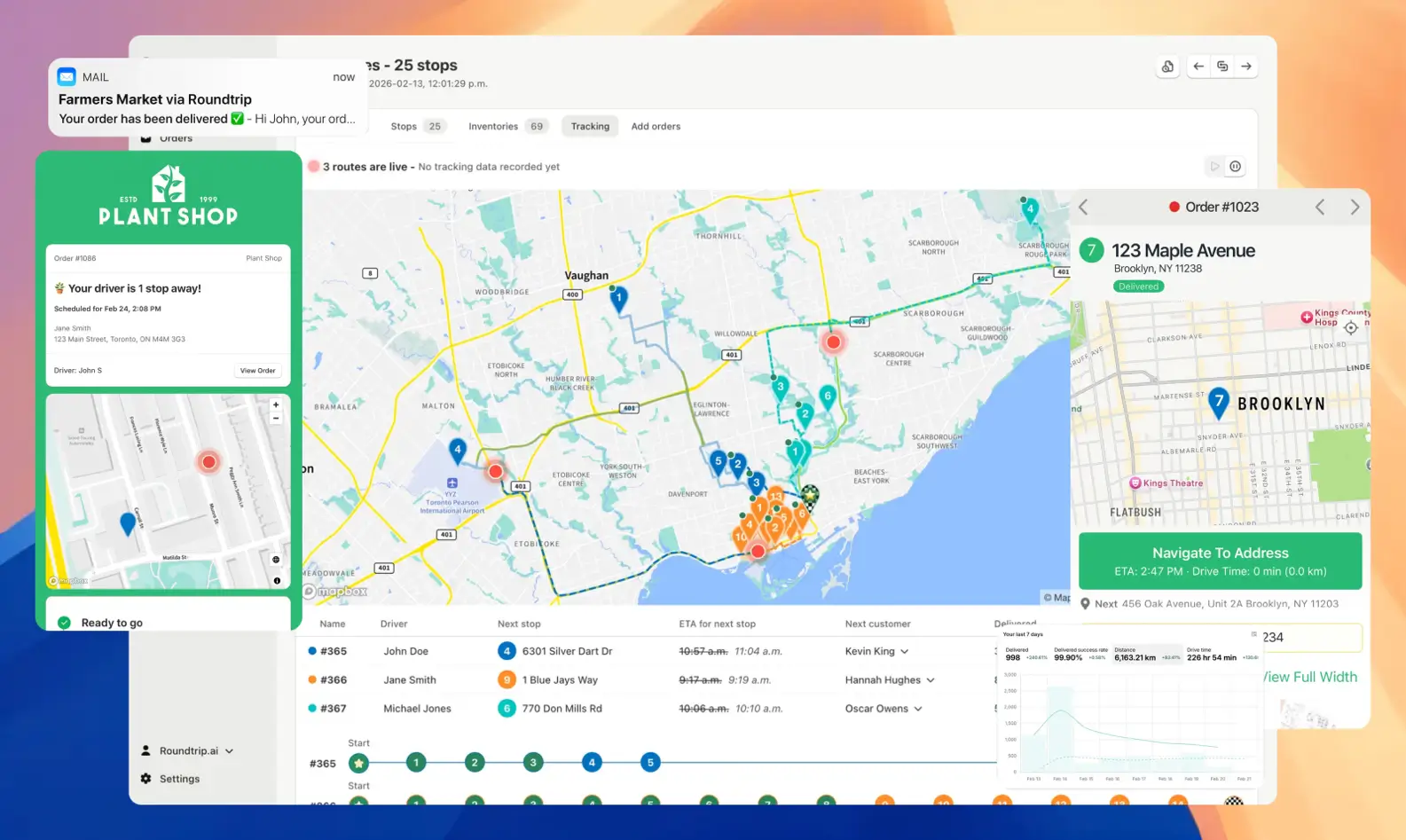
The historical knock against in-house delivery — that it means building a logistics department from scratch — no longer holds. Purpose-built delivery management software turns what used to be a whiteboard-and-spreadsheet scramble into a system you can trust.
EasyRoutes pulls in your orders, builds optimized routes in a few clicks, and dispatches them to a driver app with turn-by-turn navigation, delivery notes, and proof-of-delivery tools. Strong route optimization matters here because better sequencing directly cuts mileage and fuel — routing software can reduce delivery time by roughly 20%–30%, which means more stops per shift with less stress on drivers.
It's also built to grow with you. You can manage drivers flexibly — adding, deactivating, and reassigning seats as staffing changes, which is ideal for seasonal or on-call teams. You can auto-dispatch routes with a scheduled start time so recurring daily runs go out without extra clicks. And the optimizer respects real-world constraints through configurable vehicle profiles and capacity limits, so plans stay realistic whether you're running a compact car or a cargo van. Most teams connect, import orders, and create their first optimized route in under an hour, then layer in real-time tracking and automated customer notifications to keep the support inbox quiet.
The result is the best of both worlds the outsourcing pitch promises — reach, reliability, and professional polish — without giving up the control, margin, and customer relationships that make in-house worth it in the first place.
Third-party delivery offers low upfront cost and instant scale, at the price of fees, control, and the customer relationship. In-house delivery demands more investment and discipline, but rewards you with ownership of the experience, better long-term margins, and direct ties to your customers. Neither is universally right — the smart move is to match the model to your volume, your margins, and how much of the last mile your brand needs to own.
If you decide to bring delivery in-house, the operational complexity that once made that scary is now a solved problem. Explore the EasyRoutes website to see how route optimization, a driver app, live tracking, and automated notifications can help you run a delivery operation that customers remember for the right reasons.
EasyRoutes is a delivery management and route optimization platform for merchants, local delivery teams, and logistics operators. It helps you plan routes, dispatch to drivers, track progress in real time, and notify customers. Works with Shopify and integrates with other e-commerce platforms via EasyRoutes for Web.
EasyRoutes for Shopify is best suited for merchants who already sell goods or services within the Shopify ecosystem. Users can plan optimized delivery routes with all orders received through their Shopify storefront, created via draft orders, or imported manually as custom stops.
EasyRoutes for Shopify integrates seamlessly with the Shopify Admin and dozens of leading third-party apps, making it the ideal choice for Shopify merchants seeking a streamlined local delivery solution.
Most teams connect, fetch orders, and create their first optimized route in under an hour. Follow the Getting Started guide found in the EasyRoutes support portal to reach your “aha” moment fast.
See: Getting Started
Yes. If a scheduled start time is set, routes can be auto‑assigned and dispatched to the selected driver when created.
See: Auto‑Dispatch
You can add, remove, and switch drivers in a way that is flexible with your business at anytime from within EasyRoutes. If you need more active drivers, then you'll need to add more driver seats on your plan.
Yes. EasyRoutes supports Vehicle Profiles you can configure and assign to routes. EasyRoutes also supports capacity planning via item or weight limits per route. Use these with other options (like time windows, or custom start/end locations) to keep plans realistic and drivers on schedule.
See: Vehicle Profiles · Max items/weight per route · Commercial/GPX Export
EasyRoutes is the AI-native delivery operations platform trusted by 5,000+ businesses across 75+ countries. Plan routes in seconds, dispatch drivers automatically, and delight your customers — from Shopify or any order source. Experience delivery operations that run themselves. Rated 4.9 stars and certified Built for Shopify.
⭐⭐⭐⭐⭐ 4.9 stars • Trusted by 5,000+ Businesses