Holiday & Peak-Season Delivery: The Complete Playbook
By Joe SnyderHandle the holiday and peak-season delivery rush: forecast demand, optimize routes, batch stops, track orders, and scale local delivery with EasyRoutes.

Handle the holiday and peak-season delivery rush: forecast demand, optimize routes, batch stops, track orders, and scale local delivery with EasyRoutes.
If your local delivery operation runs smoothly in November, you are doing something right—because the holidays don’t just add orders, they compress them. You end up handling twice the volume in half the time, with weather, traffic, and sky-high customer expectations stacked on top. And a late package in December stings far more than one in April. The good news: peak season rewards preparation. With the right forecasting, routing, communication, and tools, the seasonal spike becomes a showcase for your service instead of a scramble. This guide pulls together everything a Shopify merchant or local courier needs to handle Black Friday, Christmas, and every high-volume day in between.
The holiday window is now the busiest stretch in retail, full stop. U.S. holiday sales for November and December 2025 surpassed $1 trillion for the first time, growing 4.1% year over year, while online spending hit a record $257.8 billion, up 6.8%. That demand is also concentrated: a record 202.9 million people shopped from Thanksgiving through Cyber Monday, with Cyber Week 2025 alone driving $44.2 billion online.
For a local delivery business, those numbers translate into a compressed, unforgiving operating window. Customers buying gifts, prepping for guests, or relying on you for essentials when stores are closed expect every order to land on time. Your everyday workflow won’t stretch to cover it. What you need instead is a plan built for the surge: accurate forecasts, scalable routing, contingency buffers, and communication that keeps customers calm when the roads are anything but.
The best way to handle a rush is to see it coming. Pull your order history from the last two or three seasons to spot the volume peaks, the popular delivery windows, and the products that spike. Use that to set cut-off dates, schedule staff, and pre-position inventory before the wave hits. Pre-sort orders by zone where you can, and make customer-facing policies—order-by dates, last guaranteed delivery days—crystal clear and visible at checkout. Being upfront removes stress for your team and your customers alike.
Forecasting is also where you decide how much capacity to add. Reviewing last year’s data tells you whether you need extra vehicles, seasonal drivers, or simply tighter delivery windows and scheduling to smooth the load. Coordinate early with suppliers too, so a packaging or inventory shortage doesn’t undo your routing work. Businesses that plan this far ahead can absorb last-minute changes instead of being thrown by them.
Build a weather and contingency plan into that forecast, because winter is when routes fall apart. Decide in advance how you will reroute around storms, which non-urgent orders you can reschedule, and when safety means pausing deliveries outright. Make sure vehicles are equipped for the conditions you operate in and that drivers know how to handle them. A documented fallback—secondary suppliers, backup drivers, a clear reschedule policy—turns a snow day from a crisis into a manageable detour.

During peak periods, a few minutes saved per stop multiplies across hundreds of deliveries. Smart routing is your best defence against traffic, weather reroutes, and the simple math of more stops than daylight. Modern route optimization weighs real-time traffic, delivery time windows, vehicle capacity, and stop sequence simultaneously—calculations no human dispatcher can match by hand, especially across a fleet. If you are still wrestling with spreadsheets, our guide to multi-stop route planning walks through the switch.
The payoff is concrete. Fleets using connected routing and dispatch technology reported an average 12% reduction in fuel costs after implementation, driven largely by fewer wasted miles and less idling. That efficiency lets you complete more deliveries per driver per day—added capacity without added headcount, which is exactly what you want when hiring is hardest.
The holidays are no time for one-off runs. Batch orders into delivery groups by zone and time window to maximize stop density and cut backtracking. With the right tool you can assign batches to multiple drivers, staggered through the day, for full coverage with minimal overlap—think carpooling, but for presents. Pair batching with realistic delivery windows that you communicate clearly; promising a two-hour slot you can’t hit during peak does more damage than a longer window you reliably keep. When demand genuinely outstrips capacity, offer alternatives like local pickup or a later scheduled date rather than letting an order slip silently.
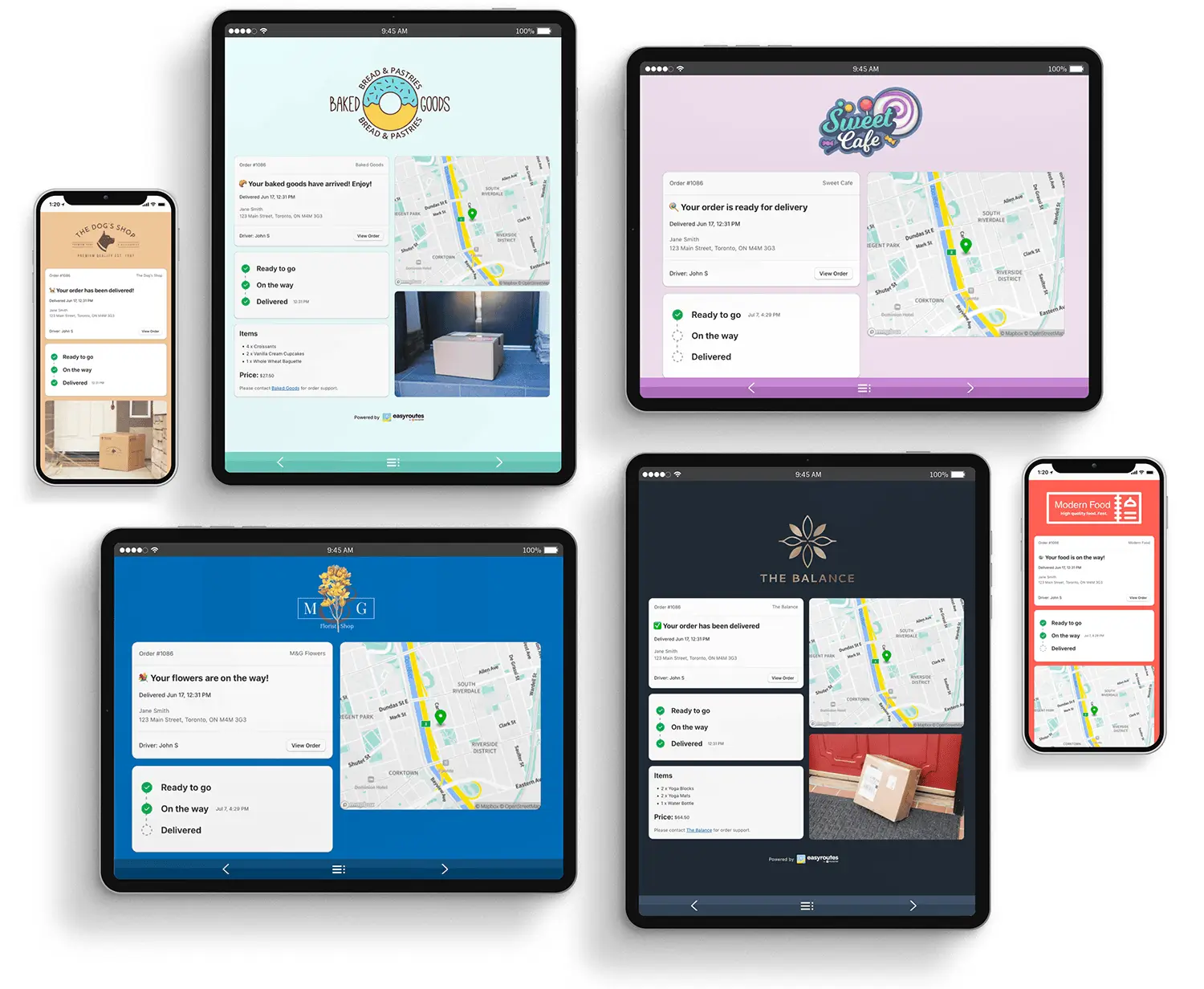
Nothing generates support tickets like a customer wondering where their holiday gift is. Proactive communication is now a baseline expectation, not a nicety: 88% of consumers consider real-time tracking critical to a positive experience, and 62% say an accurate estimated delivery date matters more to them than raw speed. Branded ETAs, status updates, and a live tracking page cut down the “where’s my order?” messages that flood inboxes in December. Our deep dive on real-time tracking and notifications covers how to set this up well.
Communication also protects loyalty, which is the whole point of a strong season. 76% of shoppers say a positive delivery experience influenced their decision to buy from a brand again, up from 72% a year earlier. Keep customers informed at dispatch, when the driver is a few stops away, and at drop-off—and make sure your support team can see delivery status when questions do come in. Clarity beats apologies every time.

Your drivers feel the same holiday pressure your customers do, just in reverse. Make their day easier with a mobile driver app that delivers turn-by-turn directions, customer notes, delivery sequence, and proof-of-delivery capture in one place—so nobody is texting dispatch or flipping through printouts at the curb. Equip them with everything a stop requires before they leave the depot, including a route-ordered inventory so packages are loaded in delivery sequence. And don’t underestimate morale: a warm thank-you, a hot drink, and fair incentives go a long way on a twelve-hour December shift. Well-supported drivers make fewer errors and deliver a better experience at the door.
Proof of delivery earns its keep during the holidays specifically. Photos, electronic signatures, and timestamped drop-off notes confirm exactly when and where each package landed, which matters when porches are crowded with parcels and disputes spike. Surfacing that proof on the customer’s tracking page heads off “I never received it” claims, protects you against chargebacks, and reassures the recipient—all without a single back-and-forth with support. Requiring proof on high-value or gift orders is a small step that saves hours of investigation later.
Manual processes that limp along in February will sink you in December. Automation frees your team to focus on the high-value work—quality control, exceptions, customer care—instead of copying orders into spreadsheets. Auto-dispatch, automated notifications, and direct integration with your store mean fewer mistakes and faster turnarounds when every minute counts. Centralized dispatch management software gives you a bird’s-eye view of every route so you can spot a bottleneck before it becomes a missed delivery, reassign a stop when a driver calls in sick, and keep priority orders moving.

Peak season inflates costs as fast as it inflates orders: overtime, fuel, and the structurally expensive final leg. Last-mile delivery now accounts for 53% of total shipping costs, up from 41% in 2018—it is the single most expensive part of getting an order to the door, and the holidays magnify every inefficiency in it. Tightening route density, reducing failed first-attempt deliveries through better communication, and trimming idle miles all attack that cost directly. For a fuller toolkit, see our guide to cutting fuel costs in your delivery business. Dynamic pricing for same-day or expedited slots—paired with discounts for off-peak windows—can also help you recover margin while smoothing demand across the day.

The shape of holiday shopping keeps shifting, and the operators who adapt win the season. Three trends stand out heading into 2026. First, shopping has gone mobile: across the 2025 holiday season, smartphones accounted for 56.4% of online holiday transactions, with social media’s share of revenue up 40.3% year over year and generative-AI-driven traffic to retail sites surging 693%. That means impulse buys, later cut-offs, and customers who expect a slick experience from tap to doorstep.
Second, fast and flexible fulfillment is now table stakes—same-day, next-day, local pickup, and scheduled windows are competitive differentiators, not perks. Third, sustainability and transparency keep climbing the priority list, and optimized routes that cut mileage and emissions serve both goals at once. Local merchants that lean into these shifts can out-deliver national players on speed and service in their own backyard; our playbook on last-mile delivery best practices goes deeper on building that advantage.
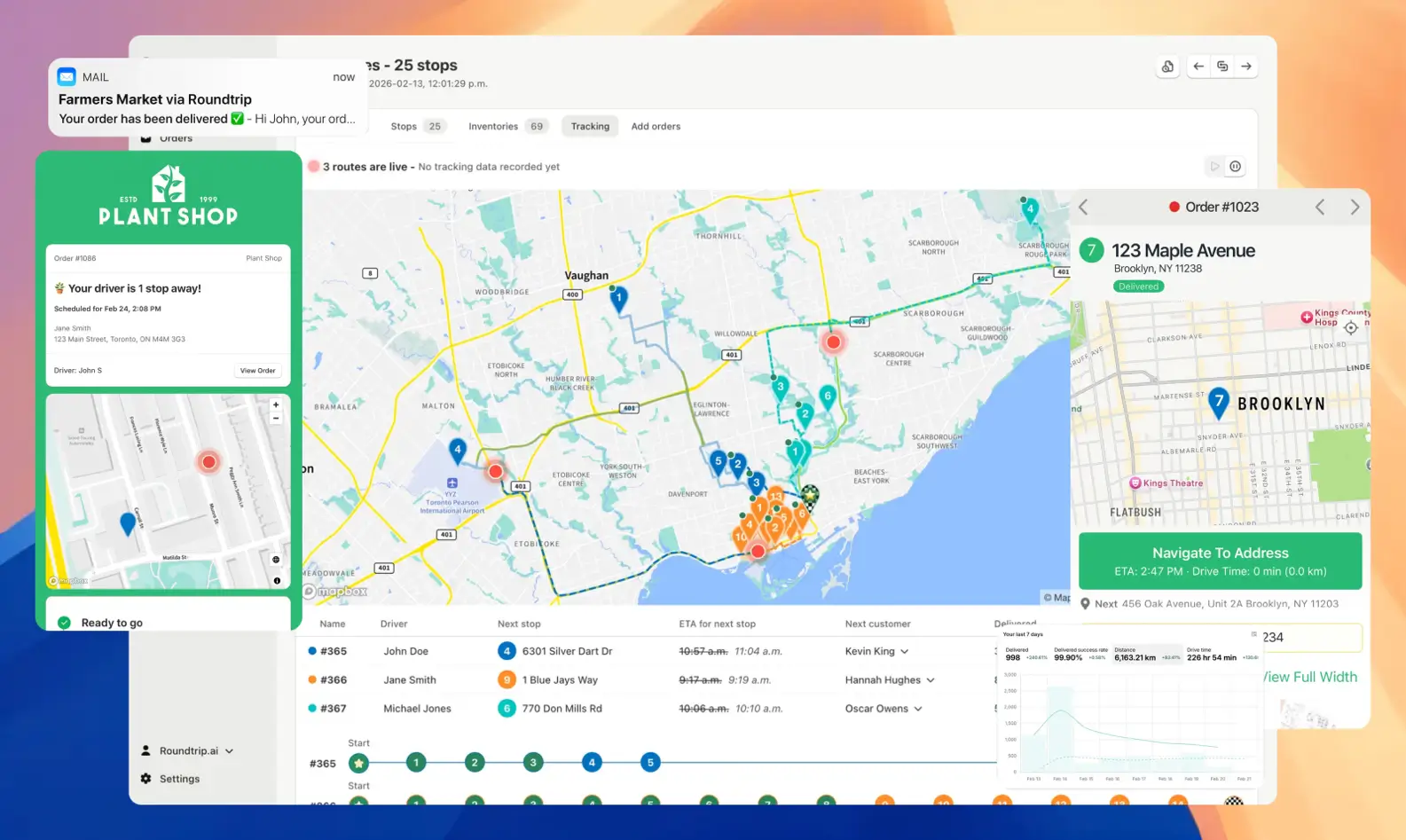
EasyRoutes was built with peak season in mind. It turns your Shopify orders into ready-to-go optimized routes in seconds—complete with smart route-splitting across multiple drivers, route-ordered inventory for loading, live tracking, branded customer notifications, and a driver app with proof-of-delivery capture. Because it works natively inside Shopify, there are no spreadsheets to export and re-import; you select the orders to deliver and EasyRoutes does the rest. Merchants across verticals—from Christmas-tree growers to bakeries to meal-kit services—use it to scale through the holidays without spinning out. If you want to go deeper on the routing engine, see our overview of Shopify route planning software.

Peak season delivery doesn’t have to be panic-inducing. Forecast early, optimize your routes, batch smartly, communicate proactively, support your drivers, and automate the busywork—and the holiday rush turns into a reputation-building, customer-winning opportunity rather than a fire drill. Whether you are delivering flowers, groceries, meal kits, or fresh-cut trees, the formula is the same: short routes, clear communication, and a team that feels supported. Ready to get your sleigh in gear? EasyRoutes can get your deliveries where they need to go—on time, every time, even during the holiday crunch. Start your 14-day free trial today!
EasyRoutes optimizes deliveries using your selected orders, start & end locations, stop time intervals, time windows, and route limits. You can balance routes, respect capacities, and re‑optimize as plans change.
See: Route Options · EasyRoutes 101
No. Each route has one assigned driver at a time. To share the work, split stops across multiple routes or use self‑assign links on separate routes.
See: Driver Assignment
Yes. If a scheduled start time is set, routes can be auto‑assigned and dispatched to the selected driver when created.
See: Auto‑Dispatch
Absolutely. Plan with item and weight limits to reflect the capacities of your fleet. Configure and assign Vehicle Profiles for an additional indicator for routes that have specific restrictions by vehicle.
Yes. Use the customizable Rescheduled notification (email/SMS) to explain delays, provide a new ETA/date, and include the tracking link.
Yes. Enable Real‑Time Tracking in Settings → Driver settings (Premium/Enterprise subscription plans) to view live driver location and progress in the Tracking tab of any route.
See: Real‑Time Tracking
Yes. EasyRoutes Premium and Enterprise plans support branded SMS notifications with usage‑based pricing per message segment. Configure templates and funding in Settings.
Absolutely. Drivers can add photos, collect an e‑signature, and record notes at each stop; these appear in the route and customer tracking (if enabled).
See: Proof of Delivery
EasyRoutes is the AI-native delivery operations platform trusted by 5,000+ businesses across 75+ countries. Plan routes in seconds, dispatch drivers automatically, and delight your customers — from Shopify or any order source. Experience delivery operations that run themselves. Rated 4.9 stars and certified Built for Shopify.
⭐⭐⭐⭐⭐ 4.9 stars • Trusted by 5,000+ Businesses