Same-Day Delivery Service: The 2026 Business Guide
By Joe SnyderSame-day delivery is now the norm, not a perk. See which industries need it and how your business can offer same-day delivery in 2026.

Same-day delivery is now the norm, not a perk. See which industries need it and how your business can offer same-day delivery in 2026.
Same-day delivery used to be the move that set Amazon apart. Today it is fast becoming the baseline. Across North America, shoppers increasingly treat sub-24-hour fulfillment as the norm rather than a premium add-on, a behavioral shift cemented during the pandemic and now hard-wired into how people buy. That is great news for customers and a real challenge for the small and mid-sized businesses competing against the delivery giants. The good news: you do not need Amazon’s budget to win locally. With the right local fulfillment plan and EasyRoutes handling the routing, tracking, and customer updates, same-day delivery is well within reach. This guide covers what same-day delivery is, why it matters in 2026, the industries that depend on it, and how to offer it profitably.
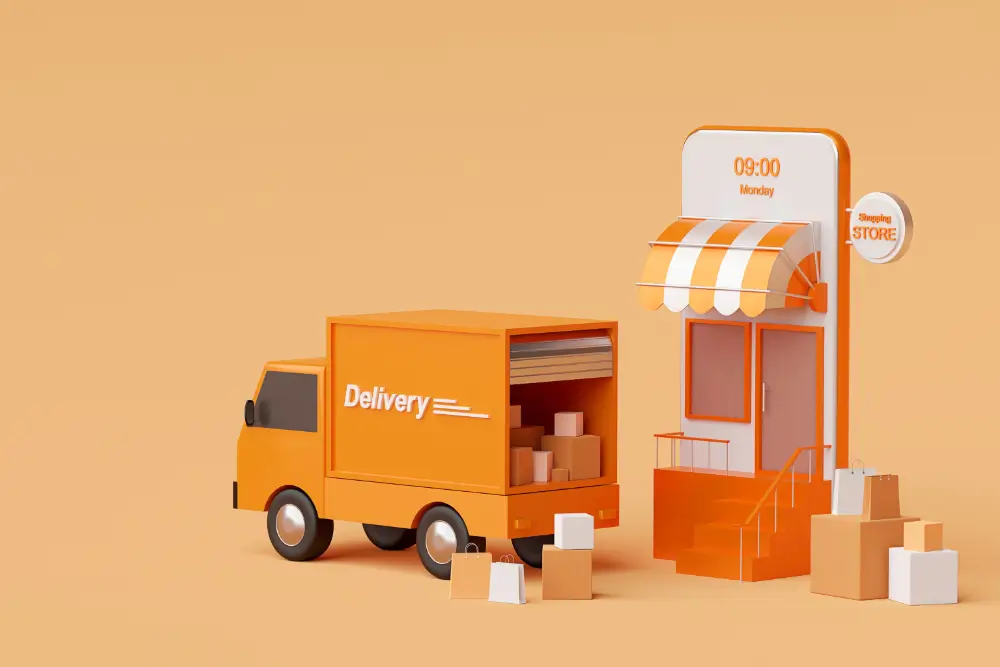
Same-day delivery means getting a product into a customer’s hands within hours of the order being placed, rather than days. For many purchases that speed is the deciding factor: the customer needs the item now, and whoever can get it there first wins the sale. What was once a logistical luxury is now a core part of the buying experience, and the gap between a same-day promise and a three-day wait increasingly decides where people shop at all.
The market reflects that. According to Mordor Intelligence, the North America same-day delivery market is worth roughly $11.59 billion in 2026 and is projected to reach $15.47 billion by 2031. E-commerce alone accounted for about 53% of regional revenue in 2025, and road-based delivery — the kind a local fleet runs — handled roughly half of all volume. In other words, the growth is concentrated in exactly the kind of last-mile delivery that smaller operators can own in their own communities.
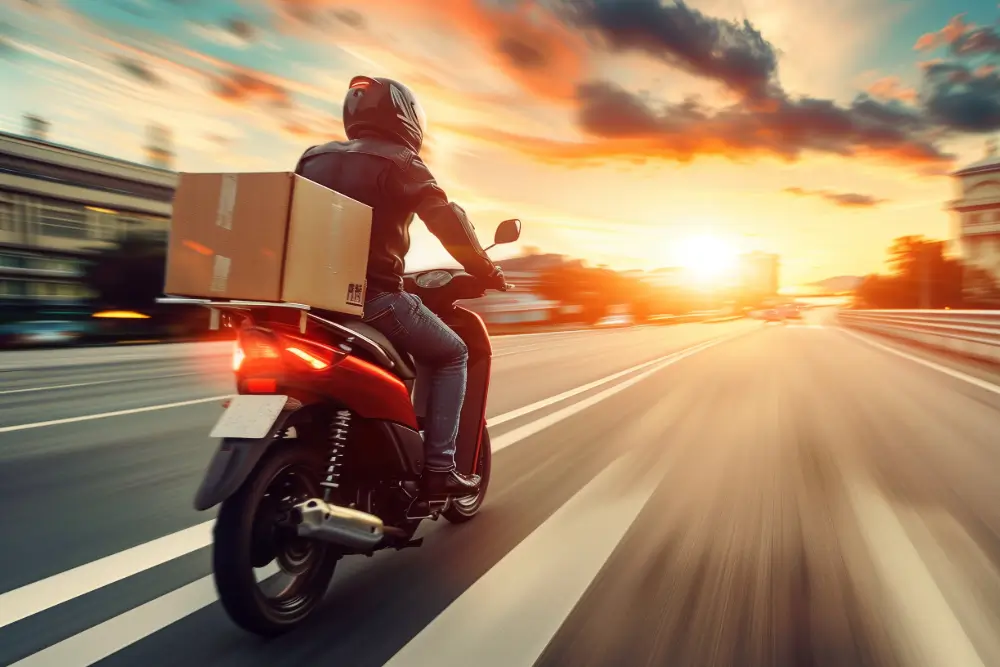
Customer expectations have outrun the old two-to-five-day standard. Research compiled by Capital One Shopping found that roughly 80% of consumers want same-day shipping, and of those, more than three-quarters want their order within about three hours of placing it. Speed has become a product in itself.
The cost of falling short is just as clear. About 28% of shoppers have abandoned a purchase because the delivery estimate did not meet their urgency, and around 70% say shipping speed is critical to a positive online experience. There is also genuine willingness to pay when the offer is right: roughly 55% of shoppers say they would spend at least $5 for same-day delivery, which means a well-priced fast option can be a margin opportunity rather than a pure cost center.
At the same time, there is a real cost-speed balance to manage. Free shipping still wins more often than raw speed, and many customers value free same-day delivery over curbside or in-store pickup. The takeaway for a growing business is not to offer the fastest option at any price, but to make same-day available — ideally free above an order threshold, or as a modest paid upgrade — so it removes friction instead of adding it. Done well, the option pays for itself: it lifts conversion at checkout, reduces the abandoned carts that slow delivery causes, and gives shoppers a reason to choose you over a marketplace listing.
Speed expectations are also being set by the biggest players. Amazon reported delivering more than 13 billion items the same or next day globally in 2025, with U.S. Prime members receiving over 8 billion same-or-next-day items — up about 30% year over year — and roughly half of those were groceries and everyday essentials. You will not match that scale, but you do not have to. Customers reward the local business that reliably delivers today, and competing with Amazon Prime on your home turf is more achievable than it looks.
E-commerce is the engine of same-day demand. Online shoppers have come to expect store-like immediacy, and retailers that can promise delivery today convert browsers into buyers who might otherwise wait for a faster competitor — or drive to a physical store. For independent and mid-sized retailers, a tight local delivery radius is an advantage the national carriers cannot easily replicate: you are already close to your customers, you know your inventory, and you can have an order on the road within the hour. The retailers that win here treat same-day not as a special event but as a standing option, surfaced clearly at checkout alongside standard shipping so shoppers self-select into the speed they are willing to pay for.
Groceries, prepared food, and other perishables live and die by timing — these orders simply cannot wait days. The category is now central to fast fulfillment: groceries and everyday essentials made up about half of Amazon’s same-or-next-day U.S. volume in 2025. For perishables, success depends on getting routes right and keeping products at temperature, which is where disciplined cold chain logistics and accurate ETAs become non-negotiable. A late or warm delivery is not just a disappointed customer — it is spoiled product and a refund. EasyRoutes helps by sequencing stops efficiently so perishables spend less time in transit, and by keeping customers informed of exactly how many stops away the driver is, so they are ready at the door the moment it arrives.

Flowers and gifts are deadline-driven by nature — a bouquet that arrives a day late has missed the occasion entirely. Demand for online floral and gift delivery keeps climbing as customers shop across greater distances for life’s milestones, and in the flowers-and-gifts category roughly 4 in 10 shoppers will abandon an order if same-day is not offered. For florists, same-day is not a nice-to-have; it is the business, and the ability to promise it reliably is often what separates a thriving local shop from one that loses orders to a faster rival.
Few categories carry higher stakes than medication. Patients are more likely to start and stick with treatment when they can get prescriptions quickly, and the major retailers have moved aggressively here: Walmart now delivers more than 90% of prescription medications to customers’ doors — including refrigerated and reconstituted drugs such as insulin and GLP-1s — and Amazon Pharmacy is expanding same-day prescription delivery to nearly 4,500 U.S. cities and towns by the end of 2026. Independent pharmacies and healthcare providers can compete by owning local delivery, where building a medical delivery service with proper handling, tracking, and proof of delivery turns speed into a genuine standard of care.
Same-day delivery is not only a consumer story. Manufacturing runs on tight, just-in-time supply chains, and a missing part can idle an entire production line and the workers along with it. Same-day movement of components, tools, and supplies keeps operations running and prevents costly disruptions, making fast, reliable local delivery just as valuable in B2B as it is in retail. The same routing discipline that gets a bouquet to a doorstep on time gets a critical part to a plant floor before the line stops — the stakes are simply measured in downtime instead of disappointment.

The giants win on infrastructure. Local businesses win on proximity and service. Here is how to turn that into a workable same-day offer:
Finally, treat same-day as something you measure, not just something you launch. Track cost per delivery, stops completed per route, on-time rate, and failed-delivery rate, then adjust your delivery radius, cutoff times, and pricing accordingly. A same-day promise you cannot keep does more damage than no promise at all, so it is worth starting with a radius and order cutoff you can hit reliably and expanding only as your routing and driver capacity prove out. The businesses that succeed treat their delivery operation as a product in its own right — refined continuously, not set and forgotten.
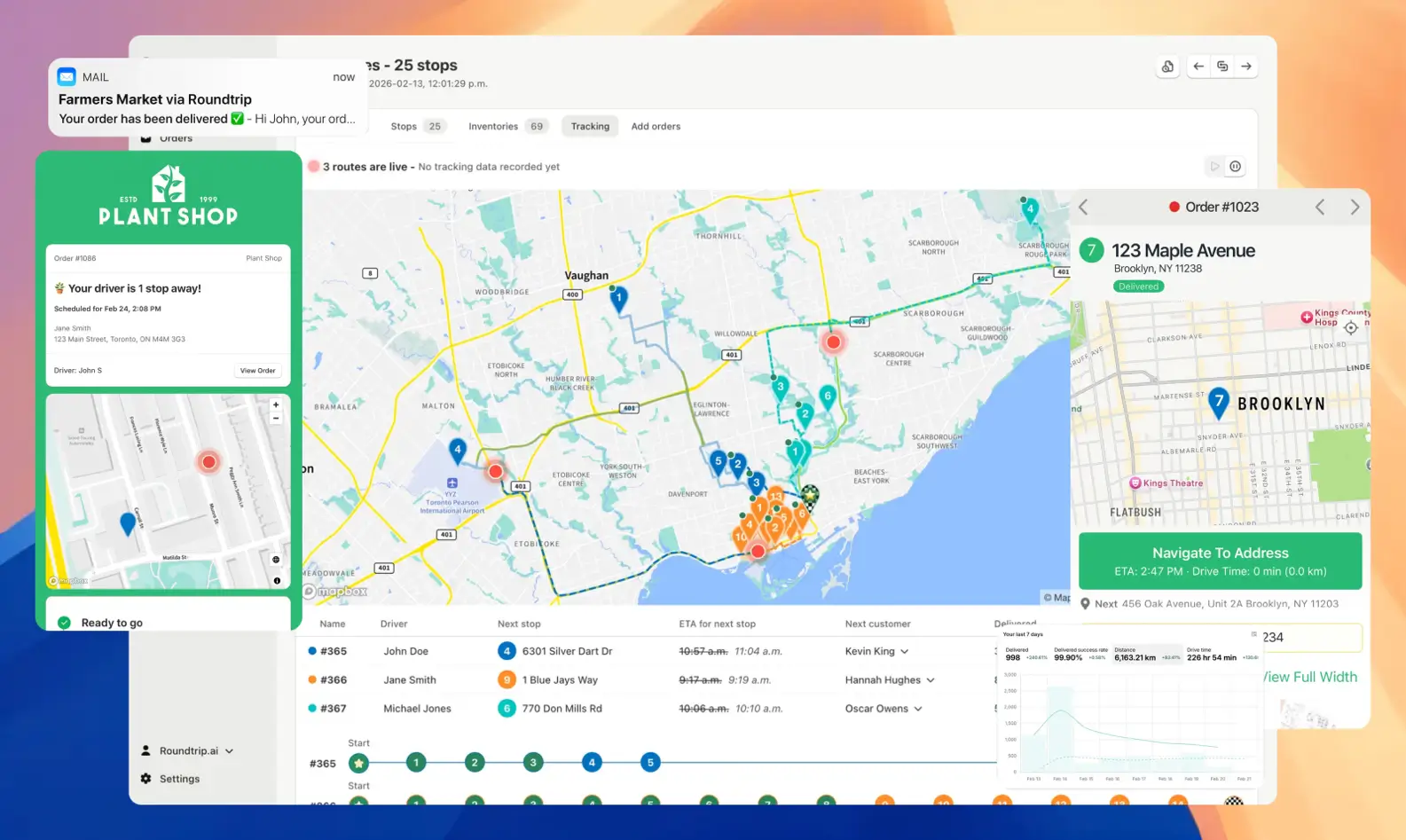
EasyRoutes makes same-day delivery manageable for teams of any size. Our software integrates tightly with your store’s back end, so when you open the app your orders are already there, ready to be routed. In a few clicks you can build optimized routes and packing lists, then share the route with drivers and send customers a live tracking link to follow along.
Because same-day operations are dynamic, EasyRoutes is built to keep up: when a new order comes in mid-shift, add it to an active route, re-optimize the remaining stops, and the driver’s app updates instantly. Drivers get turn-by-turn navigation in their preferred app, capture proof of delivery on the spot, and follow time windows pulled from checkout. Customers get accurate ETAs and stop-away alerts. EasyRoutes is a 2x Shopify Staff Pick, and you can try it free.
Try EasyRoutes free for 14 days!
Same-day delivery has shifted from a competitive edge to a customer expectation, and the businesses that meet it locally are taking share from the very giants that set the standard. You do not need a continental logistics network — you need your existing inventory, optimized routes, clear customer communication, and the discipline to deliver on the promise every time. Start with a delivery radius and cutoff time you can hit consistently, communicate proactively at every step, and lean on software to handle the routing and tracking that would otherwise eat your day. Get those right, and same-day stops being an operational headache and becomes one of the most powerful loyalty tools your business has — the reason a customer chooses you today, and comes back tomorrow.
Yes. Create routes in minutes, add last‑minute stops, and re‑optimize during the day. Dispatch instantly to drivers with live tracking and customer notifications.
See: Re‑optimize · Dispatch
Add or remove stops on existing routes, then re‑optimize to refresh ETAs and send updates to the driver app. Changes can be made anytime during the day.
Yes. You can set delivery time windows per stop or import them from supported third‑party date/time apps. EasyRoutes optimizes routes to meet these windows and calculates ETAs accordingly.
ETAs use route distance, stop service times, and historical traffic, and they update during the day as drivers progress. Accuracy improves when addresses and time windows are clean.
Yes. Enable Real‑Time Tracking in Settings → Driver settings (Premium/Enterprise subscription plans) to view live driver location and progress in the Tracking tab of any route.
See: Real‑Time Tracking
Yes. With the Premium plan and above, fully customize email/SMS: add your logo and colors, edit copy/variables, and choose which events send. Works for Shopify orders and imported/manual stops.
EasyRoutes is the AI-native delivery operations platform trusted by 5,000+ businesses across 75+ countries. Plan routes in seconds, dispatch drivers automatically, and delight your customers — from Shopify or any order source. Experience delivery operations that run themselves. Rated 4.9 stars and certified Built for Shopify.
⭐⭐⭐⭐⭐ 4.9 stars • Trusted by 5,000+ Businesses