Route Optimization for Small & Mid-Sized Fleets
By Joe SnyderHow route optimization helps small and mid-sized fleets cut fuel and labor costs, boost revenue, and improve customer satisfaction with EasyRoutes.

How route optimization helps small and mid-sized fleets cut fuel and labor costs, boost revenue, and improve customer satisfaction with EasyRoutes.
Route optimization used to be a big-company luxury. The enterprise carriers that could afford six-figure logistics platforms squeezed every wasted mile out of their networks, while smaller operators planned routes by hand and hoped for the best. That gap has closed. Affordable, powerful software like EasyRoutes now puts the same route optimization technology in the hands of small and mid-sized fleets — at a price a growing business can actually justify.
The timing matters, because the economics of delivery have shifted in favor of the operators who run the tightest routes. The last mile — that final leg from your hub to the customer’s door — now accounts for roughly 53% of total shipping costs, and the U.S. last-mile market sat near $201 billion in 2025 and is growing at about 12% a year. When the most expensive, fastest-growing part of fulfillment is also the part you control directly, getting it right is the clearest competitive edge a smaller fleet has.
This guide breaks down exactly where that edge comes from — and how small and mid-sized fleets turn route optimization into lower costs, higher revenue, and happier customers.
For a small or mid-sized fleet, every route is a line on the profit-and-loss statement. The two biggest variable costs in any delivery operation are fuel and labor, and both scale directly with how many miles your drivers cover and how long they spend on the road. Industry cost data makes the point bluntly: in the latest analysis of operating costs, driver wages were the single largest line item at about 80 cents per mile, with fuel near 48 cents per mile. Trim the miles and the hours, and you trim the two costs that hurt the most.
That is precisely what route optimization for commercial fleets is built to do. Instead of a dispatcher eyeballing a map or sequencing stops by gut feel, optimization software calculates the most efficient order for dozens or hundreds of stops in seconds — accounting for traffic, delivery windows, and vehicle capacity. The result is fewer miles driven, fewer hours paid, and more predictable days. For a lean operation without a dedicated logistics team, that automation is the difference between routing being a daily headache and routing being a non-event.

Fuel and labor dominate last-mile budgets — labor alone is roughly half of last-mile delivery expenses, and fuel adds another chunk on top. Because optimized routes cover fewer total miles, they burn less fuel by definition, which is one of the most direct ways to cut fuel costs without changing anything else about your operation. Shorter, smarter routes also mean a driver can finish a full day’s stops inside a standard shift instead of slipping into overtime.
The savings compound. A route that is 15% shorter is 15% less fuel, less wear on the vehicle, and less paid time behind the wheel — every single day, across every vehicle in the fleet. For a small fleet, software that delivers route optimization that pays for itself frees up cash for the things that actually grow the business: new equipment, marketing, or simply a healthier bottom line.

Cutting costs is only half the story. The same efficiency that lowers your expenses also raises your ceiling. When each route covers fewer miles and less idle time, every driver can fit more deliveries, pickups, or service calls into the same workday. Those extra stops are extra revenue you are capturing with vehicles and drivers you already pay for.
Multiply a handful of additional stops per driver per day across a week, a month, and a year, and the difference adds up to a meaningful revenue line — often without hiring a single new driver or buying another van. That kind of leverage is exactly how smaller operators grow revenue profitably: not by working harder, but by squeezing more productive capacity out of the fleet they already run. Stronger revenue and tighter margins also give a small business the staying power to weather slow seasons and outlast competitors who never fixed their routing.
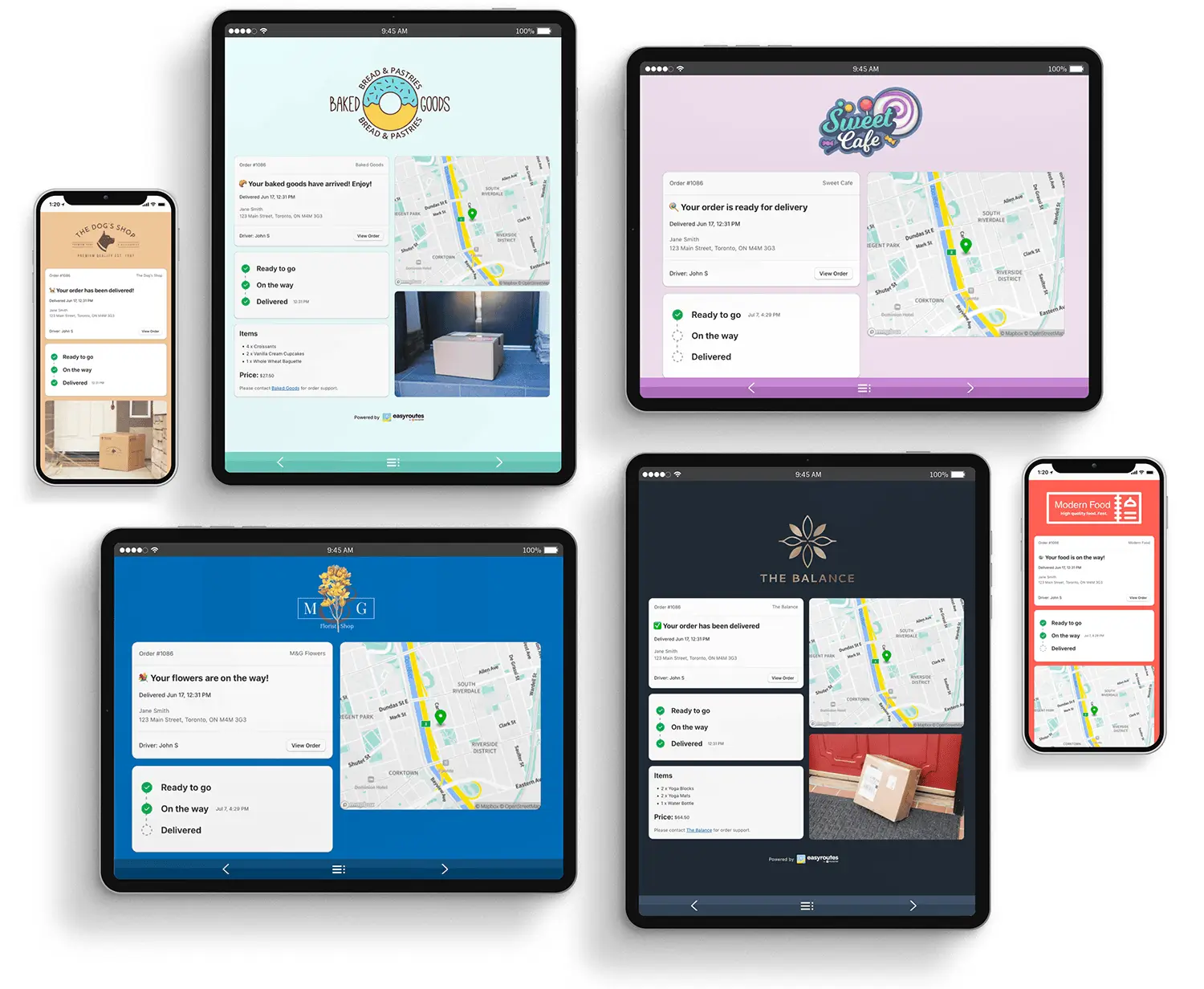
Modern customers judge a delivery the way they judge the product itself. They expect to know when their order will arrive and to watch it happen in real time. In fact, about 69% of consumers say real-time order tracking is a top factor when they shop online. A small fleet that can share accurate arrival windows, send automated updates, and offer a live tracking page suddenly looks every bit as professional as a national carrier.
That polish is not just about image — it protects your margins, too. Every anxious “where is my order?” inquiry that lands in your inbox costs roughly $5 to resolve, and those calls pile up fast when customers are left guessing. Proactive notifications and self-service tracking head off most of them before they start. Reliable, transparent delivery is also the foundation of on-time delivery reputations that drive repeat business — accurate ETAs lead to satisfied customers, satisfied customers come back, and repeat customers are the cheapest revenue any business will ever earn.
The instinct is to assume you cannot out-deliver the giants. You can — just not by copying them. The national players win on raw scale and infrastructure; a focused local or regional fleet wins on speed, flexibility, and a personal touch the big networks cannot match. Owning your own optimized last mile is exactly how smaller operators compete with Amazon Prime and the other heavyweights without their budgets. You control the route, the timing, the communication, and the doorstep experience — and those are the things customers actually notice.
Route optimization is the equalizer. It lets a two-van operation plan and dispatch with the same discipline as a fleet a hundred times its size, so the advantages of being small (agility, local knowledge, customer relationships) are no longer offset by the disadvantages of planning by hand.

Plenty of small fleets still build routes in spreadsheets or in their heads. That works until it doesn’t — until the stop count climbs, a driver quits, or a busy season exposes how fragile manual planning really is. Knowing when you have outgrown the whiteboard is its own skill; our guide on switching from manual route planning walks through the warning signs and the real cost of waiting too long.
When you are ready to make the move, the goal is to choose a tool that fits how you actually work rather than the most feature-stuffed platform on the market. Whether you compare a dedicated route planner against broader fleet management software, the fundamentals of choosing the right route planner come down to a few questions: Does it connect to where your orders already live? Can it optimize complex multi-stop, multi-driver routes? And is it simple enough that your team will actually use it every day?
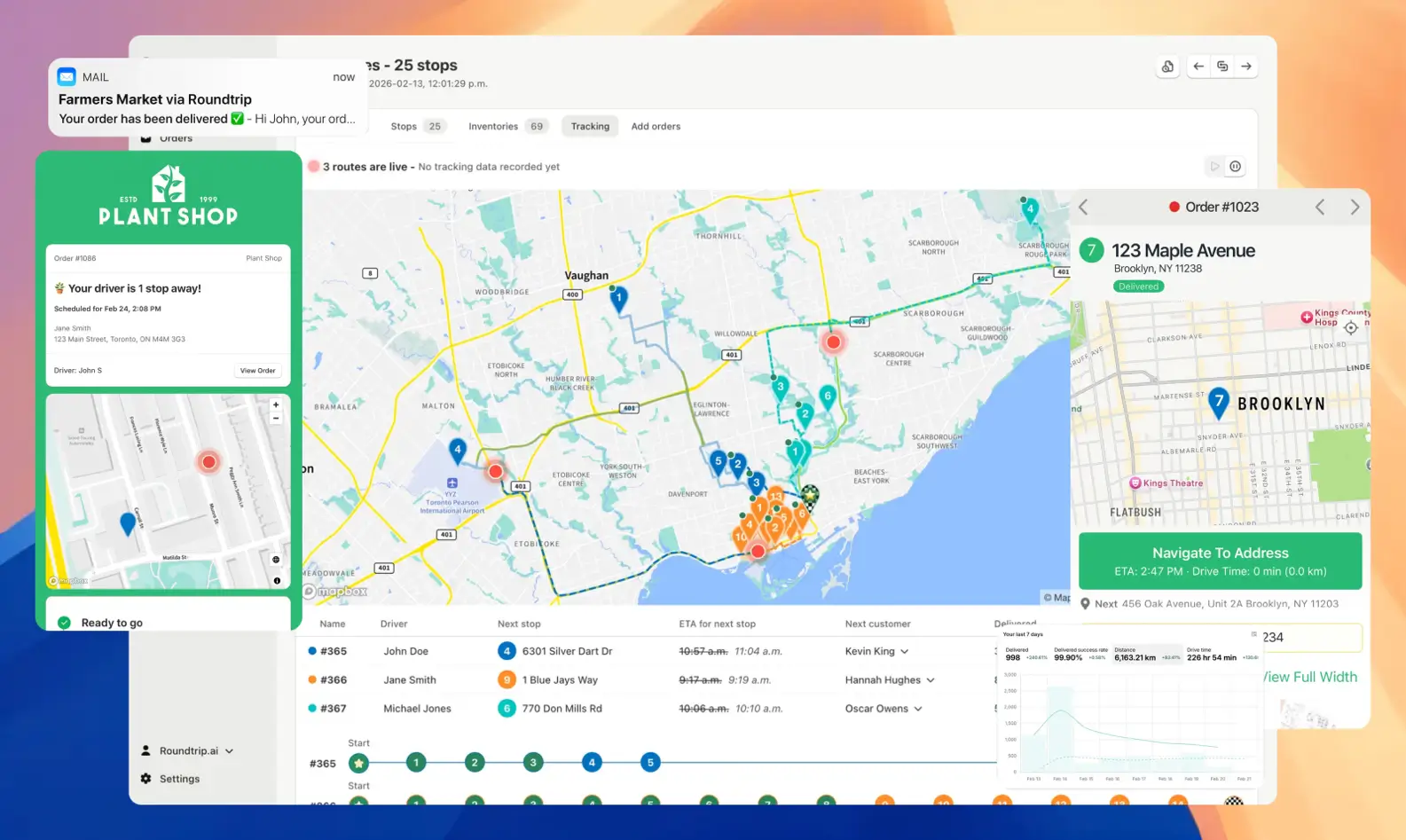
EasyRoutes was built to give every business — not just the enterprise ones — the tools to deliver beautifully. It is an all-in-one delivery platform trusted by more than 5,000 businesses across 75+ countries, and it is a certified Built for Shopify app and a two-time Shopify Staff Pick. For a small or mid-sized fleet, the appeal is that it bundles everything routing-related into one easy-to-use package:
Pricing is designed to grow with you rather than punish you for getting started. EasyRoutes offers a free plan that optimizes up to 10 stops per route and 50 Shopify orders per month, alongside paid Standard, Premium, and Enterprise tiers billed per active driver seat — so you only pay for the capacity you actually use, and you can add seats for a busy weekend and remove them afterward. You can review the current tiers on the EasyRoutes pricing page and try any plan free for 14 days.
For an owner or manager of a small or mid-sized fleet, route optimization is one of the most straightforward, cost-effective levers available. It lowers the two costs that matter most, lifts revenue by unlocking capacity you already own, and delivers the kind of transparent, on-time experience that turns first-time buyers into loyal customers. Those three advantages — lower costs, higher revenue, and happier customers — are exactly the edge a growing fleet needs to thrive in healthy and difficult markets alike.
Want to put the EasyRoutes Edge to work for your fleet? Start your 14-day free trial today!
EasyRoutes is a delivery management and route optimization platform for merchants, local delivery teams, and logistics operators. It helps you plan routes, dispatch to drivers, track progress in real time, and notify customers. Works with Shopify and integrates with other e-commerce platforms via EasyRoutes for Web.
EasyRoutes optimizes deliveries using your selected orders, start & end locations, stop time intervals, time windows, and route limits. You can balance routes, respect capacities, and re‑optimize as plans change.
See: Route Options · EasyRoutes 101
Yes. EasyRoutes supports Vehicle Profiles you can configure and assign to routes. EasyRoutes also supports capacity planning via item or weight limits per route. Use these with other options (like time windows, or custom start/end locations) to keep plans realistic and drivers on schedule.
See: Vehicle Profiles · Max items/weight per route · Commercial/GPX Export
Yes. You can set delivery time windows per stop or import them from supported third‑party date/time apps. EasyRoutes optimizes routes to meet these windows and calculates ETAs accordingly.
Yes. Schedule routes for specific dates/times, and ETAs will be calculated for each stop on a route. These ETAs can be shared via customer tracking links and email/SMS delivery notifications.
Yes. Enable Real‑Time Tracking in Settings → Driver settings (Premium/Enterprise subscription plans) to view live driver location and progress in the Tracking tab of any route.
See: Real‑Time Tracking
Yes. EasyRoutes Premium and Enterprise plans support branded SMS notifications with usage‑based pricing per message segment. Configure templates and funding in Settings.
Absolutely. Drivers can add photos, collect an e‑signature, and record notes at each stop; these appear in the route and customer tracking (if enabled).
See: Proof of Delivery
Yes. Schedule routes across multiple days with configured start times/locations and add an overnight driver break to maintain accurate ETAs.
See: Multi‑Day Scheduling
Yes. EasyRoutes for Shopify and EasyRoutes for Web include a 14‑day free trial on any tier, so you can test our advanced features before subscribing.
See: Plans & Pricing
EasyRoutes is the AI-native delivery operations platform trusted by 5,000+ businesses across 75+ countries. Plan routes in seconds, dispatch drivers automatically, and delight your customers — from Shopify or any order source. Experience delivery operations that run themselves. Rated 4.9 stars and certified Built for Shopify.
⭐⭐⭐⭐⭐ 4.9 stars • Trusted by 5,000+ Businesses