Scheduled delivery has moved from a nice-to-have to a baseline expectation. Instead of dropping packages at unpredictable times, scheduled delivery lets customers know — and often choose — when their order will arrive. That predictability is now one of the strongest levers a delivery business has: it reduces missed deliveries, lowers operating costs, and builds the kind of trust that turns first-time buyers into repeat customers. This guide explains what scheduled delivery is, why it matters, and exactly how to schedule, optimize, and track deliveries so your operation runs leaner and your customers stay loyal in 2026.
What Is a Scheduled Delivery?
A scheduled delivery is an order assigned to a specific date and, usually, a defined time window during which it is promised to arrive. Rather than a vague multi-day range, the customer gets a reliable timeframe they can plan around. For businesses, scheduled delivery means combining order data, driver availability, and route planning into a time-based plan so that what needs to get done gets done — on time and when promised.
The demand for this clarity is striking. In Stord’s 2025 Mystery Shopping Report, 58% of shoppers said they want to see an exact delivery date before committing to a purchase, yet only 1% of e-commerce brands actually provide one. That gap is an opportunity: businesses that schedule deliveries precisely and communicate them clearly stand out in a field where most competitors still hide behind ranges like 3–5 business days.
Why Scheduled Deliveries Matter for Your Business
Scheduling deliveries delivers value on three fronts: cost, competitiveness, and customer satisfaction.
It controls your single biggest delivery expense. The last mile is the most expensive leg of the journey — research summarized by MIT Sloan Management Review puts it at up to 53% of total supply chain costs, driven largely by failed deliveries, fuel, and labor. Scheduling lets you consolidate stops by area and time, cut redundant trips, and avoid the costly rework of a missed drop. It pays to cut fuel costs wherever the schedule allows.
It reduces failed deliveries. When customers know a delivery is coming, they are far more likely to be available to receive it. That matters because failures are expensive: roughly 5% of last-mile deliveries fail, at an average cost of $17.78 each — a number that compounds quickly across thousands of orders.
It wins and keeps customers. Reliability now outranks raw speed. 62% of consumers say an accurate estimated delivery date matters more to them than fast shipping. Meeting that expectation consistently is a cornerstone of a great delivery experience and a proven driver of customer retention.
Understanding Delivery Time Windows
A delivery time window is the agreed period during which an order is expected to arrive — anything from a tight one-hour slot to a half-day range. The narrower and more accurate the window, the more a customer can trust it, but the harder it is to hit. Defining windows you can actually meet requires precise route optimization and realistic per-stop service times.
Time windows are challenging to manage because the real world intrudes: traffic, weather, and last-minute order changes can all derail a plan. The two most effective defenses are accurate demand forecasting — using historical patterns to predict busy periods and staff accordingly — and dynamic routing that adjusts sequences in real time as conditions change. Offer customers a range of slots across different times and days, then use technology to keep your promises.
How to Schedule Deliveries Step by Step
Accurate scheduling is less about assigning times and more about making every part of the process work together. A practical approach looks like this:
1. Lead with your data. Analyze historical delivery data to find peak periods, your most common routes, and the stops that routinely run long. These patterns let you allocate more drivers during rushes, lighten up in slow periods, and forecast demand instead of reacting to it.
2. Optimize the route, then the schedule. Effective multi-stop route planning is the backbone of an accurate schedule. Mapping the most efficient path for each driver — accounting for traffic, distance, and time windows — means more deliveries completed in less time, lower fuel use, and reliable arrival estimates.
3. Balance workloads across drivers. Overloading some drivers while underusing others creates inefficiency and burnout. A balanced schedule keeps routes manageable, protects service quality, and reduces turnover.
4. Communicate clearly. Confirm the slot at booking, send a reminder on the day, and keep the customer informed if anything changes. Clear communication is what prevents confusion and the missed deliveries that follow.
5. Track and adjust in real time. Plans break. With live tracking you can monitor progress, reroute around a jam, and reassign stops on the fly so the day still ends on time.
Key Features to Look for in Scheduling Software

The right delivery management software turns these steps into a repeatable system. Five capabilities matter most:
- Real-time route optimization that re-sequences automatically when a roadblock or new order appears, so drivers always follow the most efficient path.
- Automated scheduling and dispatching that sets delivery slots from order volumes and assigns each stop to the nearest available driver, removing manual guesswork.
- Order tracking and customer notifications that keep buyers informed at every stage. Around 91% of consumers actively track their packages, so live updates are now table stakes, not a bonus.
- Driver management and performance tracking for visibility into on-time rates, distance, and fuel use, so you can coach drivers and reward top performers.
- Integration with your existing stack — your e-commerce platform, inventory, and CRM — so orders flow into routes without re-keying.
Optimizing Driver Schedules for Profit
Driver scheduling is where efficiency turns into margin. Every unnecessary mile carries a real cost: according to the American Transportation Research Institute, operating a truck averaged about $2.26 per mile in 2024, with fuel alone near $0.48 per mile. Trimming wasted miles from each route compounds into serious savings across a fleet.
Beyond routing, profitable scheduling depends on the human side. Distribute work evenly so no driver is consistently handed the worst routes, and build in real-time adjustments so you can cover for delays without blowing up the day. Just as important, give drivers a voice — they see road conditions and customer quirks no algorithm captures, and acting on their feedback improves both routes and retention.
Scheduling Deliveries with EasyRoutes
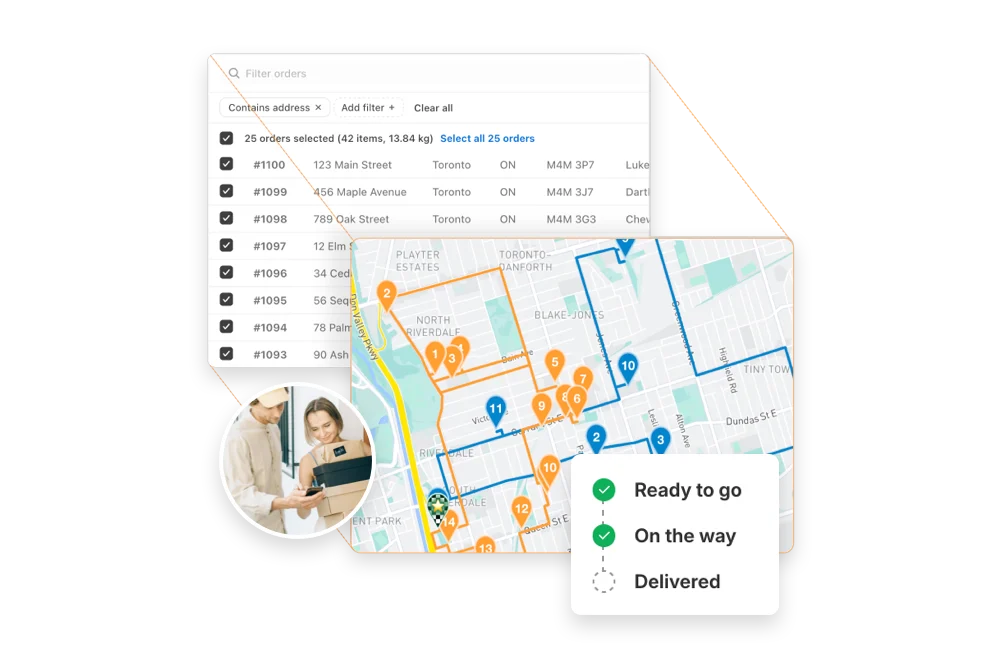
EasyRoutes brings every piece of this together for Shopify and beyond. You can attach delivery time windows directly to stops, set a scheduled start date and time, and let the app calculate accurate ETAs for every customer based on the route, service times, and windows. When same-day requests arrive, add them to an active route and re-optimize the remaining sequence in a few clicks.
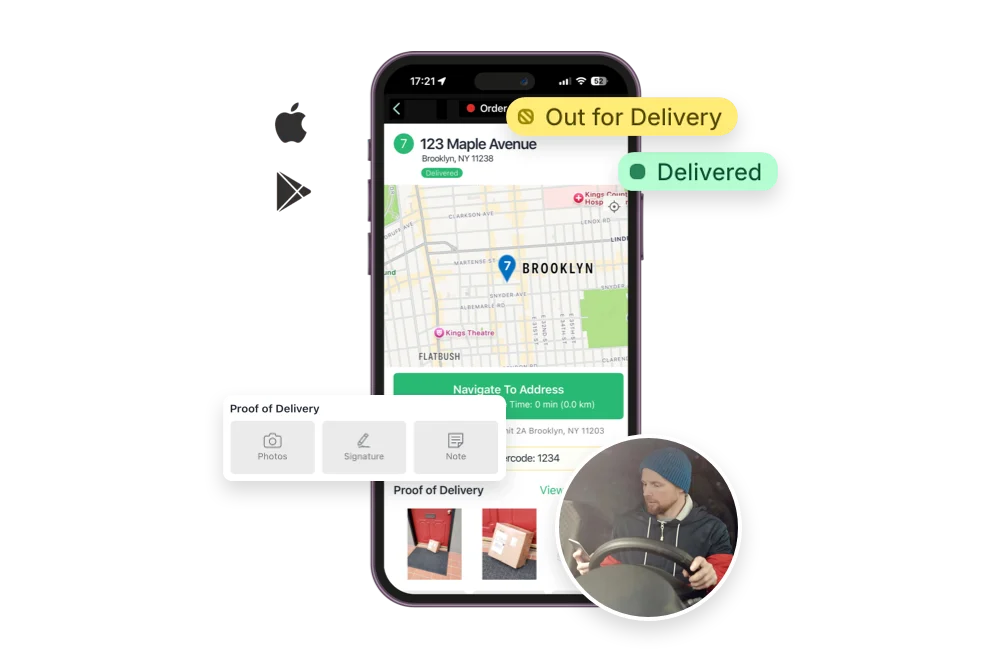
On the customer side, EasyRoutes pairs scheduling with real-time tracking and notifications, sending automated SMS or email updates when an order is out for delivery, a set number of stops away, or delivered — and a rescheduled notice if plans change. The result is fewer where-is-my-order inquiries, fewer failed deliveries, and a delivery experience that keeps customers coming back.
Final Thoughts
Scheduled delivery is more than a logistics convenience; it is a competitive strategy. By defining honest time windows, scheduling around real data, optimizing routes, and keeping customers informed, you cut costs and earn loyalty at the same time. The businesses that win in 2026 are the ones that can promise a delivery time and keep that promise, run after run. Ready to schedule smarter? See how EasyRoutes can streamline your delivery scheduling from the first order to the final mile.