Cake & Cupcake Delivery: Route Planning Guide
By Joe SnyderHow route planning and scheduling help cake and cupcake delivery businesses meet demand, cut fuel costs, and deliver fresh treats on time.

How route planning and scheduling help cake and cupcake delivery businesses meet demand, cut fuel costs, and deliver fresh treats on time.
Few products carry as much emotional weight as a cake or a box of cupcakes. They show up for birthdays, weddings, anniversaries, and the kind of ordinary Tuesday that just needs frosting. That emotional pull is also a business opportunity: the global cakes market was valued at roughly USD 102.36 billion in 2026 and is forecast to reach USD 125.38 billion by 2031, with online retail growing faster than the market overall as cold-chain e-commerce expands and cupcakes carve out their own fast-growing niche.
If you run a cake or cupcake delivery service, capturing that demand without burning out your team comes down to one thing more than any other: how well you schedule and route your drivers. Get that right and you can absorb holiday spikes, keep treats fresh, and delight customers on a thin margin. Get it wrong and you are paying for idle vans, fielding angry calls about melted buttercream, and watching good drivers quit.
This guide pulls together the challenges unique to baked-goods delivery, the role technology plays in solving them, and how a purpose-built route planner like EasyRoutes turns a chaotic delivery day into a predictable one.
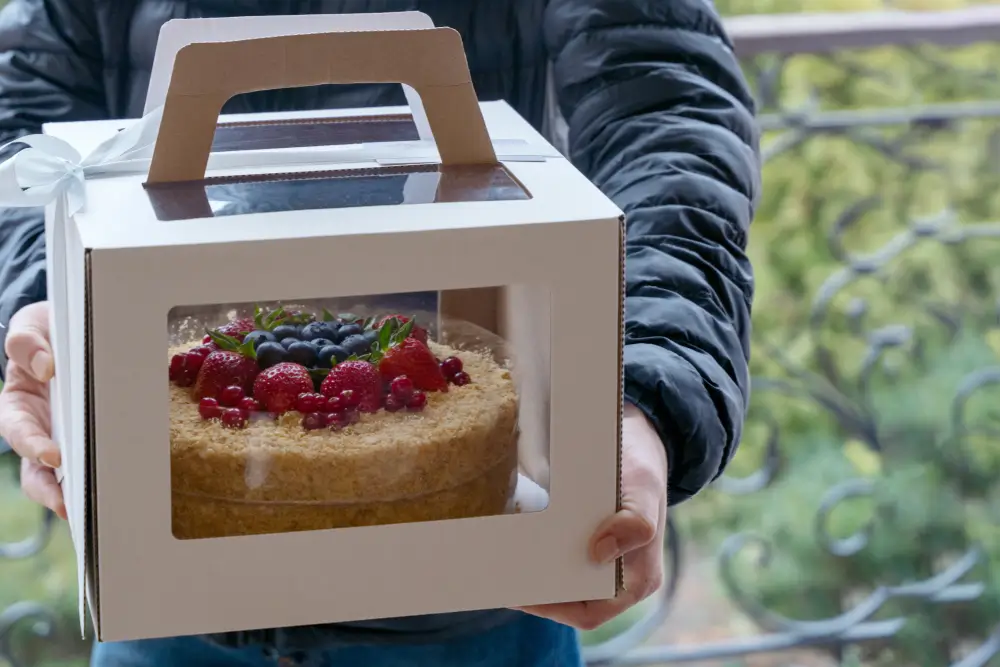
Consumers increasingly expect to order indulgences the same way they order everything else: online, with a fast, trackable delivery. That expectation is now backed by real money. More than half of online shoppers say they will pay at least USD 5 for same-day delivery, and the U.S. same-day delivery market is projected to grow from about USD 9.86 billion in 2025 to USD 13.0 billion by 2030.
For a local bakery, that is a gift. You are already close to your customers, which means you can offer the kind of speed national chains struggle to match. The catch is that fast, reliable delivery is an operations problem, not a baking problem — and it is the part most bakeries are least prepared for. If you are weighing whether to add a quick-turn option, our guide to running a same-day delivery service breaks down how to do it without an Amazon-sized budget.
Before we look at how to schedule drivers efficiently, it helps to name the complexities that make baked-goods delivery harder than dropping off a box that does not care if it gets tilted.

Customers order cakes and cupcakes year-round for birthdays and anniversaries, but major occasions — Valentine's Day, Mother's Day, the holidays, graduation season — send demand through the roof. Bakeries are also unusually prone to weekly swings, with more people indulging their sweet tooth on Saturdays and Sundays than midweek. Figuring out how many drivers to put on the road, and where to send them, for such a moving target is genuinely difficult. Our playbook on how to manage local deliveries in peak times covers the forecasting and batching tactics that keep a holiday rush from becoming a meltdown.
The instinct to simply keep more drivers on the road only pays off if every driver is actually busy. As the owner, you have to decide which driver handles which stops, accounting for travel time between deliveries, how many orders fit in a single trip, each driver's position relative to the next drop, and adequate rest breaks. Planning all of that by hand is slow and error-prone. Automating it is the only way to run a lean, productive fleet as you scale.
No matter how carefully you forecast, outliers happen. Traffic, weather, a sudden corporate order for 300 cupcakes — external factors reshape your day constantly. The fix is to build flexible systems into your operation so you can re-plan on the fly instead of scrambling. Drivers need current, cutting-edge tools that let them adjust routes in real time, avoiding the late or failed deliveries that quietly erode the customer experience.
Delivery is a people business. You need to follow local labor laws, give drivers proper breaks, and pay them transparently for their hours or stops. When bakeries fail to keep delivery staff happy, skilled people leave — and turnover is expensive. The simplest way to make a driver's life easier is to hand them the right tools: clear routes, less backtracking, and fewer frustrations. Choosing technology that reduces effort and increases completed deliveries is how you build a delivery team that sticks around.
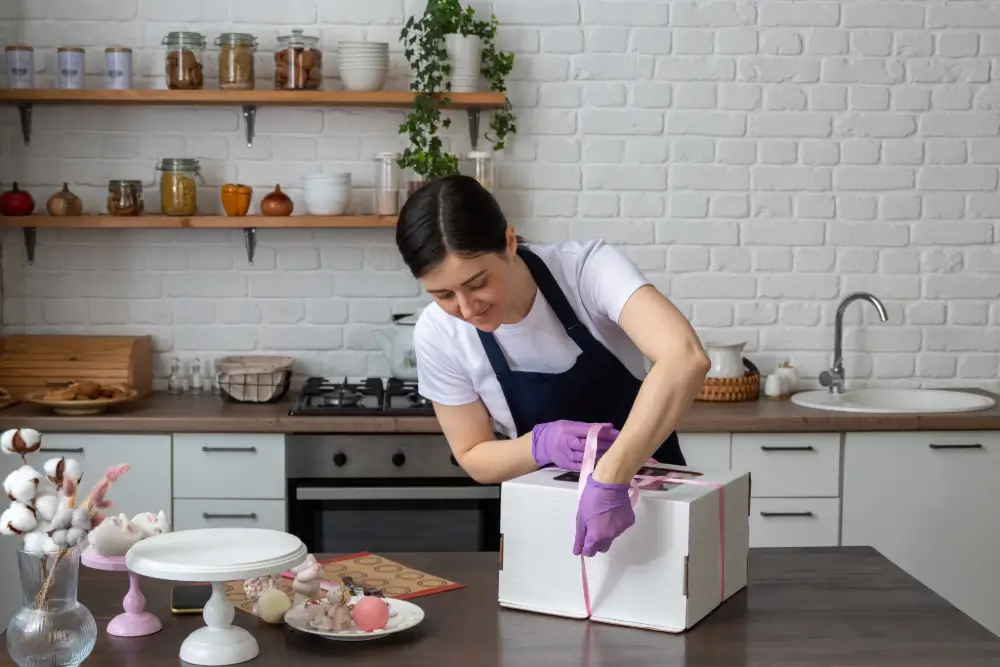
Technology is what lets your team work efficiently enough to deliver excellent results for customers without working around the clock. The right tools help drivers route around the roadblocks that external factors throw up, which protects the customer experience and frees you to recruit and retain the best people in a competitive labor market.
At the center of it all is a route optimization engine. Route optimization is the difference between a delivery day you react to and one you control — it takes a pile of orders and turns them into the most efficient sequence of stops, automatically. That single capability is what makes automated driver scheduling possible, and it is the foundation everything else builds on. With a powerful delivery route planner, you can plan ahead, streamline the workflow for your drivers, and lift service levels across the board.
The benefits, though, go well beyond arranging schedules. Let's look at what a dedicated route planner actually does for a cake and cupcake operation.
Changing consumer behavior means customers now expect timely, accurate deliveries with full visibility. Leading route planners use geocoding to get drivers to the exact right address and analyze conditions like traffic and ETAs to build tailored routes. Just as importantly, automated real-time tracking and notifications let customers follow their order by email or SMS — which cuts down on the where-is-my-order calls that eat your day and reassures someone anxiously awaiting a birthday cake.
Optimized routes get drivers to their destinations faster and with less fuel by avoiding jams and unnecessary mileage. For a category where margins are tight and vans run constantly, that adds up quickly — lower fuel spend, more deliveries per shift, and lower overall operating costs as you grow. If fuel is a sore spot, our guide on how to cut gas costs in your delivery business goes deeper on the levers that matter most.
A good planner lets you build dense, efficient multi-stop routes and reassign or re-optimize them when orders change. That means you can take on the big corporate cupcake order or the last-minute wedding cake without throwing the rest of the day into disarray. You get a bird's-eye view of the whole operation, so you can spot bottlenecks and make real-time decisions with clear visibility into every route.
A cake that arrives late, lopsided, or melted is a refund and a bad review. Shorter, smarter routes mean less time on the road and less chance of damage in transit — which is exactly why so many perishable-goods businesses treat routing as part of their quality control. The same discipline that powers cold chain logistics for other fresh products applies to baked goods: minimize transit time, sequence delicate orders thoughtfully, and the product shows up looking the way it left your kitchen.
A capable route planner automates the busywork and reduces manual intervention, so you can scale without scaling the headaches. When something changes, you can update the schedule and notify drivers in a few clicks instead of a flurry of phone calls. Reducing manual work frees your team to focus on the core business — and confirmed deliveries with proof of delivery photos give you a reliable record that the right cake reached the right doorstep, in perfect condition.
Schedule smarter and use your data
Beyond a single day's routes, a planner helps you schedule deliveries across time windows and even multiple days, then feeds you the workforce and performance data to forecast demand and improve. Over time, you stop guessing about your customers' ordering habits and start planning around them.

Most cake and cupcake makers do not stop at cake and cupcakes. Bread, pastries, cookies, and seasonal specialties all share the same delivery challenges, which is why it helps to think about your whole bakery delivery operation as one system. Route scheduling keeps fresh bread and pastries arriving at peak freshness, smart delivery zones let you define a sensible service area, and adaptable driver-seat functionality lets you spin up extra drivers for a busy Saturday or a holiday rush, then scale back when demand cools.
There is also a growing payoff in delivering sustainably. Eco-conscious consumers increasingly favor businesses with greener practices, and optimized routing is one of the most direct ways to shrink your delivery footprint — fewer miles driven means less fuel and lower emissions. Many bakeries take it further, using bicycles, scooters, or electric vehicles for short local hops. If sustainability is part of your brand, our overview of green transportation shows how efficient delivery and environmental goals reinforce each other.
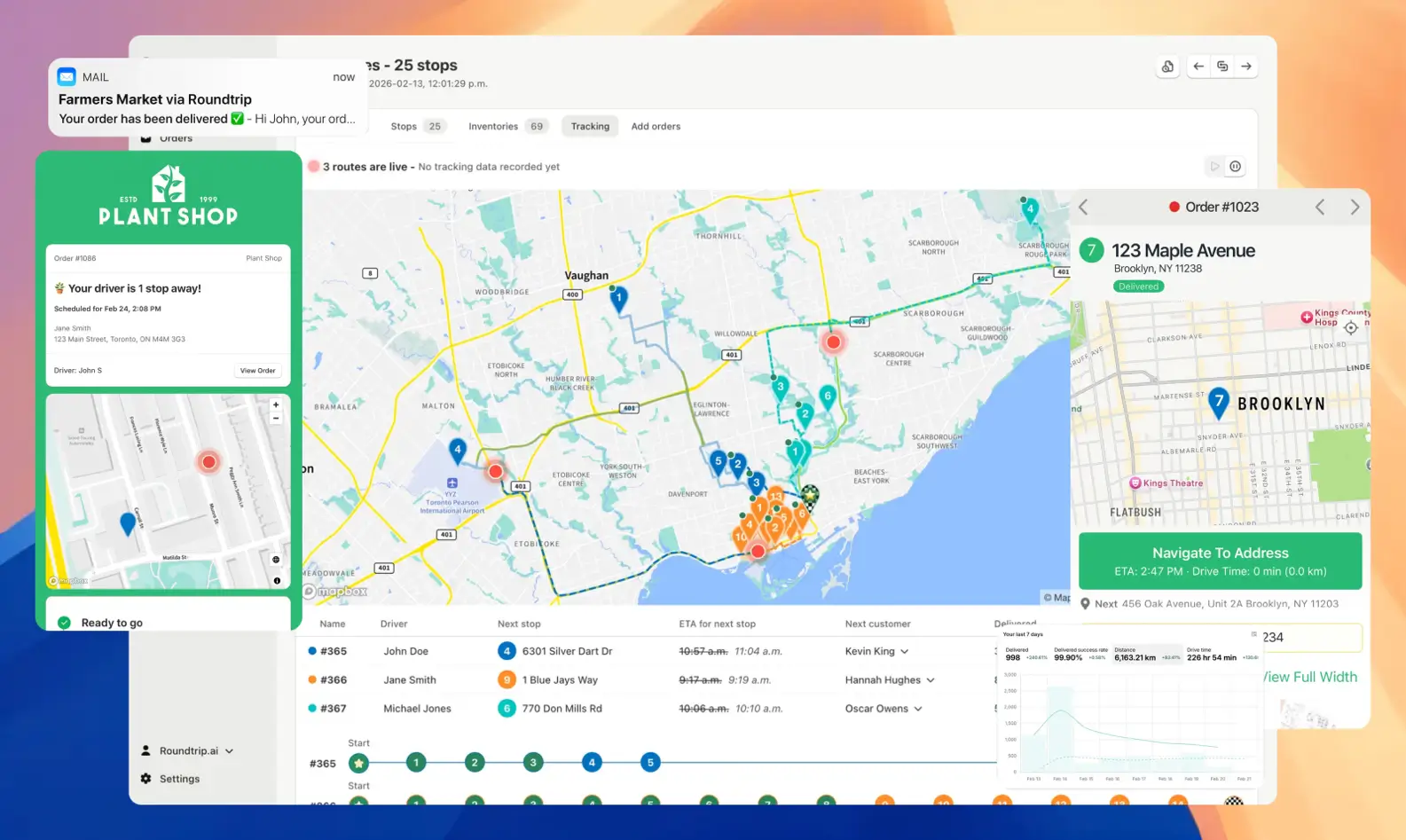
EasyRoutes is a powerful route planning platform that optimizes multi-stop delivery paths and points your drivers down the shortest practical route, saving time, energy, and fuel. With a few clicks you can adjust schedules, routes, and driver assignments, balance stops evenly across vehicles, and re-optimize when the day changes.
Its intuitive driver app — on iOS and Android — gives drivers turn-by-turn navigation, customer notes, and the ability to capture delivery-proof photos so you know each cake arrived on time and intact. Customers, meanwhile, get branded tracking pages and automated notifications that keep them in the loop. The result is a smoother last-mile experience for a product where the last mile really matters.
You can save hours of planning time every week, and because EasyRoutes is the top-rated local delivery app on the Shopify App Store, it slots directly into the store you already run. Try EasyRoutes free to see how it fits your bakery.
Cake and cupcake delivery is a wonderful business to be in — demand is steady, margins improve with scale, and customers genuinely love what you make. The businesses that thrive are the ones that treat delivery as seriously as they treat the recipe. Smart route planning and scheduling let you meet demand spikes, control costs, keep treats fresh, and give drivers a better day at work. Handle the logistics well, and the frosting takes care of itself.
Yes. Schedule routes across multiple days with configured start times/locations and add an overnight driver break to maintain accurate ETAs.
See: Multi‑Day Scheduling
Yes. Enable Balance routes to distribute stops as evenly as possible across multiple routes/drivers while respecting other route constraints (like time windows, or item/weight limits).
See: Balance routes · How many routes?
Yes. EasyRoutes supports Vehicle Profiles you can configure and assign to routes. EasyRoutes also supports capacity planning via item or weight limits per route. Use these with other options (like time windows, or custom start/end locations) to keep plans realistic and drivers on schedule.
See: Vehicle Profiles · Max items/weight per route · Commercial/GPX Export
Yes. EasyRoutes lets you set limits for maximum route duration, maximum stops per route, and maximum items per route. Configure these constraints in Route Options before planning, or when editing a route.
See: Route Options
Absolutely. Drivers can add photos, collect an e‑signature, and record notes at each stop; these appear in the route and customer tracking (if enabled).
See: Proof of Delivery
Absolutely. Add tracking links to SMS notifications (available on Premium/Enterprise subscription plans) so customers can follow their delivery. Usage‑based fees apply.
See: SMS Notifications · SMS Pricing
Yes. Draw custom delivery zones on the map to select orders in a specific geographical area, and reuse the same workflow whenever you plan routes for the same local area.
See: Delivery Zones
Yes. Add scheduled driver breaks to new or existing route, and EasyRoutes will insert a break stop while updating downstream ETAs and total route time.
See: Driver Breaks
EasyRoutes is the AI-native delivery operations platform trusted by 5,000+ businesses across 75+ countries. Plan routes in seconds, dispatch drivers automatically, and delight your customers — from Shopify or any order source. Experience delivery operations that run themselves. Rated 4.9 stars and certified Built for Shopify.
⭐⭐⭐⭐⭐ 4.9 stars • Trusted by 5,000+ Businesses