Should you take the shortest route or the fastest route for deliveries? This guide explains the difference, when to use each, how to avoid traffic, and why route optimization software makes the choice for you.
When you're planning a delivery route, one question comes up more often than almost any other: should you take the shortest route or the fastest route? They sound like they should be the same thing, but they're usually not — and choosing the wrong one can cost your business real money in wasted fuel, missed delivery windows, and frustrated customers.
This guide breaks down exactly how shortest and fastest routes differ, when to use each one, how to avoid traffic during route planning, and why modern AI-powered route optimization makes the entire question easier to answer than ever before.
Table of Contents
Shortest Route vs. Fastest Route: What's the Difference?
When to Choose the Shortest Route
When to Choose the Fastest Route
Key Factors That Should Guide Your Decision
How to Avoid Traffic During Route Planning
Why Google Maps Isn't Enough for Multi-Stop Routes
How Route Optimization Software Solves the Problem
Conclusion
Shortest Route vs. Fastest Route: What's the Difference?
The distinction is straightforward but frequently misunderstood:
The shortest route is the path that covers the fewest miles (or kilometers) between your stops. It minimizes distance.
The fastest route is the path that gets you there in the least amount of time, measured in minutes. It minimizes travel time.
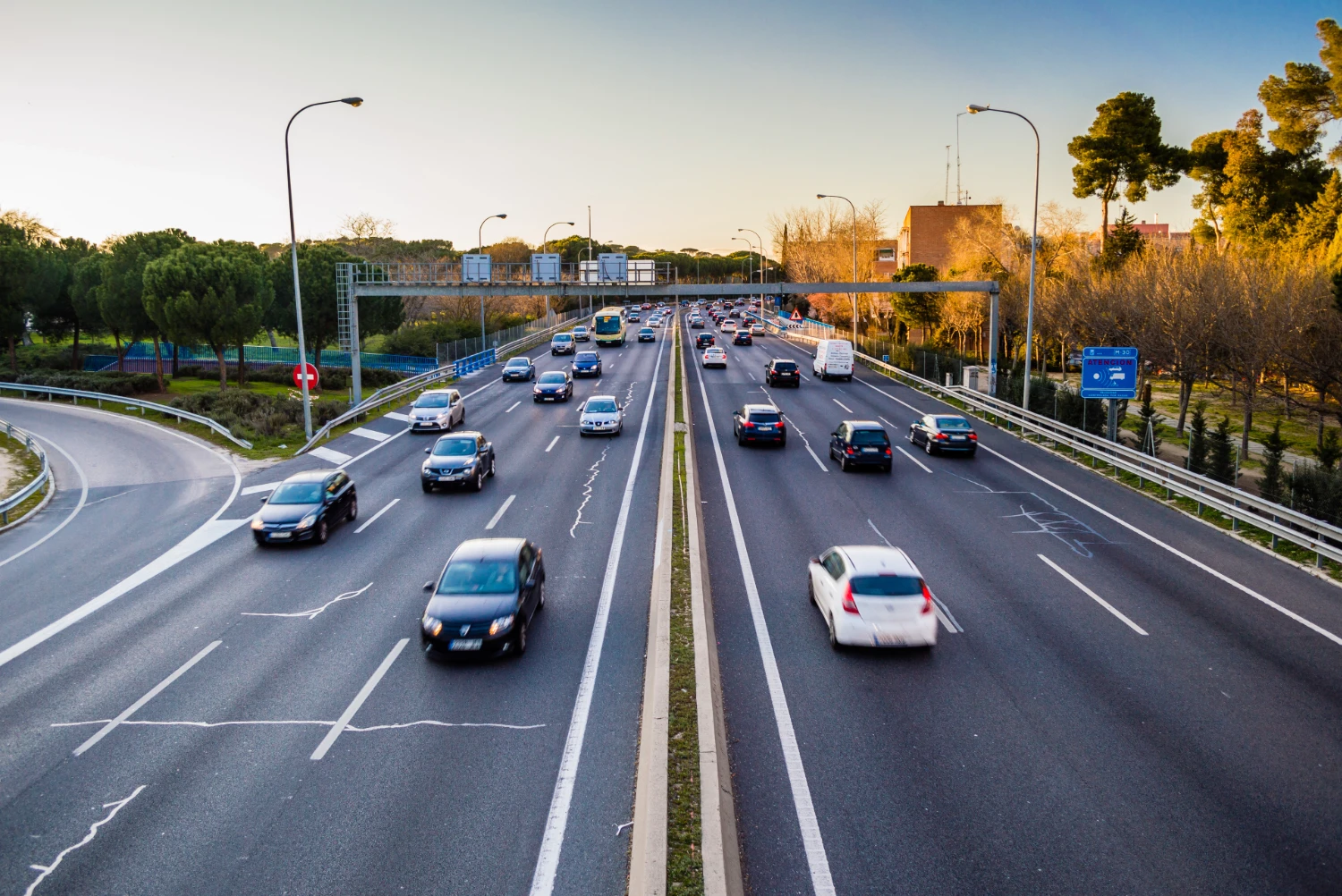
These are often two entirely different routes. The shortest path might take you through city streets packed with traffic lights, stop signs, school zones, and congestion. The fastest path might add several miles to your trip but route you onto highways and expressways where you maintain higher average speeds with fewer interruptions.
A simple example: driving 5 miles through downtown during rush hour might take 35 minutes. Driving 12 miles via the highway bypass might take 18 minutes. The shortest route costs you 17 extra minutes on the clock — and for a delivery business making dozens of stops per day, those minutes compound into hours of lost productivity.
When to Choose the Shortest Route
The shortest route makes sense when minimizing distance is more important than minimizing time. Common scenarios include:
Fuel cost is your primary concern. If you're operating on thin margins and fuel is a major expense, fewer miles driven means less fuel burned. For businesses covering large rural areas — like firewood delivery or agricultural supply runs — this can be the dominant consideration.
Traffic isn't a significant factor. In rural areas, small towns, or during off-peak hours, the shortest route and the fastest route often converge. When roads are empty, distance becomes the primary determinant of travel time anyway.
Vehicle wear and mileage matter. If you're leasing vehicles with mileage caps, or managing an older fleet where every mile accelerates maintenance needs, keeping total distance down has direct financial value beyond fuel savings.
You have flexible delivery windows. If your customers don't have tight time constraints, taking the shortest (potentially slower) route is a reasonable tradeoff — you save on fuel and wear without impacting customer satisfaction.
When to Choose the Fastest Route
The fastest route is the better choice when time is the constraint that matters most:
You have tight delivery windows. If customers are expecting deliveries within specific time slots, arriving late damages trust and satisfaction. The fastest route maximizes your ability to hit every window. For time-sensitive deliveries like meal kits, fresh produce, or medical supplies, this is usually non-negotiable.
You need to maximize stops per shift. If your delivery volume is high relative to your available drivers and vehicles, the fastest routes let each driver complete more deliveries per shift. Even small time savings per stop accumulate across a full day — an extra 3–5 deliveries per driver per day can dramatically impact your capacity without adding headcount.
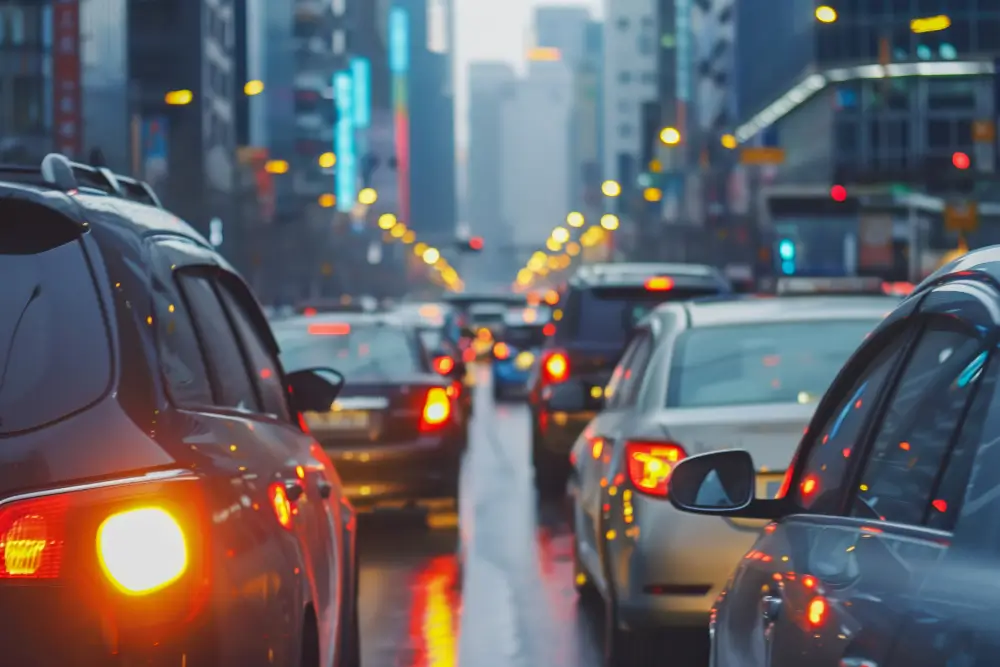
You're delivering in urban environments during peak hours. In cities with heavy traffic, the difference between shortest and fastest can be enormous. A route optimized for speed will route around congestion, use highways where available, and avoid known bottleneck areas — sometimes adding miles but saving significant time.
Customer satisfaction is your competitive edge. In an era where consumers expect fast, reliable delivery, speed is a differentiator. Businesses that consistently deliver faster earn better reviews, more repeat customers, and stronger word-of-mouth referrals.
Key Factors That Should Guide Your Decision
In practice, the shortest-vs-fastest choice isn't binary. It depends on a combination of factors that vary by route, by day, and sometimes by individual stop. Here's what to weigh:
Time of day: A route that's fastest at 6 AM might be slowest at 8:30 AM during rush hour. Traffic patterns shift throughout the day, and the optimal route shifts with them. This is one of the strongest arguments for dynamic, AI-powered routing rather than static route plans.
Day of the week: Traffic patterns differ significantly between weekdays and weekends, and even between specific weekdays. Monday morning commute patterns differ from Friday afternoon patterns. Route optimization software that incorporates historical traffic data accounts for these variations automatically.
Road types available: The mix of highways, arterial roads, and residential streets in your delivery area determines how much the shortest and fastest routes diverge. In areas with good highway access, fastest routes may add minimal extra distance. In dense urban grids with no highway options, the two routes may be nearly identical.
Number of stops: For single-destination trips, the choice is simple. For multi-stop delivery routes with 20, 50, or 100+ stops, the calculation becomes exponentially more complex. The optimal sequence of stops — and the best path between each pair — requires algorithmic optimization that balances distance and time simultaneously. This is where manual planning breaks down entirely and specialized software becomes essential.
Vehicle type: Larger delivery vehicles may be restricted from certain roads, bridges, or residential areas. A route that's fastest for a car might not be viable for a box truck. Good route optimization software accounts for vehicle-specific constraints.
How to Avoid Traffic During Route Planning
Whether you're optimizing for distance or time, traffic is the variable that disrupts both. Here are the most effective strategies for minimizing its impact on your delivery operations:
Understand your local traffic patterns
Every delivery area has predictable congestion patterns — morning and evening rush hours, school zone slowdowns, weekend shopping traffic near retail centers, and construction-season delays. Studying historical traffic data for your specific routes helps you anticipate bottlenecks before they happen. Most route optimization tools incorporate this data automatically, but understanding the patterns yourself helps you make better high-level scheduling decisions.
Time your deliveries strategically
One of the simplest and most effective ways to avoid traffic is to schedule deliveries during off-peak hours. Starting routes earlier in the morning, shifting certain deliveries to mid-day windows, or handling dense urban areas before or after rush hour can dramatically reduce transit times without changing the route itself.
Use real-time traffic data
Static route plans created the night before can't account for a morning accident, an unexpected road closure, or a weather-related slowdown. Real-time traffic integration — via GPS and traffic monitoring feeds — allows drivers to receive live updates and reroute dynamically. This is table stakes for delivery operations in 2026, and any route optimization tool worth considering should include it.
Always have alternative routes ready
Even with real-time data, having pre-identified alternative paths for your most common routes provides an extra layer of resilience. If a primary highway is blocked, knowing that a specific parallel route adds only 5 minutes versus 20 gives drivers confidence and keeps deliveries on schedule. AI-powered routing tools handle this automatically by recalculating in seconds, but driver familiarity with the area remains valuable.
Leverage predictive analytics
The most advanced route optimization systems go beyond real-time data to predict traffic conditions before they develop. By analyzing historical patterns, weather forecasts, local event calendars, and seasonal trends, predictive systems can proactively route drivers away from areas likely to experience congestion — even before that congestion materializes. In 2026, this capability is increasingly available in tools designed for small and mid-sized delivery operations, not just enterprise logistics platforms.
Why Google Maps Isn't Enough for Multi-Stop Routes
Google Maps is an excellent tool for finding the fastest or shortest route between two points. It's free, reliable, and provides real-time traffic data that over a billion people use every month. For personal navigation or a quick one-off delivery, it's hard to beat.
But for multi-stop delivery routes, Google Maps has significant limitations. It caps routes at 10 stops, and it simply sequences them in the order you enter them — it doesn't optimize the stop order for efficiency. If you're planning a 25-stop route, you'd need to manually figure out the best sequence, split it across multiple Google Maps sessions, and hope that traffic conditions don't change between planning and execution.
For delivery businesses making more than a handful of stops per day, this approach wastes time, produces suboptimal routes, and doesn't scale. It's the reason purpose-built route optimization software exists.
How Route Optimization Software Solves the Problem
Modern route optimization software eliminates the shortest-vs-fastest dilemma by optimizing for both simultaneously — along with dozens of other variables that manual planning simply can't handle.
Tools like EasyRoutes analyze distance, real-time traffic, delivery time windows, vehicle capacity, driver availability, and stop priority to produce routes that minimize total time and cost across your entire operation. The algorithm doesn't just find the fastest route between two points — it finds the optimal sequence of all your stops, accounting for every variable at once.
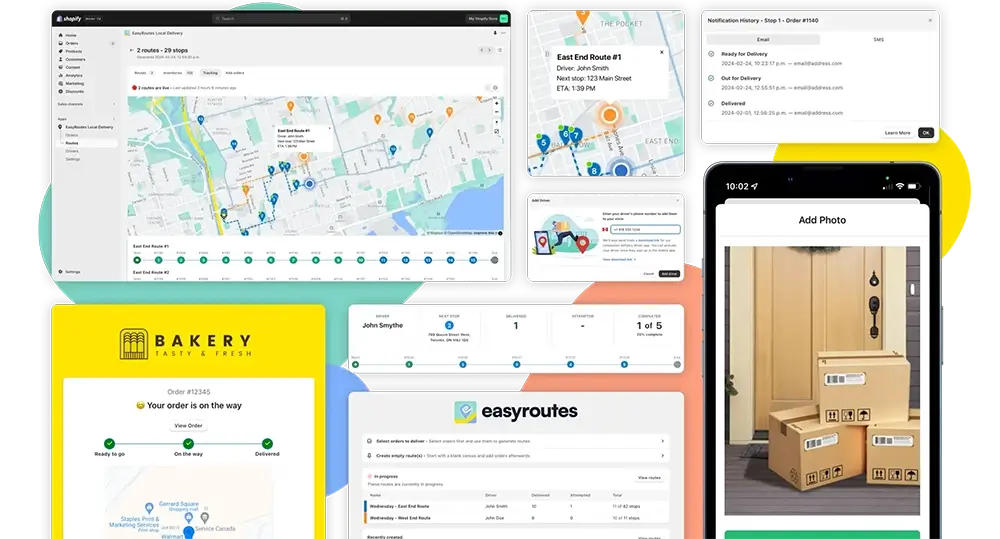
For Shopify merchants, EasyRoutes pulls in orders automatically, optimizes routes with a few clicks, and dispatches them to drivers via a mobile app. Drivers get turn-by-turn navigation, customers receive real-time tracking updates and ETAs, and the entire planning process that used to take hours is reduced to minutes.
This is the real answer to the shortest-vs-fastest question: you don't have to choose. The right software makes the optimal tradeoff for every stop on every route, every day — dynamically adjusting as conditions change.
Businesses like Uproot Food Collective have seen this firsthand. By switching to optimized routing with EasyRoutes, they saved significant time and costs while expanding their delivery reach — the software handled the distance-vs-time optimization automatically, freeing the team to focus on growing the business.
Conclusion
The choice between shortest and fastest routes depends on your priorities: fuel savings and reduced mileage favor the shortest path, while tight delivery windows and maximum productivity favor the fastest. In reality, most delivery businesses need a blend of both — and the optimal balance changes with every route, every day, based on traffic, weather, order volume, and customer expectations.
The practical solution in 2026 isn't to choose one over the other — it's to use route optimization software that makes the right tradeoff automatically, in real time, across every stop and every driver in your operation.
Ready to stop guessing and start optimizing? EasyRoutes builds the most efficient routes for your deliveries automatically — balancing distance, time, traffic, and delivery windows so you don't have to. Start your free trial today.
EasyRoutes is a delivery management and route optimization platform for merchants, local delivery teams, and logistics operators. It helps you plan routes, dispatch to drivers, track progress in real time, and notify customers. Works with Shopify and integrates with other e-commerce platforms via EasyRoutes for Web.
EasyRoutes optimizes deliveries using your selected orders, start & end locations, stop time intervals, time windows, and route limits. You can balance routes, respect capacities, and re‑optimize as plans change.
Yes. Turn on settings to avoid toll roads and u‑turns from the Route Options panel. Enable these options before planning a route, or edit the route after creation and re‑optimize to see them reflected in your route.
Yes. Re‑optimize at any time — after adding or removing stops, changing stop priorities, editing route options, or balancing loads. Drivers can also re-optimize routes delivered out of order, or re‑order stops if enabled from your EasyRoutes Settings.
Yes. You can set delivery time windows per stop or import them from supported third‑party date/time apps. EasyRoutes optimizes routes to meet these windows and calculates ETAs accordingly.
Yes. EasyRoutes supports Vehicle Profiles you can configure and assign to routes. EasyRoutes also supports capacity planning via item or weight limits per route. Use these with other options (like time windows, or custom start/end locations) to keep plans realistic and drivers on schedule.
Yes. Define custom start and end points per route so planning and ETAs include travel to and from these locations. Supported in EasyRoutes for Shopify and EasyRoutes for Web.
ETAs use route distance, stop service times, and historical traffic, and they update during the day as drivers progress. Accuracy improves when addresses and time windows are clean.
Yes. Drivers can launch directions via Google Maps, Apple Maps, or Waze from each stop, and pick a default navigation app in their mobile app settings.
Yes. Enable Real‑Time Tracking in Settings → Driver settings (Premium/Enterprise subscription plans) to view live driver location and progress in the Tracking tab of any route.
Yes. Enable Balance routes to distribute stops as evenly as possible across multiple routes/drivers while respecting other route constraints (like time windows, or item/weight limits).
EasyRoutes is the AI-native delivery operations platform trusted by 5,000+ businesses across 75+ countries. Plan routes in seconds, dispatch drivers automatically, and delight your customers — from Shopify or any order source. Experience delivery operations that run themselves. Rated 4.9 stars and certified Built for Shopify.