Reduce Missed Deliveries & Master Reverse Logistics
By Joe SnyderReduce missed deliveries and master reverse logistics with smarter route planning, real-time tracking, and an easier returns process.

Reduce missed deliveries and master reverse logistics with smarter route planning, real-time tracking, and an easier returns process.
Every delivery driver dreads the “Sorry, we missed you” moment. For small and mid-sized businesses, a missed delivery doesn’t just cost a wasted trip — it triggers redelivery fees, customer-service time, and the slow erosion of trust that turns repeat buyers into refund requests. And when an order does come back, whether it was missed, refused, or simply unwanted, you’re suddenly running your supply chain in reverse. Whether you manage flower delivery, meal kits, or medical supplies, the businesses that win are the ones that prevent misses up front and handle the inevitable returns without losing money or goodwill.
The good news: both problems respond to the same toolkit. Smarter route planning, proactive customer communication, driver-friendly proof of delivery, and a deliberate returns process let you catch issues before they snowball — and clean them up gracefully when they happen. This guide walks through the full lifecycle, from first-attempt success to a cost-effective reverse logistics operation.
A failed first attempt is one of the most expensive events in last-mile delivery. Once you add redelivery, warehousing, support tickets, and the occasional lost sale, a single failed order is estimated to cost a retailer somewhere between $15 and $40 once reship, support, and churn are included. Those costs compound at volume, which is exactly why every avoidable miss matters to your margins. Understanding why on-time delivery is so important is the first step toward protecting them.
And misses are not rare. Across the UK, roughly 8% of domestic deliveries fail on the first attempt, and nearly a quarter of online businesses report failure rates above 10%. For perishable categories like groceries, meal kits, or seafood, a missed drop can also mean total product loss. Customers are usually understanding once — but repeated misses or a confusing returns experience quickly cost you loyalty, which makes first-attempt success a metric worth obsessing over.

There’s rarely a single culprit. The usual suspects are customers not being home, incorrect or incomplete address details, unclear drop-off instructions, traffic delays, and product issues that lead to a refusal. Address quality is the big one: incomplete or wrong addresses are consistently cited among the leading causes of first-attempt failure, so the cheapest fix often happens at checkout, not on the road.
Being proactive closes most of the gap: verify addresses at checkout, let customers add delivery notes, and build a little slack into routes for minor delays. It also helps to avoid the classic trap of cramming too many stops into a day — a slightly leaner route with a higher success rate beats a packed one that spirals into redelivery chaos. Many of these failures show up again and again, so it’s worth reviewing the most common delivery mistakes and designing them out of your operation.
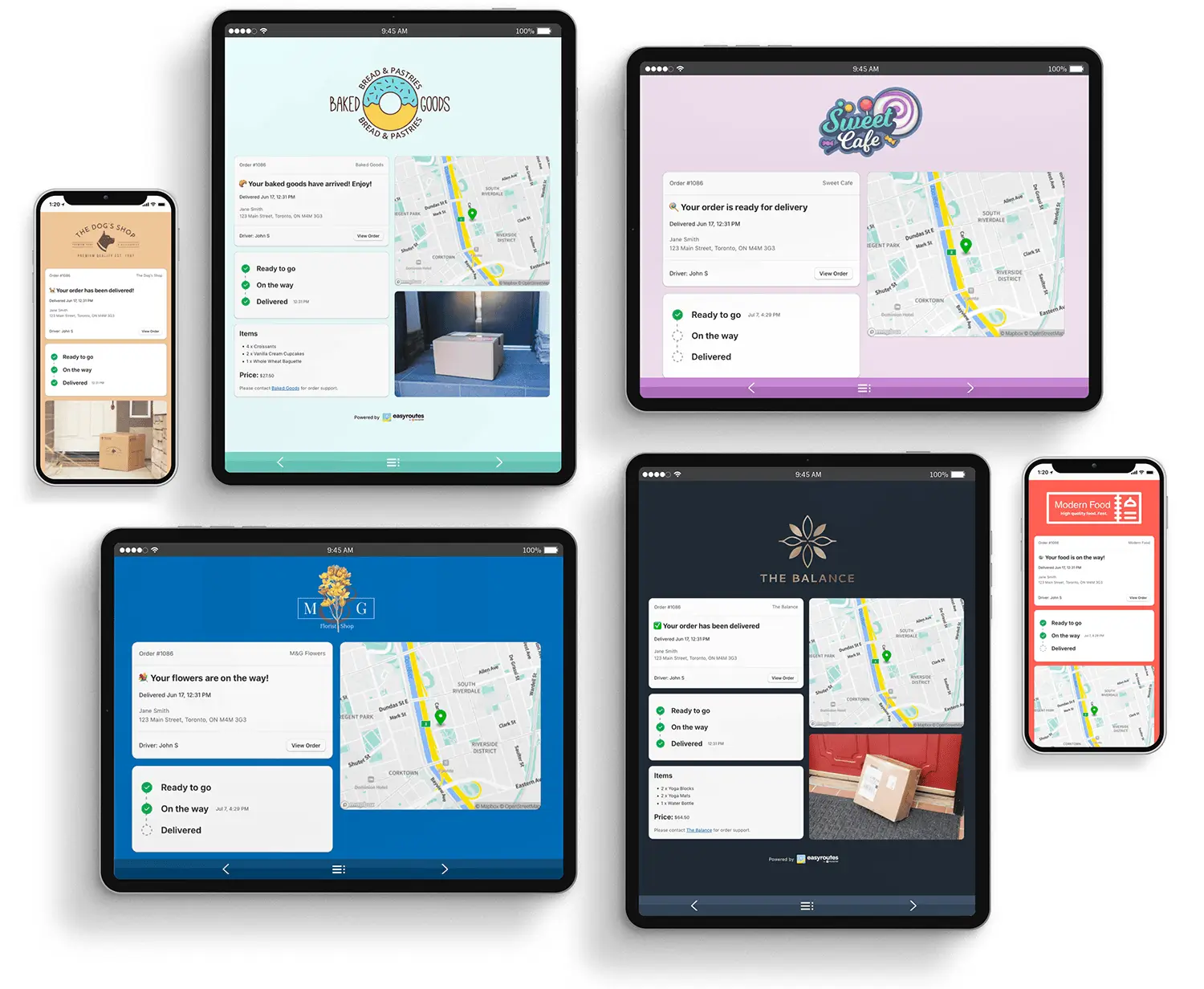
Real-time tracking and delivery notifications do more than reassure customers — they materially increase the odds that someone is home to receive the order. Transparency is now an expectation, not a perk: 88% of consumers say real-time delivery tracking is critical to a positive experience, and 92% factor delivery windows into their buying decisions. Meeting that expectation also pays for itself on the support side, since each “where is my order?” inquiry costs roughly $5 to resolve and stacks up fast during peak season.
With automatic notifications and live ETAs, customers can prepare for the driver’s arrival — cutting missed attempts and the WISMO tickets that follow. Clear, proactive communication is your first line of defense against failed drop-offs, and it’s the backbone of keeping customers informed with real-time tracking from dispatch to doorstep.

If a driver shows up at the wrong time, even flawless planning won’t help. That’s why route optimization — accurate ETAs, tight stop sequencing, and realistic delivery windows — is the engine behind first-attempt success. Narrowing broad “8 AM to 5 PM” slots into windows based on customer availability and historical data reduces both misses and idle driving.
The efficiency dividend is real. Optimized routing typically delivers 10–25% fuel savings and 15–30% fewer miles driven compared with manual planning. Even the biggest players treat this as a core lever — UPS’s ORION routing system reportedly trims 10 to 14 miles per driver per day. Fewer miles means lower costs and a far better shot at arriving inside the window. To know whether it’s working, track the right numbers — first-attempt rate, redelivery rate, and cost per stop — using a clear set of delivery metrics and KPIs.
Drivers are the front line of your success rate. Practical training on customer service, navigation, and time management — plus how to handle the awkward moments, like a customer who isn’t home or an unexpected road closure — turns a good route into a completed one. Equip the team to reroute on the fly and to communicate directly with customers when plans change.
Then plan for the days that go sideways. A simple contingency protocol — spare vehicles, backup drivers, and a clear escalation path when a route can’t be finished — keeps a single breakdown or weather event from becoming a wave of misses. Businesses with complex, time-sensitive operations like meal kits or catering benefit most from having that emergency playbook written down before they need it.

Reverse logistics — moving returned goods from the customer back to your warehouse — used to be an afterthought. Not anymore. The volume is enormous: U.S. retail returns reached an estimated $849.9 billion in 2025, with about 19.3% of online sales sent back. Roughly a quarter of all online purchases eventually head back to the retailer, and handling them isn’t cheap — reverse logistics can run $30 to $65 per item for electronics, and can exceed the product’s margin entirely for bulky goods. The fix is to treat returns as a routing problem, not a clean-up job.
Picking up each return individually is what makes reverse logistics expensive. Instead, batch them. You can set aside specific days for collections — say, Mondays and Fridays — so a driver gathers many returns in one efficient run. Or, even simpler, insert return pickups directly into your upcoming delivery routes, reusing a stop you were already driving past. A capable route planner makes either approach a few clicks rather than a spreadsheet headache.
You don’t have to send a driver to every doorstep. Pickup and drop-off locations — lockers and counters at partner stores, malls, or grocers — let customers return items on their own time while you collect in bulk. Carrier networks have made box-free, label-free drop-off a mainstream expectation, and offering it lowers your per-return cost while improving the customer experience.
Returns happen mid-route, so give drivers a mobile app that lets them flag the issue, snap photos, and capture a signature or note on the spot. The same proof-of-delivery workflow that documents a successful drop also documents a refused or returned one — protecting you from disputes and keeping inventory accurate. It’s worth setting this up deliberately; the benefits of proof of delivery and how to implement it apply just as much to reverse trips as forward ones. Correct packaging and labeling on the return side also keeps inbound items from getting tangled up with outbound orders at the warehouse.

Nobody wants a confusing returns process — but a policy that’s too lenient invites unnecessary returns. The sweet spot is clear, fair, and easy to follow, with explicit rules for what’s returnable and under what conditions. Make sure drivers and customer-service staff are aligned on those rules, and communicate them before something goes wrong, not after. Free returns remain a powerful purchase driver, so the goal is to keep the experience smooth while setting sensible boundaries that protect your margins during peak periods.
The cheapest return is the one that never happens. A large share of returns trace back to a predictable handful of causes — fit and sizing for apparel, and the now-common habit of “bracketing,” where shoppers deliberately over-order with the intent to send much of it back. You won’t eliminate that, but you can shrink it: write precise product descriptions, publish detailed sizing and measurement guides, use clear photography, and gather feedback on every return so you can fix the root cause. Tightening fulfillment accuracy helps too — the fewer wrong or damaged items you ship, the fewer come back. These tactics overlap heavily with the broader work of boosting order accuracy to cut errors and returns.
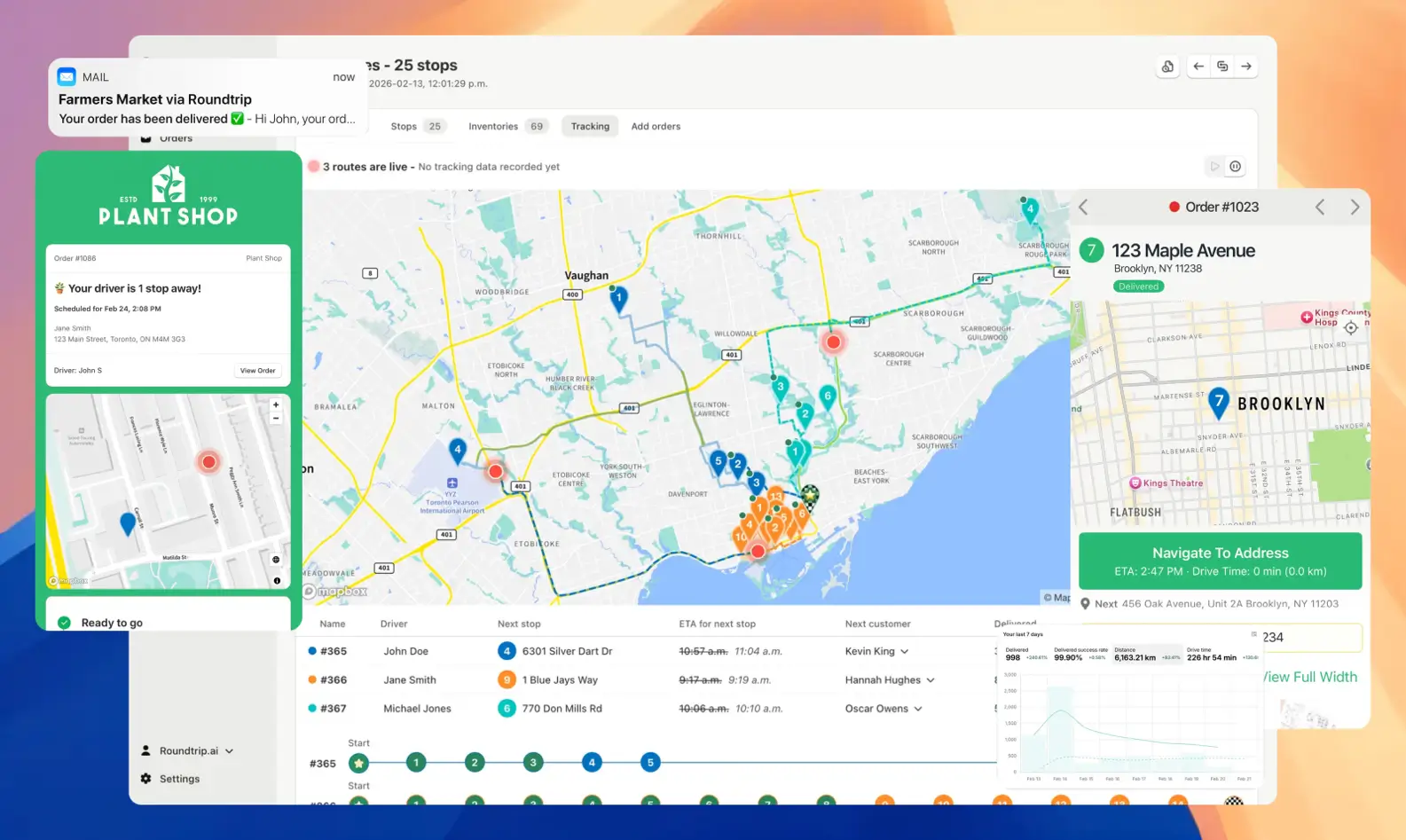
EasyRoutes brings the whole lifecycle into one place. On the forward leg, it optimizes multi-stop routes around time windows, traffic, and vehicle capacity, then keeps customers in the loop with automatic SMS and email notifications, live ETAs, and a real-time tracking page — the combination that drives first-attempt success. Drivers carry proof-of-delivery tools (photos, signatures, notes) that work for both completed and attempted deliveries.
On the reverse leg, you can route pickup stops, fold returns into existing delivery runs, or build dedicated collection routes — turning reverse logistics from a cost centre into a coordinated part of the day. From grocery and pizza delivery to plant and furniture delivery, it’s already helping businesses cut misses and recover returns efficiently. Want to see exactly where you’re losing orders today? Reviewing your last-mile delivery costs is a good place to start.
Missed deliveries and messy returns don’t have to be the cost of doing business. With smart route planning, proactive communication, driver-friendly tools, and a deliberate returns process, you can prevent most failures — and handle the unavoidable ones with speed and grace. Whether you’re moving butcher boxes, meal kits, or medical supplies, keeping first-attempt success high and reverse-logistics costs low is what protects both profitability and customer loyalty. EasyRoutes gives you the tools to do both — like a pro.
Yes. Analytics includes a delivered vs. missed/attempted view over your selected period and or driver. Use it to track delivery success rates.
See: Analytics Reports
Yes. Analytics shows counts of missed deliveries; individual stop pages display the reason provided by the driver (e.g., no answer, inaccessible).
Yes. PoD can be attached to Attempted deliveries and, if configured in settings, can be required in order to mark a stop as Attempted.
See: Proof of Delivery
Yes. Create pickup‑only routes or mix pickups and deliveries. Use your store or pickup point as the address, and include any notes/requirements for staff reference.
See: Pickup Orders
Yes. EasyRoutes supports Shopify Local Delivery and can include Pickup orders on routes when you need a driver or staff task at your store or pickup point. Local Delivery instructions appear directly on the stop when available.
Yes. Use the customizable Rescheduled notification (email/SMS) to explain delays, provide a new ETA/date, and include the tracking link.
Yes. You can set delivery time windows per stop or import them from supported third‑party date/time apps. EasyRoutes optimizes routes to meet these windows and calculates ETAs accordingly.
Yes. EasyRoutes Premium and Enterprise plans support branded SMS notifications with usage‑based pricing per message segment. Configure templates and funding in Settings.
EasyRoutes optimizes deliveries using your selected orders, start & end locations, stop time intervals, time windows, and route limits. You can balance routes, respect capacities, and re‑optimize as plans change.
See: Route Options · EasyRoutes 101
Absolutely. Drivers can add photos, collect an e‑signature, and record notes at each stop; these appear in the route and customer tracking (if enabled).
See: Proof of Delivery
EasyRoutes flags any orders that are missing a shipping address so you can add or correct the address before routing. For pickup orders, use your store or pickup location as the address.
EasyRoutes is the AI-native delivery operations platform trusted by 5,000+ businesses across 75+ countries. Plan routes in seconds, dispatch drivers automatically, and delight your customers — from Shopify or any order source. Experience delivery operations that run themselves. Rated 4.9 stars and certified Built for Shopify.
⭐⭐⭐⭐⭐ 4.9 stars • Trusted by 5,000+ Businesses