Urban Delivery: Beat City Traffic & Parking in 2026
By Joe SnyderCity traffic, parking fines, and gridlocked downtowns slow deliveries. Here's how to beat urban congestion in 2026 with smarter routes and timing.

City traffic, parking fines, and gridlocked downtowns slow deliveries. Here's how to beat urban congestion in 2026 with smarter routes and timing.
Navigating a city with a delivery vehicle can feel like a high-stakes puzzle: vanishing curb space, stop-and-go gridlock, surprise construction, and delivery windows that don’t care about any of it. For small and mid-sized businesses trying to deliver reliably and affordably, the pressure is real — and in 2026 it’s getting heavier. But dense cities are also where demand is richest, so the operators who learn to move smart win big. This guide pulls together what actually works: reading the urban landscape, planning routes for time instead of distance, taming parking, timing your runs, and equipping drivers to handle whatever the street throws at them.
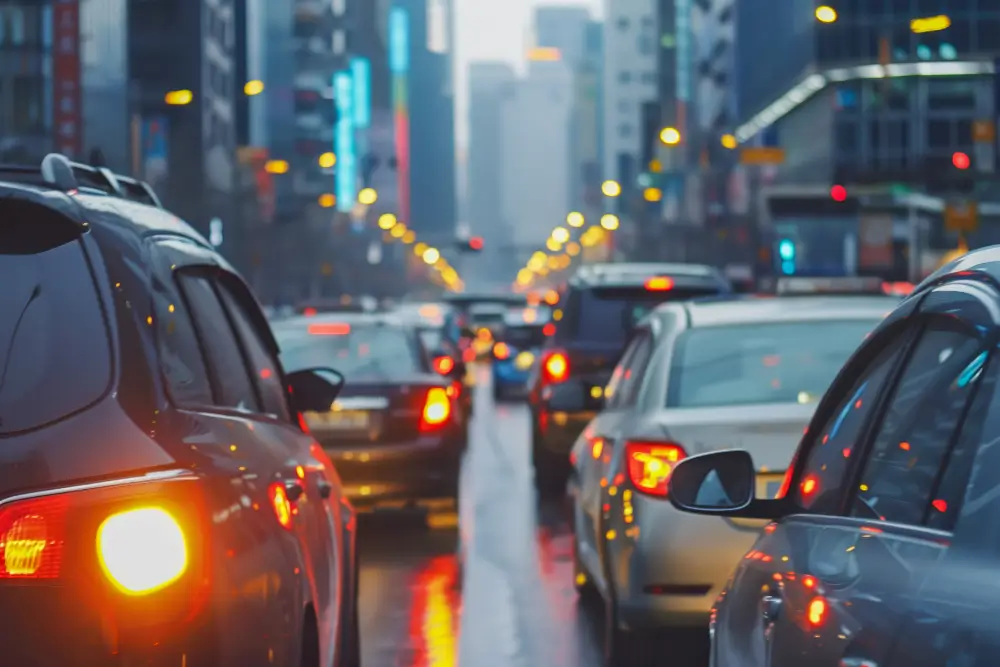
Congestion isn’t just annoying — it’s a line item. The typical U.S. driver lost 49 hours to traffic in 2025, roughly $894 in lost time each, with delays costing the country close to $86 billion. For a delivery operation, every hour a vehicle idles in traffic is an hour of paid driver time, burned fuel, and a stop that didn’t happen. In a city, a three-mile run can swallow 45 minutes during gridlock or breeze by in ten with the right timing — which is exactly why urban routing rewards planning over raw mileage.
Those idle minutes quietly inflate your biggest variable cost. Time stuck in traffic is fuel burned for zero forward progress, so the same habits that beat congestion also protect your margins — a connection worth tracing when you’re looking at ways to cut fuel costs across your delivery business.
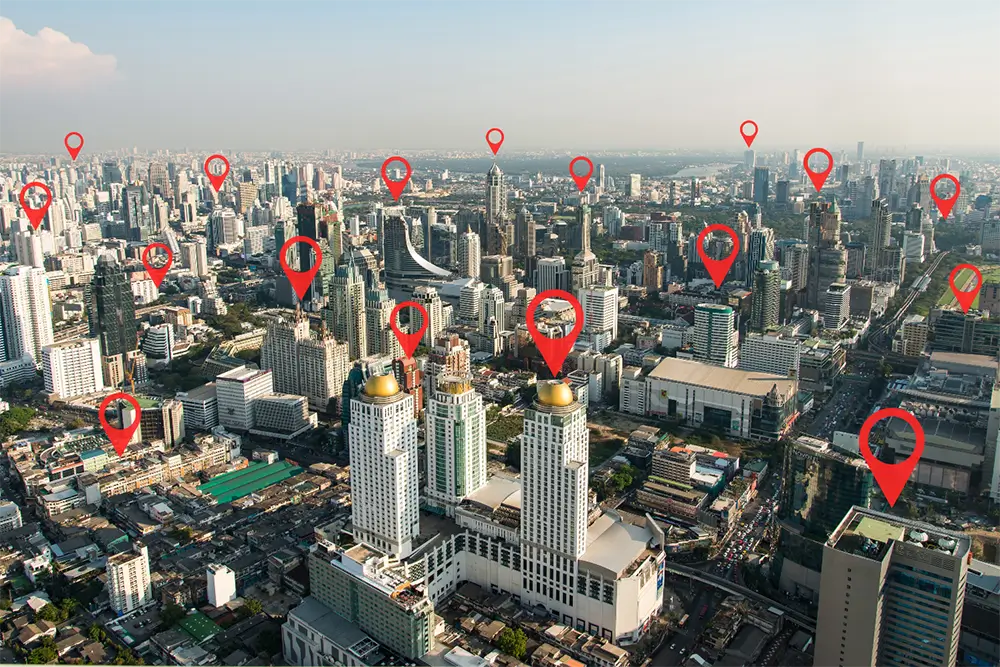
If your routes touch the country’s most congested metros, plan for them specifically. The 2025 INRIX Global Traffic Scorecard reshuffled the rankings: Chicago now tops the U.S. list at 112 hours lost per driver (about $2,063 each), as Lake Michigan funnels traffic through limited corridors crowded with rail crossings and freight. New York City follows at 102 hours and roughly $1,879 per driver, its delays flat year over year — a rare plateau credited partly to congestion pricing. Philadelphia (101 hours) chokes on I-95 and the Schuylkill, while Los Angeles (about 86 hours) and Boston (83 hours) round out the worst.
Each city punishes drivers differently. San Francisco layers steep hills and strict parking rules onto high vehicle wear. Atlanta’s “Spaghetti Junction” tangles several highways into one notorious snarl. Washington, D.C. adds security closures and protests; Boston’s pre-automobile street grid confounds anyone without solid navigation; and sprawling Houston simply makes you drive farther for every drop. The common thread: local knowledge — of corridors, choke points, and curb rules — beats brute force every time.
The practical move is to let the city shape the route rather than forcing one template onto every market. In a hill-and-grid city like San Francisco, that might mean clustering stops tightly by neighborhood to minimize elevation changes and repositioning. In a freight-heavy corridor like Chicago, it means building in buffer time around known bottlenecks and rail crossings. And in a sprawling metro like Houston, it means grouping stops geographically so a driver isn’t criss-crossing 40 miles of highway. The toughest cities reward operators who treat each one as a distinct routing problem with its own rules.
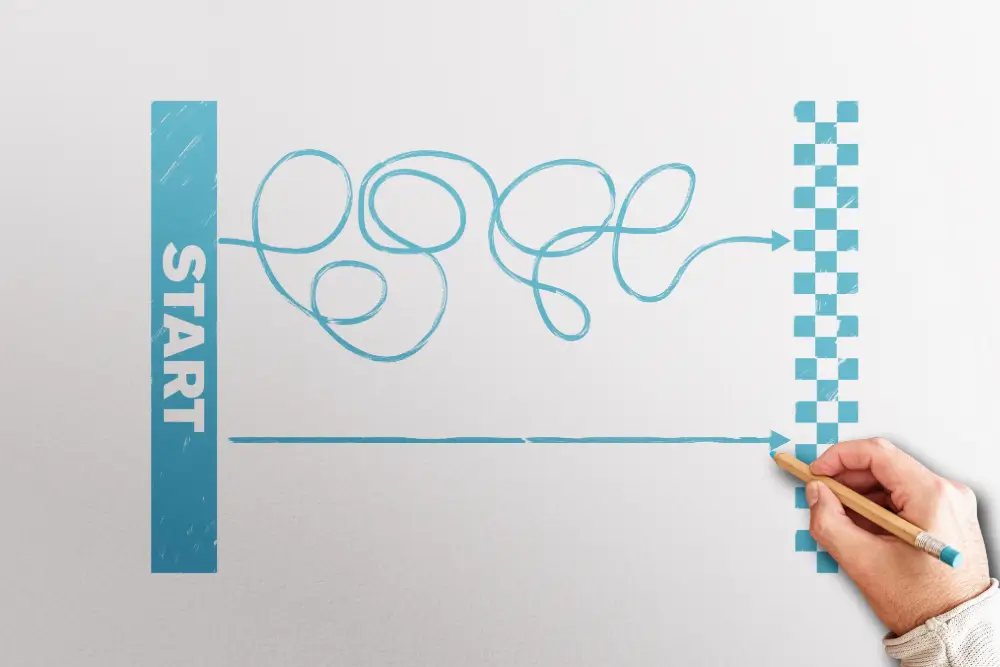
In the suburbs, routing is about distance. In the city, it’s about duration. Smart routing software doesn’t just draw a line from A to B — it weighs real-time traffic, historical congestion patterns, and delivery windows to sequence stops in the order that actually saves time on the ground. That’s the difference between hitting a tight window and triggering a costly re-delivery.
The payoff compounds across a shift: trimming a few minutes per stop in a dense zone can mean one or two extra deliveries per driver per day. If you’re weighing how the underlying technology decides what “efficient” means, it’s worth understanding how route optimization works and where its tradeoffs lie, and — for fleets juggling dozens of drops — the mechanics of multi-stop route planning. Both turn a chaotic stop list into a calm, ordered run.
Size matters downtown. The larger the vehicle, the harder it is to park, turn, and reposition mid-route — and the more it costs to feed and insure. For tight zones, consider smaller vans, cargo bikes, or even walking couriers, and lean on micro-fulfillment, staging inventory closer to high-density neighborhoods so drivers spend less time crossing town and more time delivering.
Right-sizing your fleet isn’t only an efficiency play; it’s a cost play. Vehicle choice is one of the biggest levers on your per-mile economics, which is why it features so heavily in any serious breakdown of what last-mile delivery actually costs. Fewer tickets, lower fuel burn, and easier parking all stack up when the vehicle fits the street.

Parking in a dense city is its own art form — and a brutal one. Consider this: in 2019, commercial delivery firms racked up about $123 million in New York City parking fines, with UPS alone paying roughly $23 million and FedEx around $9 million. The giants treat it as a cost of doing business, but a small operator can’t absorb that. The goal is to avoid the ticket in the first place.
A few tactics that work: sometimes you don’t park, you pause — train drivers to make quick curbside hand-offs by calling ahead so the customer meets them at the vehicle. Use legal loading zones (and respect their time limits), learn which blocks tolerate a brief double-park, and bookmark the live or static loading-zone maps many cities now publish. Building rapport with doormen and building managers can unlock secure drop points and private space. And keep documentation — permits, delivery manifests — handy to smooth any interaction with enforcement. Quick, clearly labeled, easy-to-locate deliveries spend less time exposed to a ticket.
It’s worth knowing how the math differs at your scale. The big carriers enroll in programs like New York’s Stipulated Fine scheme, which trades the right to contest tickets for a reduced, predictable per-violation cost — a volume play that only pencils out when you’re absorbing hundreds of thousands of violations. A growing local business has no such cushion, so prevention is the entire strategy. The single best lever is spending less time parked at all: tighter stop sequencing means shorter dwell times, fewer blocks circled hunting for space, and far fewer minutes sitting somewhere a meter maid will notice.
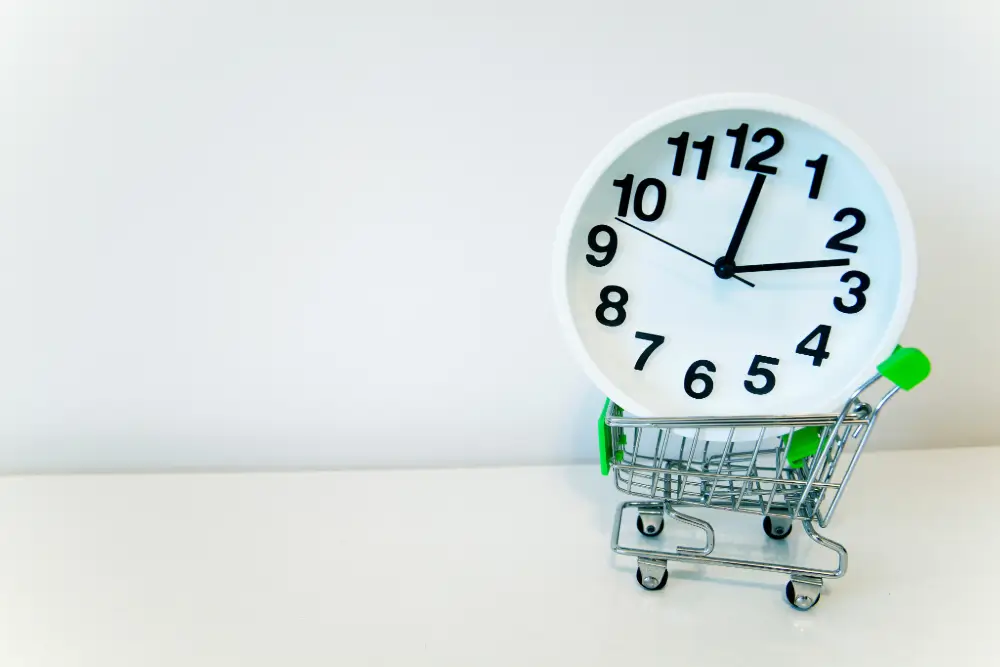
The gap between a smooth delivery and an hour-long ordeal often comes down to a few minutes of timing. Avoid peak congestion windows where you can; early-morning and evening runs frequently move two to three times faster than midday. Delivering just before or after lunch can also cut missed connections and the re-delivery costs that follow.
This is where scheduling tools earn their keep — batching deliveries into the lightest-traffic windows when customers are most likely to be home. The same discipline that beats daily rush hour scales up to the brutal stretches of the year; the playbook for managing local deliveries during peak times applies whether it’s a Tuesday commute or a holiday crush.
Cities don’t get easier when the sky opens up. According to the Federal Highway Administration, about 21% of the nation’s roughly 5.7 million annual crashes happen in adverse weather — nearly 1.2 million crashes a year, most of them on wet pavement. You can’t control the weather, but you can plan around it with real-time route adjustments and extra buffer on rainy or icy days.
The human factor matters just as much. Distraction remains deadly: the NHTSA reports 3,208 people were killed in distraction-affected crashes in 2024. For a fleet, that’s both a safety imperative and a liability exposure. GPS-based driver monitoring — with speed alerts and trip review — helps managers coach risky habits before they become incidents, and gives you the real-time visibility to reroute a driver stuck behind a closure. It’s the backbone of using driver and vehicle tracking effectively.

Urban delivery is equal parts logistics and survival. Give your team a driver app with turn-by-turn directions, live updates, and on-the-spot proof-of-delivery capture so nothing depends on memory or paper. Drivers handling fragile or perishable cargo also need training for the realities of city drop-offs — elevators, loading docks, secure-building access, and the etiquette of a crowded lobby.
Reliable navigation is the foundation. Whether your drivers prefer Google Maps, Waze, or Apple Maps, the point is consistent, current guidance through unfamiliar one-ways and construction detours; our rundown of the best navigation apps for Android and iOS can help you standardize. Pair that with live dispatch visibility and you can reroute on the fly when a surprise parade or water-main break swallows a block.
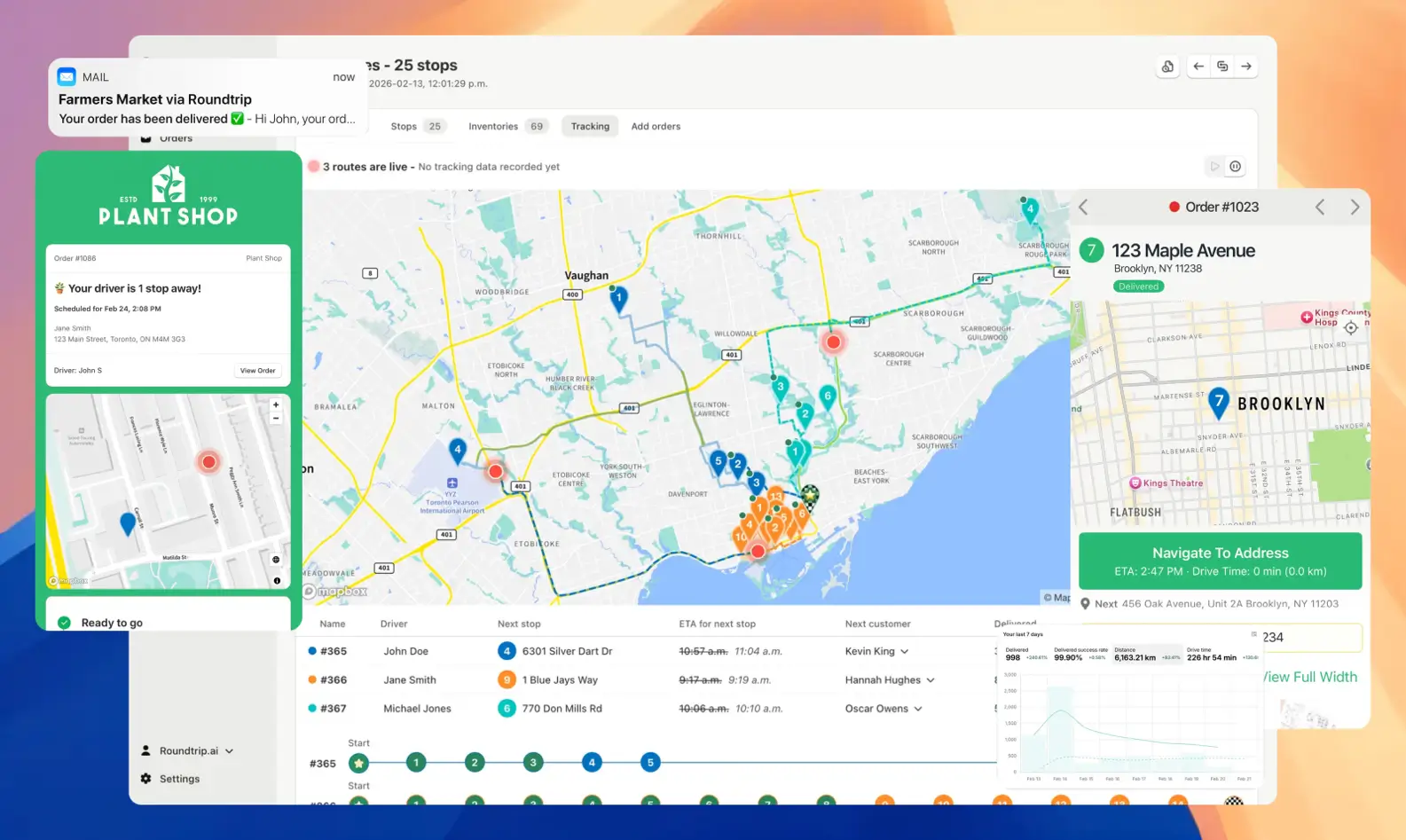
Urban delivery doesn’t have to be chaotic. EasyRoutes simplifies local delivery by optimizing and sequencing routes, batching orders intelligently, and keeping customers in the loop with automated tracking and notifications. Built to handle Shopify orders seamlessly, it lets meal-kit, grocery, bakery, and medical-supply operations scale up without adding mayhem.
With mobile-friendly routing, stop-by-stop ETAs, in-app proof-of-delivery, and the ability to re-optimize remaining stops when conditions change, EasyRoutes is your map, traffic assistant, dispatcher, and customer-comms desk in one. It’s the difference between reacting to the city and staying a step ahead of it.
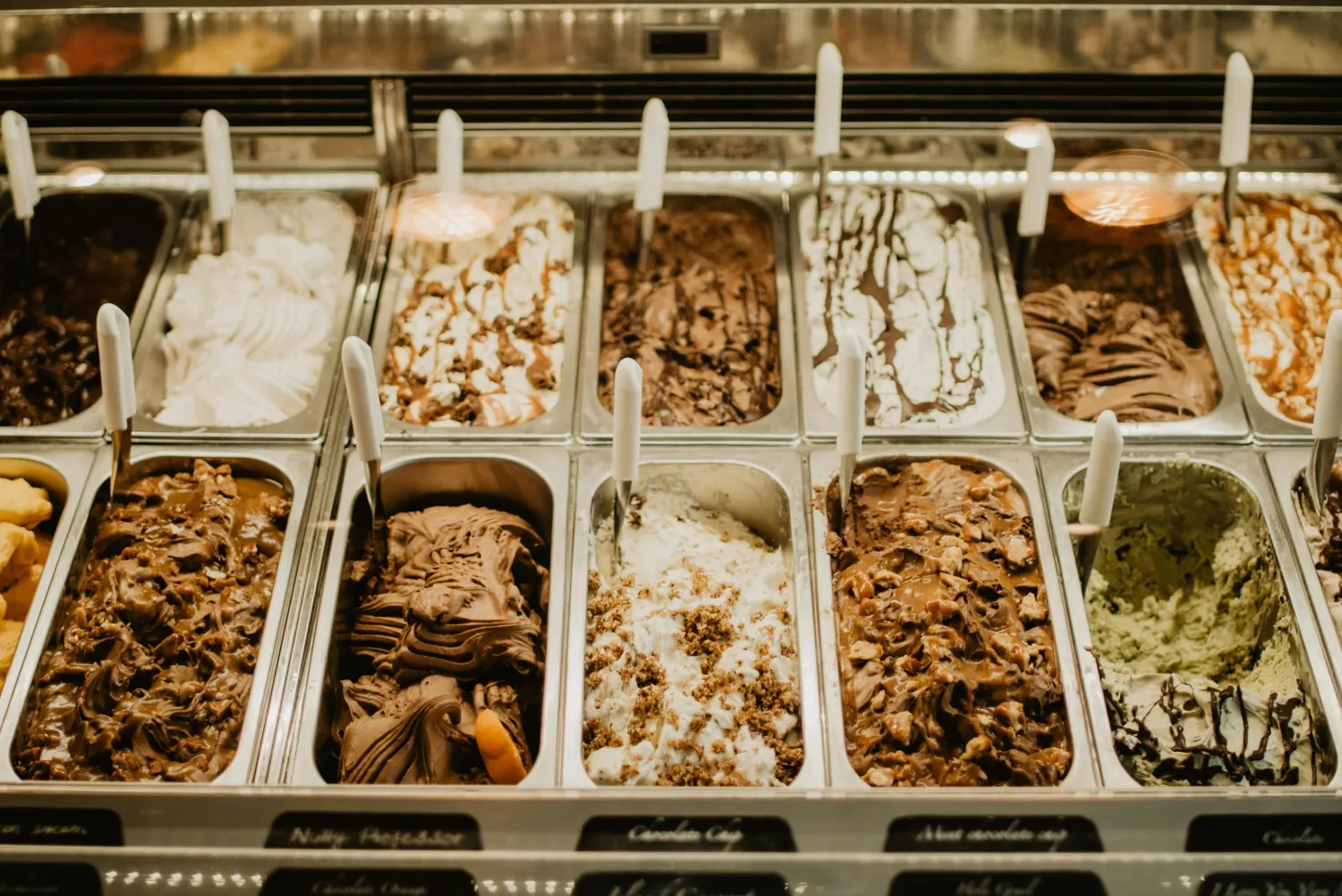
Duo Duo Ice Cream makes handcrafted frozen treats that have to arrive fast and still frozen — a tall order amid downtown congestion and time-sensitive windows. As volume grew, manual planning couldn’t keep up.
By switching to EasyRoutes, Duo Duo automated route creation, cut delivery times, and sent customers real-time notifications that quieted the “where’s my order?” calls. The platform helped them hold quality and speed even when the streets were anything but chill — proof that a sweet delivery experience starts with smart planning.
Delivering in the city isn’t easy, but it is manageable with the right approach. Tight traffic, tighter parking, and unforgiving timing are real obstacles — and also real opportunities to out-execute slower competitors, build your brand, and earn customer loyalty. Read the landscape, plan for time instead of distance, right-size your vehicles, respect the curb, and give drivers the tools and structure to succeed.
Ready to turn urban mayhem into delivery momentum? EasyRoutes helps you route, schedule, and simplify — so your team conquers the city like pros.
EasyRoutes optimizes deliveries using your selected orders, start & end locations, stop time intervals, time windows, and route limits. You can balance routes, respect capacities, and re‑optimize as plans change.
See: Route Options · EasyRoutes 101
Yes. Re‑optimize at any time — after adding or removing stops, changing stop priorities, editing route options, or balancing loads. Drivers can also re-optimize routes delivered out of order, or re‑order stops if enabled from your EasyRoutes Settings.
Yes. EasyRoutes supports Vehicle Profiles you can configure and assign to routes. EasyRoutes also supports capacity planning via item or weight limits per route. Use these with other options (like time windows, or custom start/end locations) to keep plans realistic and drivers on schedule.
See: Vehicle Profiles · Max items/weight per route · Commercial/GPX Export
Yes. Drivers can launch directions via Google Maps, Apple Maps, or Waze from each stop, and pick a default navigation app in their mobile app settings.
ETAs use route distance, stop service times, and historical traffic, and they update during the day as drivers progress. Accuracy improves when addresses and time windows are clean.
Yes. Schedule routes for specific dates/times, and ETAs will be calculated for each stop on a route. These ETAs can be shared via customer tracking links and email/SMS delivery notifications.
Yes. Use the customizable Rescheduled notification (email/SMS) to explain delays, provide a new ETA/date, and include the tracking link.
EasyRoutes is the AI-native delivery operations platform trusted by 5,000+ businesses across 75+ countries. Plan routes in seconds, dispatch drivers automatically, and delight your customers — from Shopify or any order source. Experience delivery operations that run themselves. Rated 4.8 stars and certified Built for Shopify.
⭐⭐⭐⭐⭐ 4.8 stars • Trusted by 5,000+ Businesses