The complete guide to last-mile delivery in 2026: market data, key metrics to track, cost reduction strategies, common customer complaints, industry trends, scaling strategies, sustainability, and the technology that makes it work.
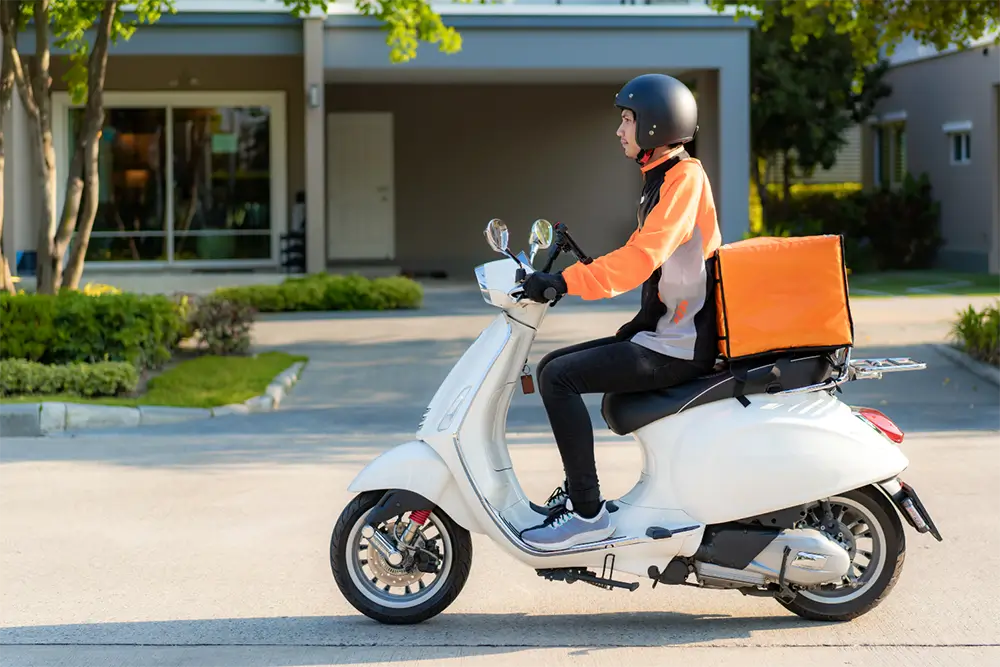
Last-mile delivery — the final leg of the journey from distribution hub to customer's door — is simultaneously the most important and most expensive part of the logistics chain. It accounts for up to 53% of total shipping costs, and it's the single interaction where customers form their strongest impression of your brand. Get it right, and you build loyalty. Get it wrong, and 98% of consumers say a poor delivery experience impacts their brand loyalty.
The global last-mile delivery market reached approximately $178–$184 billion in 2025 and is projected to grow to $200+ billion in 2026, expanding at a CAGR of 8–10% toward $350–$450 billion by the early 2030s. For delivery businesses of every size, understanding how to optimize last-mile operations isn't optional — it's a competitive necessity.
This guide covers everything you need to know: what makes last-mile delivery so challenging, the metrics you should track, the trends reshaping the industry in 2026, how to reduce costs, how to scale efficiently, the most common customer complaints and how to prevent them, and the tools that tie it all together.
Table of Contents
Why Last-Mile Delivery Is So Challenging
The Metrics That Matter
How to Reduce Last-Mile Delivery Costs
Common Customer Complaints and How to Prevent Them
Trends Shaping Last-Mile Delivery in 2026
How to Scale Last-Mile Operations Efficiently
Sustainability in Last-Mile Delivery
The Technology Stack for Last-Mile Excellence
Conclusion
Why Last-Mile Delivery Is So Challenging
Last-mile delivery is inherently inefficient compared to every other stage of the supply chain. A freight truck carrying 20 tonnes of goods from a port to a distribution center travels one route. A last-mile driver carrying 50 individual packages to 50 different addresses navigates a web of residential streets, apartment complexes, traffic lights, parking challenges, and individual customer preferences.
This structural complexity drives up costs. Last-mile delivery costs have grown from 41% of total shipping costs in 2018 to 53% in 2024, and they continue to rise as consumer expectations intensify. The average cost of a failed delivery is $17.20, and approximately 5% of all last-mile deliveries fail on the first attempt — creating a persistent drag on profitability.
Adding to the challenge: 66% of consumers now expect same-day delivery for online purchases, 80% want orders within two hours in some markets, and 91% actively track their packages (with 39% checking at least once per day). Meeting these expectations while maintaining margins requires a combination of intelligent technology, operational discipline, and continuous improvement.
The Metrics That Matter
You can't optimize what you don't measure. These eight metrics provide the clearest picture of your last-mile performance:
On-time delivery rate measures the percentage of deliveries completed within the promised window. This is your single most important customer-facing metric. If it's declining, your route planning, scheduling, or capacity allocation needs attention.
Average delivery time tracks total elapsed time from dispatch to doorstep. Monitor this at the route level and the individual stop level — a route that averages well may hide specific stops that consistently run long.
Cost per delivery encompasses fuel, driver time, vehicle wear, and overhead for a single delivery. This is your core profitability metric. Businesses using AI route optimization typically reduce cost per delivery by 15–20%.
First-attempt delivery success rate measures how often deliveries complete without needing a second trip. Every failed attempt doubles the cost of that stop. Improving this metric through better customer communication and proof of delivery has an outsized impact on your bottom line.
Customer satisfaction score captures how customers feel about the delivery experience — gathered through post-delivery surveys, reviews, or NPS. Businesses like The Real Good Life have boosted satisfaction by offering proactive updates and a smooth delivery experience for their meal kits.
Fuel efficiency and carbon emissions track environmental impact per delivery. Route optimization directly reduces both — and with 86% of consumers willing to delay delivery for more sustainable shipping, this metric increasingly carries brand value alongside operational value.
Route optimization score measures how efficiently your actual routes compare to the theoretical optimum. Tools like EasyRoutes provide this data automatically, highlighting where improvements are possible.
Driver performance tracks adherence to planned routes, safe driving behavior, and stop completion times. Monitoring this metric enables data-driven coaching and recognition — not surveillance, but support.
How to Reduce Last-Mile Delivery Costs
Last-mile costs are the largest controllable delivery expense for most businesses. Here are the most effective levers:
Optimize your routes. This is the single highest-impact action. AI-powered route optimization evaluates distance, traffic, delivery windows, and vehicle capacity to produce routes that minimize total mileage and maximize stops per shift. DHL's Greenplan dynamic routing algorithm achieved a 20% reduction in delivery costs; Tesco's AI routing saved 11.2 million miles and cut fuel consumption by 8% per order.
Reduce failed deliveries. At $17.78 per failed attempt, even small improvements compound rapidly. Automated delivery notifications with precise ETAs, plus customer-facing tracking pages, ensure recipients are home and ready. Address validation at checkout catches errors before they become costly field problems.
Right-size your fleet. Vehicles that are too large waste fuel and struggle with parking in residential areas. Vehicles that are too small require multiple trips. Match your fleet to your actual delivery profile — product sizes, delivery density, and geographic spread.
Automate manual processes. Manual route planning, address entry, order processing, and dispatch coordination consume hours of staff time that automation eliminates. EasyRoutes pulls orders directly from Shopify, optimizes routes in seconds, and dispatches to drivers automatically — replacing the entire manual workflow.
Train your drivers for efficiency.Well-trained drivers load in delivery sequence, minimize time at each stop, handle customer interactions professionally, and maintain their vehicles proactively. Investing in driver training delivers compound returns through reduced fuel use, fewer failed deliveries, and lower vehicle maintenance costs.
Improve communication. Clear communication with customers reduces WISMO ("where is my order?") inquiries, which consume support resources and create negative brand interactions. Businesses using real-time tracking report 60–80% reductions in delivery-related support volume.
Common Customer Complaints and How to Prevent Them
Understanding what frustrates customers most helps you prevent problems before they erode loyalty:
Unclear delivery times. 48% of consumers cite a choice of delivery slots as their top last-mile priority. Offering delivery time windows at checkout — and honouring them — eliminates the anxiety of waiting all day for a package.
Long delays. 55% of consumers will switch to a competitor offering faster delivery. Route optimization and strategic scheduling are your primary tools for reducing transit times without adding cost.
No visibility into delivery status. 93% of shoppers want proactive delivery updates, and 98.8% want to be notified immediately if there's a problem. Automated notifications with real-time tracking links meet this expectation at scale.
Missing or stolen packages. 36% of American consumers have experienced package theft. Proof of delivery — photos, GPS timestamps, and delivery notes — provides evidence that protects both the customer and your business.
The common solution across all four complaints is transparency. When customers know when their delivery will arrive, can track it in real time, and receive a photo confirmation when it does, the vast majority of complaints simply disappear.
Trends Shaping Last-Mile Delivery in 2026
Several major trends are converging to reshape last-mile delivery this year:
AI-powered route optimization is becoming standard. AI-driven routing systems are delivering measurable results: 25% reductions in delivery times and 20% cuts in fuel consumption. The global route optimization software market reached $7.93 billion in 2024 and is projected to hit $25.75 billion by 2033. Despite these gains, AI adoption across logistics remains at roughly 12% — early adopters are capturing disproportionate advantages.
Micro-fulfillment centres are expanding rapidly. Dark stores and micro-fulfillment locations are growing from 250 in 2020 to an estimated 6,600 by 2030 because they cut last-mile delivery times by 40%+ and reduce costs by 35%. For small businesses, this translates to the principle of positioning inventory closer to customers — whether that's a second storage location or a partnership with a local fulfillment provider.
Same-day and instant delivery demand keeps growing. The same-day delivery market was valued at $12.1 billion in 2025 and is expanding at 21% CAGR. 51% of retail shoppers now prefer same-day delivery over longer shipping, and businesses that can offer it gain a meaningful competitive edge.
Sustainability is moving from preference to requirement. Electric delivery vehicles, optimized routing, and sustainable packaging are becoming standard practices. 86% of consumers are willing to delay delivery for more sustainable shipping. Under expanding carbon pricing frameworks, reducing delivery emissions now carries direct financial value beyond just fuel savings.
Autonomous delivery is entering commercial reality. Zipline has surpassed 100 million autonomous miles with 1.4 million deliveries. Serve Robotics has deployed 2,000+ robots completing 100,000+ deliveries. DoorDash, Uber, and Walmart are all running active autonomous delivery programs. While mainstream adoption is still years away, the trajectory is clear.
Real-time tracking has become baseline infrastructure. 91% of consumers actively monitor their packages, with 39% checking at least once per day. Tracking is no longer a feature that differentiates — it's table stakes that customers expect from every delivery business.
How to Scale Last-Mile Operations Efficiently
Scaling last-mile delivery is one of the hardest operational challenges in logistics. What works for 20 deliveries a day breaks down at 200. Here's how to grow without losing efficiency:
Let technology scale with you.Route optimization software handles complexity that humans can't — whether you're routing for 2 drivers or 20, the algorithm produces optimal routes in seconds. EasyRoutes scales naturally with your operation, adding drivers and routes without proportional increases in planning overhead.
Build delivery territories. As your delivery zone expands, divide it into defined territories. EasyRoutes lets you import or draw custom delivery zones on a map and automatically assigns orders to the correct zone during route creation. This prevents the routing chaos that comes from sending drivers across overlapping areas.
Use dynamic scheduling. Adjust driver schedules based on actual demand rather than fixed shifts. During peak periods, add temporary capacity; during slower periods, consolidate routes to maintain efficiency. This flexibility prevents both understaffing during peaks and overstaffing during troughs.
Offer flexible delivery models. Same-day, next-day, scheduled windows, and pickup options each serve different customer needs. Offering a range of options distributes demand more evenly and lets customers self-select based on their urgency and willingness to pay. Businesses like Sweet E's Bake Shop have scaled their operations by using route optimization to manage growing order volumes while maintaining high service standards.
Monitor and optimize continuously. Use delivery analytics to track performance across routes, drivers, and time periods. Identify which zones are most efficient, which consistently run over time, and where failed deliveries cluster. This data turns every delivery day into an improvement opportunity.
Sustainability in Last-Mile Delivery
Sustainability in last-mile delivery has moved beyond corporate responsibility into a genuine operational advantage:
Route optimization is the fastest path to reduced emissions. Every unnecessary mile eliminated is fuel not burned and carbon not emitted. AI-powered routing can reduce delivery-related emissions by up to 20% — and it costs nothing beyond the software subscription you're already using for efficiency.
Electric vehicle adoption is accelerating. Major logistics companies are investing billions in EV fleets, and the cost economics are increasingly favourable for smaller operators too. EVs have lower per-mile operating costs than diesel vehicles and require less maintenance.
Sustainable packaging reduces waste and builds brand loyalty. Consumers — particularly younger demographics — actively evaluate brands on environmental practices. Businesses like EcoFuel.ie have built sustainability into their brand identity, using electric vehicles, optimized routing with EasyRoutes, and eco-friendly packaging materials.
Delivery consolidation reduces total trips. Offering customers the option to batch orders or select less-urgent delivery windows allows you to consolidate more deliveries per route, reducing total trips and emissions per order.
The Technology Stack for Last-Mile Excellence
Every strategy in this guide — route optimization, cost reduction, customer communication, scaling, and sustainability — depends on having the right technology in place. For Shopify-based delivery businesses, EasyRoutes provides the complete last-mile delivery stack:
Proof of delivery — photos, e-signatures, GPS stamps, and driver notes synced instantly.
Delivery analytics tracking on-time rates, cost per delivery, driver performance, and route efficiency over time.
Businesses like Wonky Box, Misa Christmas Trees, and Illuminate Food all use EasyRoutes to power their last-mile operations — from daily produce deliveries to seasonal holiday surges.
Conclusion
Last-mile delivery is where your brand meets your customer — literally. It's the most expensive, most complex, and most impactful part of the delivery chain. In 2026, with consumer expectations at an all-time high and the technology to meet them more accessible than ever, the businesses that invest in optimizing their last mile will build the strongest customer relationships and the healthiest margins.
Track the right metrics, reduce costs systematically, prevent the complaints that drive churn, stay ahead of industry trends, and equip your team with technology that makes excellence the default — not the exception.
Ready to optimize your last-mile delivery? EasyRoutes gives you AI-optimized routes, real-time tracking, proof of delivery, and delivery analytics — all within a single integrated platform. Start your 14-day free trial today.
EasyRoutes is a delivery management and route optimization platform for merchants, local delivery teams, and logistics operators. It helps you plan routes, dispatch to drivers, track progress in real time, and notify customers. Works with Shopify and integrates with other e-commerce platforms via EasyRoutes for Web.
EasyRoutes optimizes deliveries using your selected orders, start & end locations, stop time intervals, time windows, and route limits. You can balance routes, respect capacities, and re‑optimize as plans change.
Yes. Enable Balance routes to distribute stops as evenly as possible across multiple routes/drivers while respecting other route constraints (like time windows, or item/weight limits).
Yes. Draw custom delivery zones on the map to select orders in a specific geographical area, and reuse the same workflow whenever you plan routes for the same local area.
Yes. You can set delivery time windows per stop or import them from supported third‑party date/time apps. EasyRoutes optimizes routes to meet these windows and calculates ETAs accordingly.
Yes. With the Premium plan and above, fully customize email/SMS: add your logo and colors, edit copy/variables, and choose which events send. Works for Shopify orders and imported/manual stops.
Yes. Enable Real‑Time Tracking in Settings → Driver settings (Premium/Enterprise subscription plans) to view live driver location and progress in the Tracking tab of any route.
EasyRoutes supports delivery photos, e‑signature, driver notes, and automatic timestamps (with GPS location when available) to provide a complete delivery record.
ETAs use route distance, stop service times, and historical traffic, and they update during the day as drivers progress. Accuracy improves when addresses and time windows are clean.
Delivery Analytics shows totals and trends for stops and routes, including completed vs. missed deliveries, average delivery time, per‑driver performance, and route metrics over a chosen period.
Yes. Drivers can launch directions via Google Maps, Apple Maps, or Waze from each stop, and pick a default navigation app in their mobile app settings.
EasyRoutes is the AI-native delivery operations platform trusted by 5,000+ businesses across 75+ countries. Plan routes in seconds, dispatch drivers automatically, and delight your customers — from Shopify or any order source. Experience delivery operations that run themselves. Rated 4.9 stars and certified Built for Shopify.