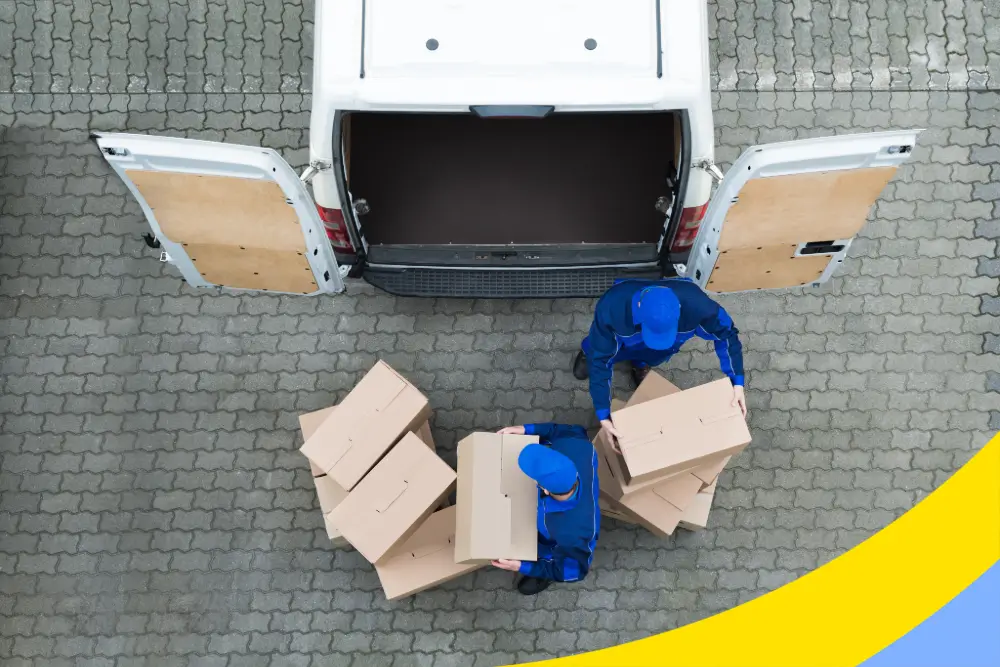
In 2026, customers expect every delivery to be exactly right, whether they’re ordering groceries, meal kits, medication, or supplies for their pets. Order accuracy — getting the correct items, in the right quantities, to the right person, on time — has become one of the clearest signals of whether a delivery operation is built to last. Get it right and you earn repeat purchases, stronger loyalty, and a reputation worth talking about. Get it wrong and the costs pile up fast: returns now equal roughly one in five online orders, and U.S. retail returns reached about $849.9 billion in 2025, a meaningful share of that driven by wrong or damaged shipments rather than simple buyer’s remorse.
The stakes are easy to underestimate. Returns are no longer a back-office afterthought; they’re a structural cost of selling online. One analysis estimates that for every $1 billion in sales, retailers face roughly $145 million in returned merchandise — and every avoidable error adds to that pile while chipping away at trust. Each wrong item also triggers a return shipment, a refund or replacement, and a support conversation, so the true cost of a single inaccuracy is almost always larger than the item itself.
The good news is that accuracy is highly controllable. The five strategies below — spanning inventory, picking, tracking, quality control, and feedback — give delivery businesses a practical playbook for making sure customers receive exactly what they ordered, every time. They also reinforce one another: tighter inventory feeds better picking, real-time tracking surfaces problems before they reach the door, and customer feedback closes the loop. For a broader view of where accuracy fits into the wider workflow, see our guide to last-mile delivery best practices.
1. Implement Inventory Management Systems
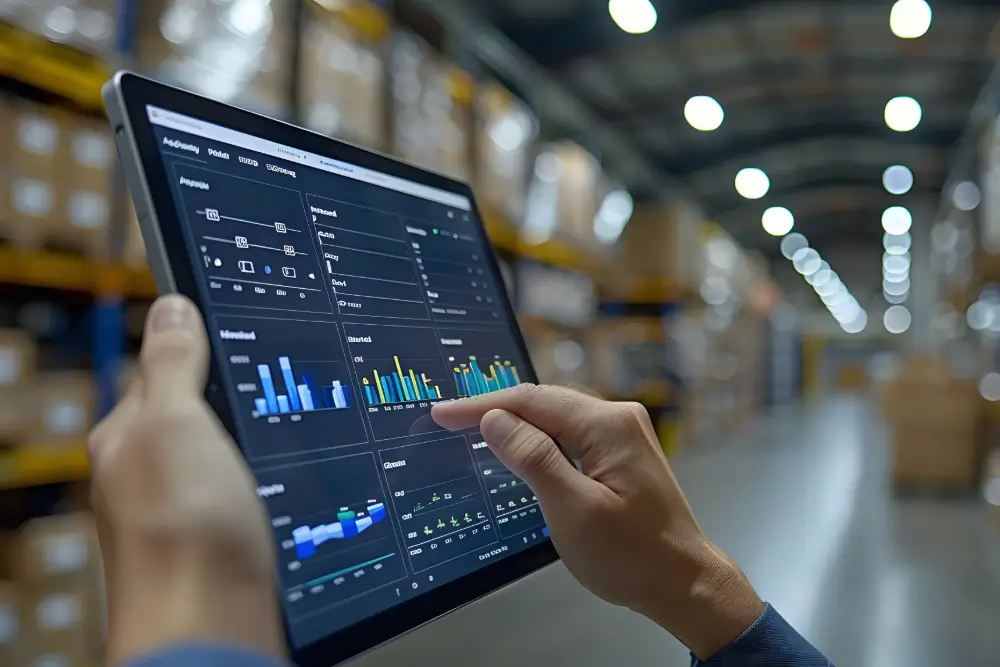
Accurate inventory management is the foundation of order accuracy. When stock counts drift away from what’s actually on the shelf, the result is incorrect or incomplete orders, last-minute substitutions, and items sold that can’t be fulfilled. An inventory management system that tracks stock in real time and syncs with your ordering platform keeps that from happening. The difference is stark: manual, paper-based tracking typically runs a 10% to 15% error rate, while barcode-driven systems reach up to 99.9% accuracy — and inventory mistakes alone can quietly cost a business 2% to 4% of revenue through rushed shipping, replacements, and write-offs.
For high-turnover categories like grocery delivery, where dozens of items move per order and freshness windows are tight, automation prevents the all-too-common scenario where a product listed as available is actually gone. By updating stock the moment an item is received, picked, or sold, the system ensures only genuinely available products are offered to customers. The same live data powers smarter routing decisions downstream, because a route built on phantom inventory wastes a driver’s day and disappoints a customer at the door. For businesses selling across a storefront, a marketplace, and a phone line at once, a single source of truth for stock is what keeps those channels from overselling the same unit.
Getting there doesn’t require ripping everything out at once. Most operations see the biggest gains from a few fundamentals: clean product data, scannable shelf locations, and a workflow that forces a scan at every handoff so the system reflects the shelf rather than someone’s memory. Layering in regular cycle counts on your fastest-moving SKUs keeps accuracy from eroding over time. Inventory accuracy is really the first checkpoint in a larger sequence — if you want to see how the pieces connect end to end, our complete guide to order fulfillment walks through the full process from stock to doorstep.
2. Optimize Order Picking

Order picking is where many accuracy problems are either caught or created. It’s also where small percentages translate into real money. Manual picking error rates run roughly 1% to 3% industry-wide, and each mispick costs an estimated $50 to $75 in rework, reshipping, and customer-service time — while best-in-class operations that enforce scan verification at every stage reach 99.9% pick accuracy. At 500 orders a day, the gap between a sloppy process and a disciplined one is the difference between a handful of wrong shipments daily and almost none.
Closing that gap rarely requires exotic technology. Organized storage, clear picking instructions, and a scan confirmation at receiving, picking, and packing do most of the work. Barcode scanning verifies the SKU before it goes in the box and updates order status in real time, which is especially valuable for businesses like bakery delivery, where similar packaging makes look-alike mix-ups easy. High-volume operations can layer on zone or batch picking, pick-to-light guidance, and consistent picker training to improve speed without sacrificing precision.
The returns on even modest improvements compound quickly. In one documented case, cutting picking errors by 70% saved a retailer about $500,000 a year — a reminder that accuracy work pays for itself well before it shows up in customer reviews. It also lifts throughput, because pickers spend less time hunting for items and correcting mistakes and more time fulfilling orders. Picking errors are one of the most common, and most preventable, sources of inaccurate deliveries; our breakdown of common delivery mistakes covers the others worth designing around.
3. Use Real-Time Order Tracking

Real-time tracking does double duty: it reassures customers and it gives your team a live window into whether each order is going where it should. Demand for it is no longer a nice-to-have. Surveys show that 73% of consumers want to track their orders throughout delivery, and 96% use tracking when it’s offered. When customers can see exactly where an order is, mix-ups, missed handoffs, and failed delivery attempts drop, because both sides are working from the same information.
There’s an operational payoff, too. Real-time visibility cuts the flood of “Where is my order?” inquiries — one analysis found tracking technology reduces those calls by up to 35%, freeing your team to focus on genuine exceptions instead of status updates. Tracking also pairs naturally with address validation: confirming a deliverable address before dispatch is one of the simplest ways to prevent first-attempt failures, which are expensive and frustrating for everyone.
EasyRoutes integrates with real-time driver tracking so every stop is correctly assigned, tracked, and updated through the delivery. For categories like meal kit delivery, where timing and freshness are everything, that transparency lets customers plan to be home and verify contents on arrival. To go deeper on building this into your operation, see our pillar on using real-time tracking to keep customers informed.
4. Integrate Quality Control Measures

Quality control (QC) is the safety net that catches errors before they reach the customer. Building checkpoints into the fulfillment flow — verifying order contents, confirming quantities, inspecting packaging, and validating the delivery address — turns accuracy from a hope into a process. Each checkpoint targets a known failure mode, so mistakes are intercepted rather than discovered in an angry review. This matters more as expectations sharpen: 62% of shoppers now value an accurate delivery date over faster shipping, meaning reliability and correctness beat raw speed in the eyes of most customers.
The payoff shows up in the numbers retailers track. In the 2026 American Customer Satisfaction Index shipping study, the accuracy of order fulfillment scored 84 and earned a place among new delivery-quality metrics, underscoring how central correctness has become to satisfaction. Packaging is part of this story too, since damage in transit accounts for a large share of returns; the right box, fill, and handling protect accuracy that the warehouse already got right.
For categories where presentation and condition are part of the product — flower delivery is a classic example — QC checks on packaging and freshness ensure customers receive arrangements that look as good at the door as they did in the shop. A final verification step at handoff, captured as proof of delivery, also confirms the right order reached the right person; our guide to proof of delivery benefits and implementation explains how to put that last checkpoint to work.
5. Use Customer Feedback to Improve

Customer feedback turns accuracy from a one-time effort into a system that keeps improving. Post-delivery surveys, ratings, and reviews surface recurring problems — a product that’s frequently mispicked, a route where addresses are often wrong, a category prone to damage — that internal metrics can miss. Acting on that data lets you fix root causes instead of patching individual complaints, and it signals to customers that their experience is being heard.
The cost of ignoring feedback is steep. According to the NRF and Happy Returns 2025 Retail Returns Landscape, 71% of consumers say a bad return experience would stop them from shopping with a retailer again — and many will tell friends and family about it. The flip side is just as powerful: 76% of first-time customers who have a smooth return say they’d come back, so getting accuracy and recovery right is one of the cheapest ways to turn a one-time buyer into a repeat one.
Feedback collected at the moment of delivery is especially valuable because it’s specific and timely; tying it back to the responsible route, driver, or SKU is what makes it actionable rather than anecdotal. Set a simple cadence — a one-tap rating after delivery, a short monthly review of the lowest scores, and a clear owner for fixes — and accuracy improves on its own momentum. Accuracy and loyalty are tightly linked, which is why feedback belongs in any retention strategy — our customer retention tips for delivery businesses show how to build the loop into everyday operations.
How EasyRoutes Helps You Deliver Accurately
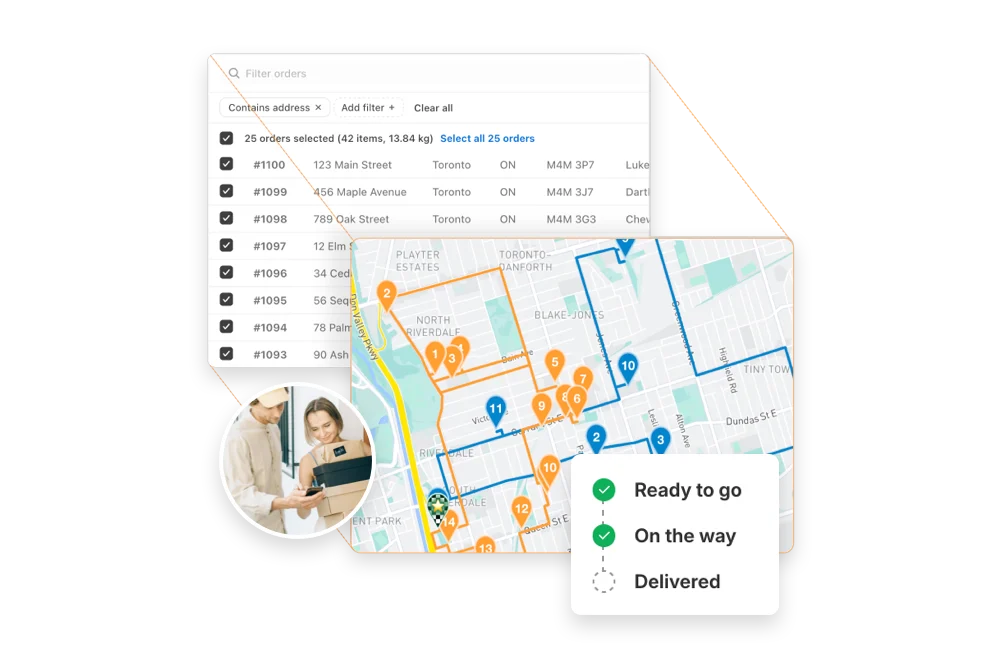
Each of these strategies is stronger when the technology behind your deliveries reinforces it. EasyRoutes brings inventory-aware routing, barcode-backed driver tasks, real-time tracking, customizable customer notifications, and proof of delivery into one workflow — so the order that’s picked is the order that’s loaded, routed, and confirmed at the door. Drivers verify stops in the app, customers follow along on a live tracking page, and your team gets a clear record of what was delivered and when, with photo or signature proof attached to each stop. Customizable notifications keep buyers informed at each milestone, which cuts inbound questions and gives customers a clear moment to flag anything that looks off before it becomes a return.
Accuracy isn’t a single feature; it’s the cumulative result of getting inventory, picking, tracking, quality control, and feedback to work together. Businesses that treat it that way see fewer returns, stronger reviews, and customers who come back. For a wider look at how these pieces add up to delivery customers actually love, read what makes a great delivery experience — and when you’re ready to streamline your own operation, EasyRoutes gives you the tools to make accurate, on-time delivery the default.