Logistics Automation in 2026: Transforming Delivery
By Joe SnyderSee how logistics automation — AI route optimization, autonomous vehicles, warehouse robotics and real-time tracking — is reshaping delivery in 2026.
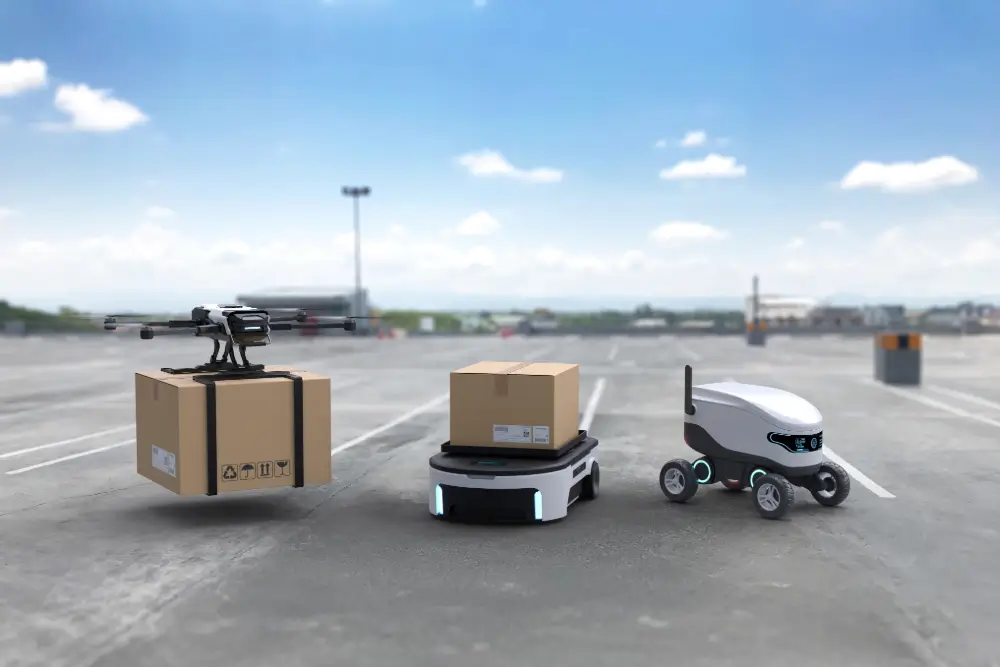
See how logistics automation — AI route optimization, autonomous vehicles, warehouse robotics and real-time tracking — is reshaping delivery in 2026.
Automation is rewriting the rules of logistics. What used to be a patchwork of clipboards, manual dispatch boards, and best-guess routing has become a connected system where software plans the work, robots move the goods, and customers watch their orders arrive in real time. The momentum is hard to overstate: the global logistics automation market is on track to reach roughly USD 99 billion in 2026 and more than USD 260 billion by 2034, growing at a double-digit annual clip. In this guide we break down the technologies reshaping the industry in 2026 — from AI route optimization to autonomous freight, warehouse robotics, and drone delivery — and show how a delivery business of any size can put them to work.

Efficient routing is the foundation of profitable delivery, and it is the easiest place for most businesses to capture automation gains. Planning routes by hand is slow, error-prone, and almost never produces the lowest-mileage sequence — especially once you are juggling dozens of stops, time windows, and vehicle constraints. Automated route optimization solves a problem that humans simply cannot do well at scale, using algorithms to weigh distance, traffic, delivery windows, and capacity all at once.
The payoff shows up directly on the bottom line. Last-mile delivery is the most expensive leg of the journey, and fuel alone can account for a large share of fleet costs, so trimming unnecessary miles compounds quickly across a week of routes. Smarter sequencing also lifts driver utilization — fitting more stops into each shift without adding vehicles — which means a growing order book no longer demands a proportionally bigger fleet.
Platforms like EasyRoutes plug straight into Shopify and other e-commerce systems, turning a list of orders into sequenced, driver-ready routes in seconds — work that used to consume a dispatcher’s entire morning. Because the optimization runs continuously, you can re-plan as new orders arrive, balance stops evenly across multiple drivers, and account for real-world constraints like delivery time windows and vehicle capacity that manual planning tends to ignore.
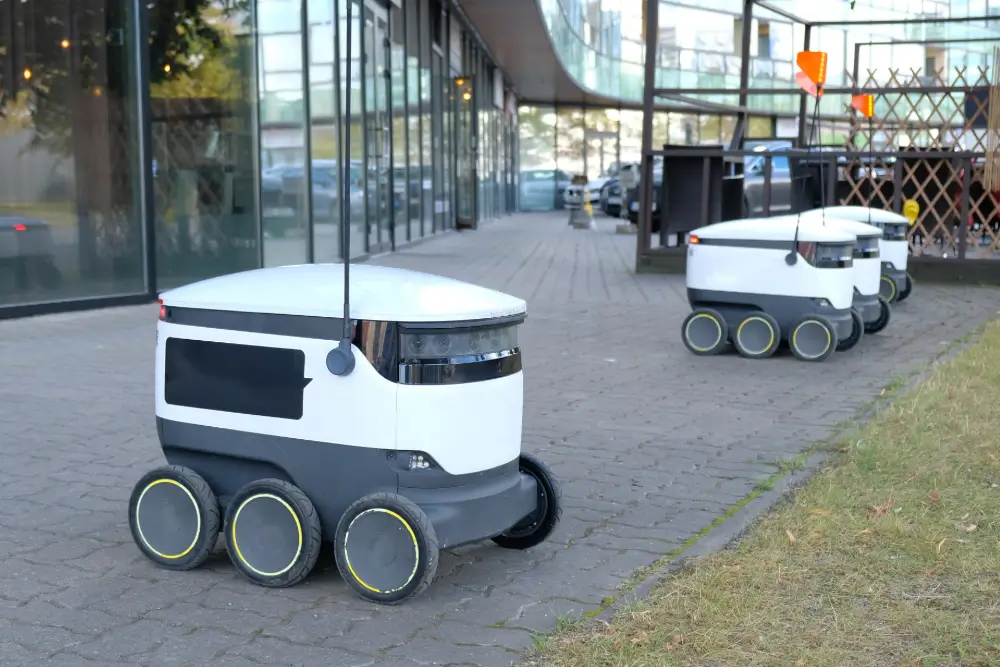
Self-driving technology has moved decisively from demo to deployment, though not always in the form people predicted a few years ago. On the passenger side, Waymo now runs around 400,000 paid rides a week and is targeting a million weekly rides by the end of 2026 — proof that fully driverless operations can scale safely in dense urban environments.
For moving goods, the action has shifted to long-haul freight and sidewalk robots. Aurora and McLane have transitioned to fully driverless commercial hauls on the Dallas-to-Houston corridor, using a hybrid model where the autonomous system handles the interstate middle mile and human drivers manage local delivery. Autonomous trucks can run close to around the clock without the hours-of-service limits that constrain human drivers, helping carriers cope with a persistent shortage of qualified labor on long routes.
Notably, several early last-mile pioneers — including Nuro, which once built custom delivery pods — have pivoted to licensing their driving systems rather than operating their own delivery fleets, a reminder that the technology is maturing faster than any single business model. For most delivery operations, autonomy will arrive as a tool that extends human drivers rather than replaces them outright, taking on the predictable middle mile while people handle the nuanced, doorstep-level work that still benefits from a human touch.
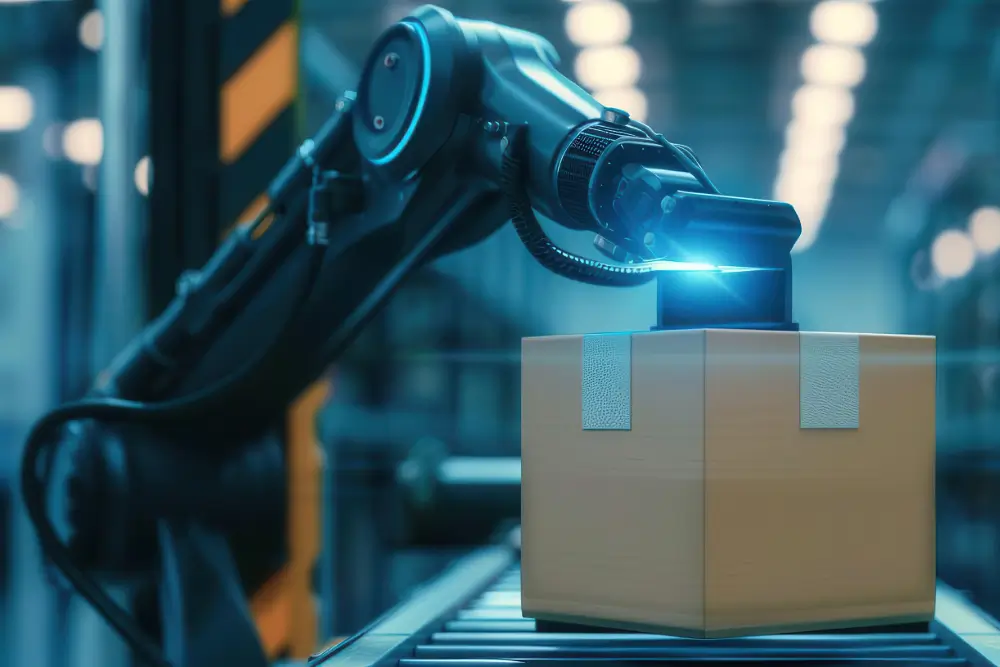
Inside the warehouse, robotics has reached genuine scale. Amazon now operates more than one million robots across over 300 fulfillment centres, a fleet that rivals its human workforce in size. These range from carts that ferry inventory shelves to robotic arms that pick individual items and fully autonomous mobile units that navigate the floor alongside employees.
The bigger story is coordination. Amazon’s generative-AI model, DeepFleet, acts as a traffic-control system for the whole robot population and has already cut fleet travel time by about 10%, translating into faster, lower-cost order processing. Beyond speed, automating repetitive picking and hauling improves accuracy and takes the most physically punishing tasks off human shoulders, while creating new roles in maintenance, robotics supervision, and systems engineering. The lesson for smaller operators is that automation is no longer just about hardware — it is about the intelligence orchestrating it. Studying how the largest carriers automate their operations is one of the best ways to find tactics you can adapt at your own scale.
Artificial intelligence is the connective tissue of modern logistics. Machine-learning models digest vast streams of order, traffic, and weather data to forecast demand, anticipate delays, and continuously refine delivery plans. Unlike static rules, these systems improve as they ingest more data, making each week’s routing and staffing decisions sharper than the last. Accurate demand forecasting, in particular, lets businesses pre-position inventory and schedule drivers ahead of predictable spikes — the holiday rush, a weekend promotion, a weather event — instead of scrambling to react after orders pile up.
One of the most practical applications is dynamic routing — adjusting routes on the fly as conditions change rather than locking in a plan at the start of the day. When a driver runs late, a new rush order lands, or a road closes, AI-driven systems can re-sequence stops in real time, protecting promised delivery windows. The same predictive capability extends to fleet maintenance, flagging vehicles for service before a breakdown takes them off the road.
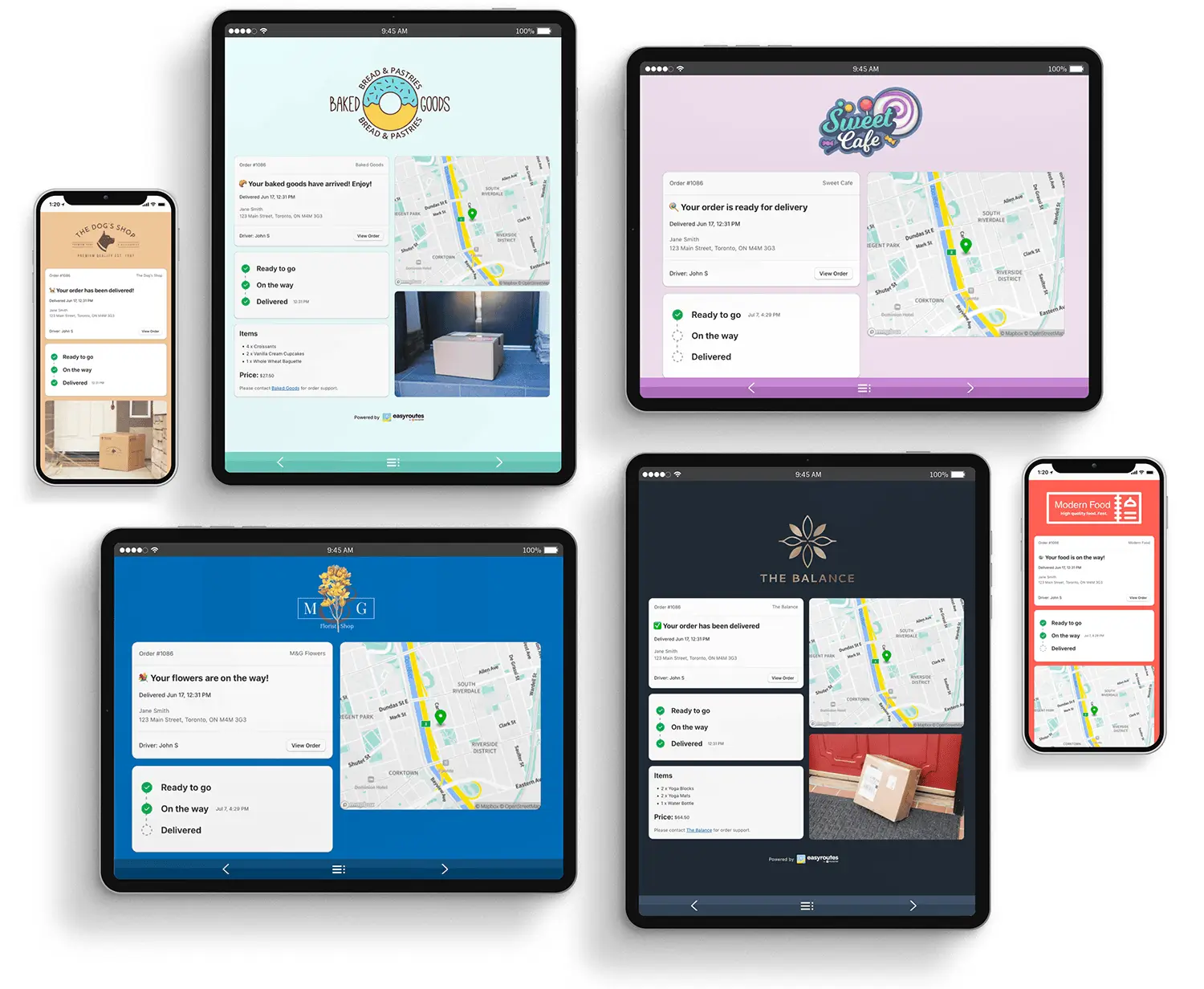
Automation has quietly transformed the post-purchase experience, and customer expectations have risen to match. In 2026, 88% of consumers say real-time delivery tracking is critical to a positive experience. Shoppers now expect a stream of proactive updates — order confirmed, out for delivery, arriving soon — delivered automatically by text and email.
Meeting that expectation manually is impossible at volume, which is exactly why automation matters here. Systems that provide real-time tracking and automated notifications keep customers informed without a single staff hour spent fielding “where is my order?” questions. EasyRoutes, for example, sends delivery notifications and live tracking links automatically, letting recipients follow their driver on a map right up to the doorstep — reducing missed deliveries and support calls in one move.

Automated inventory systems keep stock at the right level without constant manual counting. By tracking quantities in real time, forecasting demand, and triggering reorders automatically, they reduce both the dead capital tied up in overstock and the lost sales caused by stockouts.
Tied into the rest of the supply chain, this visibility means products are available when customers want them and warehouse space is used efficiently. The result is healthier cash flow, lower storage costs, and fewer fire drills when a popular item suddenly sells out. Connected to your delivery software, accurate stock data also prevents the costly mistake of dispatching a driver for an order that cannot actually be fulfilled.
Blockchain continues to find its footing as a tool for transparency rather than hype. By recording each transaction on a shared, tamper-resistant ledger, it gives every party in a supply chain access to the same trustworthy record of where goods have been and who handled them.
That provenance trail is most valuable in high-stakes categories — pharmaceuticals, luxury goods, and food safety — where proving authenticity and preventing fraud carry real financial and regulatory weight. For everyday last-mile delivery its role is smaller, but as a layer of security and accountability it complements the broader push toward automated, data-rich logistics.
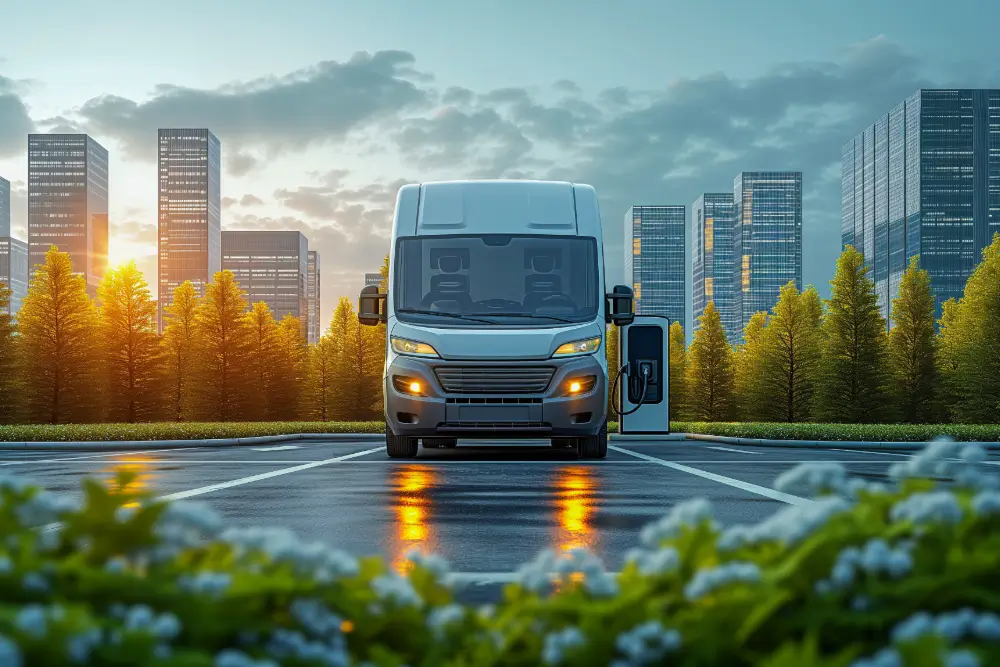
Automation and sustainability increasingly pull in the same direction. Optimized routes mean fewer miles, less idling, and lower emissions, while automated load planning squeezes more deliveries out of every trip. Layer in electric vehicles and renewable-powered warehouses, and the environmental footprint of a delivery operation shrinks measurably.
It is also good business. More than a third of consumers say they would pay a dollar or two extra for more sustainable shipping, and many will trade a slightly slower delivery for a greener one. Adopting greener transportation practices helps businesses meet tightening regulations and win over eco-conscious shoppers at the same time.
Drone delivery has crossed from pilot project to regulated reality. The U.S. Federal Aviation Administration’s new Part 108 framework — phasing in beginning July 2026 — establishes the first standardized path for routine beyond-visual-line-of-sight operations at scale, the regulatory unlock the industry has waited years for.
The operators are scaling fast behind it. Wing and Walmart announced an expansion aimed at reaching 60 million U.S. households, while Amazon Prime Air has said it intends to serve communities with 30 million customers and deliver half a billion packages by the end of the decade. Drones will not replace the delivery van any time soon, but for small, urgent shipments — prescriptions, fresh food, replacement parts — they are becoming a genuine option. Alongside autonomous freight and electric fleets, they point to a future explored in our overview of on-demand delivery trends.
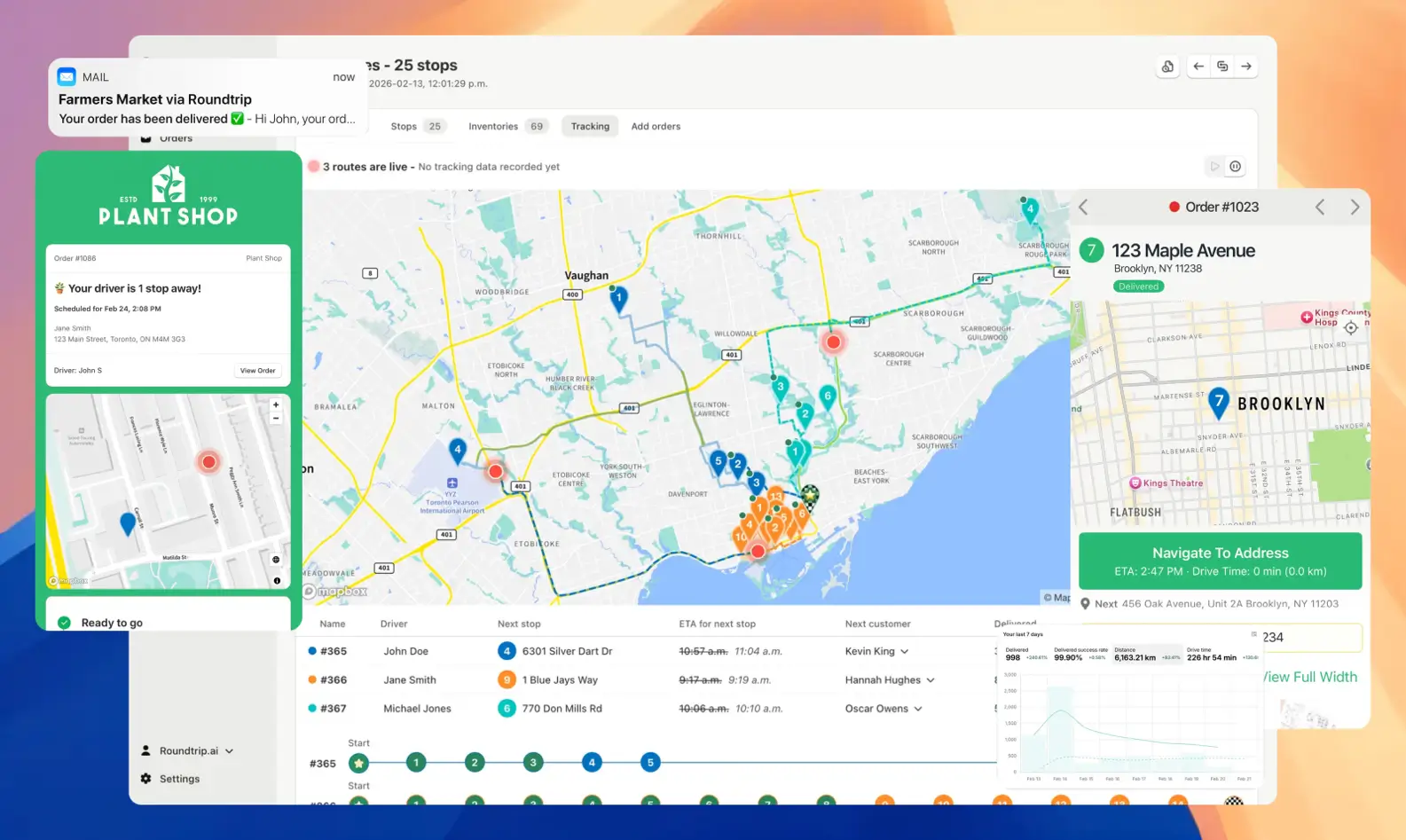
You do not need a fleet of robots or a research lab to benefit from logistics automation. Much of what large enterprises spend millions on is available to small and mid-sized delivery businesses through software. EasyRoutes brings the core pieces together in one Shopify-friendly platform: it optimizes multi-stop routes automatically, factors in vehicle types and capacity limits, and can even plan multi-day delivery schedules — so the right stops land on the right vehicles in the right order.
From there, automation carries the work through the rest of the day. Routes can be auto-dispatched to drivers, customers receive automatic SMS and email notifications with live tracking links, and drivers capture proof of delivery — photos and signatures — straight from the mobile app. Workflows can tie these steps together so that new orders flow into routes and updates reach customers without manual intervention, freeing your team to focus on growth instead of logistics busywork. And because every stop, delivery, and notification is logged, you gain the kind of route and performance data that used to be the exclusive advantage of the giants — turning each completed route into insight you can act on next week.
Automation is no longer the future of logistics — it is the present, and it is accessible to businesses of every size. By embracing route optimization, real-time tracking, and intelligent automation, you can cut costs, delight customers, and stay competitive in a fast-moving industry. Explore EasyRoutes' automation and route planning features and start transforming your delivery operations today.
EasyRoutes optimizes deliveries using your selected orders, start & end locations, stop time intervals, time windows, and route limits. You can balance routes, respect capacities, and re‑optimize as plans change.
See: Route Options · EasyRoutes 101
Yes. Schedule routes across multiple days with configured start times/locations and add an overnight driver break to maintain accurate ETAs.
See: Multi‑Day Scheduling
Yes. EasyRoutes supports Vehicle Profiles you can configure and assign to routes. EasyRoutes also supports capacity planning via item or weight limits per route. Use these with other options (like time windows, or custom start/end locations) to keep plans realistic and drivers on schedule.
See: Vehicle Profiles · Max items/weight per route · Commercial/GPX Export
Yes. If a scheduled start time is set, routes can be auto‑assigned and dispatched to the selected driver when created.
See: Auto‑Dispatch
Workflows save time and reduce errors by automating routine steps, like creating routes with new orders on delivery days, or auto-dispatching routes to assigned drivers, all based on custom scheduling that works for your business. This keeps operations efficient and customers informed.
Learn more: Workflows Guide
Yes. On Premium/Enterprise plans you can display a live driver pin on tracking pages when the driver is 1–10 stops away.
Yes. EasyRoutes Premium and Enterprise plans support branded SMS notifications with usage‑based pricing per message segment. Configure templates and funding in Settings.
Absolutely. Drivers can add photos, collect an e‑signature, and record notes at each stop; these appear in the route and customer tracking (if enabled).
See: Proof of Delivery
EasyRoutes is the AI-native delivery operations platform trusted by 5,000+ businesses across 75+ countries. Plan routes in seconds, dispatch drivers automatically, and delight your customers — from Shopify or any order source. Experience delivery operations that run themselves. Rated 4.9 stars and certified Built for Shopify.
⭐⭐⭐⭐⭐ 4.9 stars • Trusted by 5,000+ Businesses