How Amazon, UPS, FedEx & Walmart Optimize Delivery
By Joe SnyderSee how Amazon, UPS, FedEx, and Walmart optimize last-mile delivery — route optimization, data, and flexible fleets — and how to do the same.
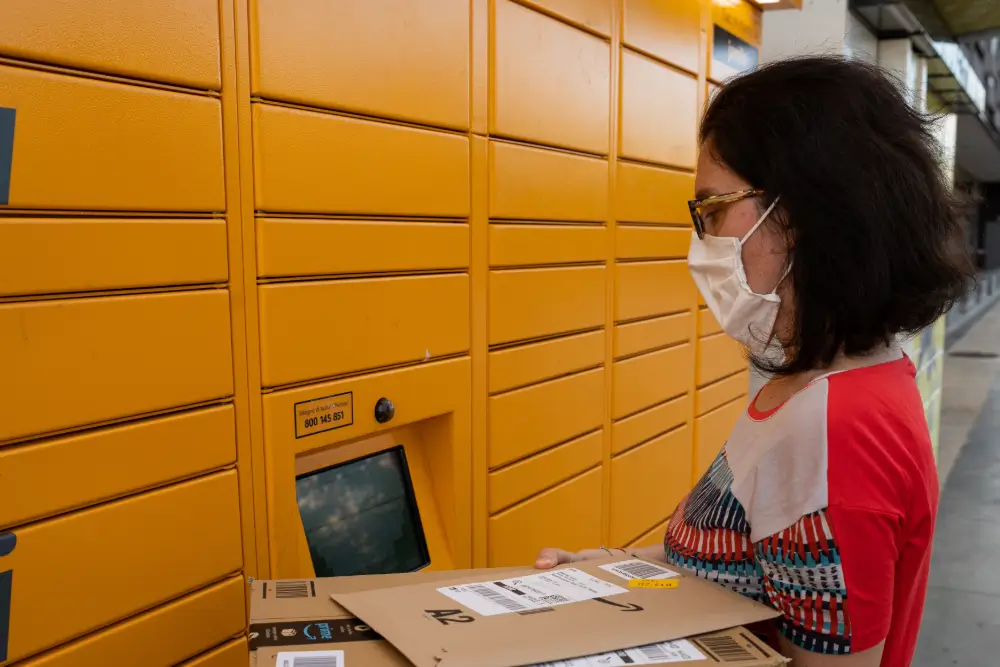
See how Amazon, UPS, FedEx, and Walmart optimize last-mile delivery — route optimization, data, and flexible fleets — and how to do the same.
The fastest, most expensive, and most visible part of any delivery isn’t the warehouse or the long-haul freight leg — it’s the last mile to the customer’s door. Industry data shows the last mile now absorbs roughly 53% of total shipping costs, up from 41% in 2018, and the U.S. last-mile market was worth about $201 billion in 2025. That is exactly why Amazon, UPS, FedEx, and Walmart pour so much money and engineering into it. Each company has built a different machine to solve the same problem, and the underlying principles — route optimization, data, flexible labor, and real-time visibility — are surprisingly learnable for businesses of any size.
This guide breaks down how the four logistics heavyweights actually plan and optimize delivery, what they share in common, and how a small or mid-sized delivery operation can borrow the same playbook without an enterprise budget.
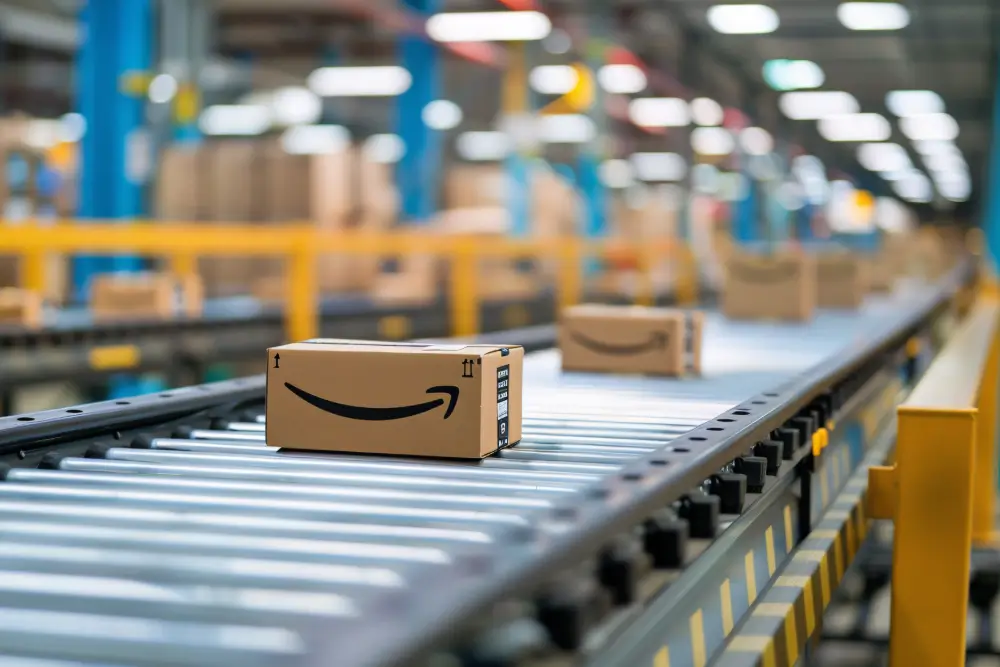
Amazon’s last-mile strategy is built on owning as much of the final leg as possible rather than handing it to traditional carriers. Three pillars carry the volume. The Delivery Service Partner (DSP) program lets local entrepreneurs build and run fleets of Amazon-branded vans; Amazon Flex enlists independent contractors who deliver in their own cars; and an in-house network of vans, planes, and sortation centers gives Amazon direct control over speed and cost. In dense, walkable neighborhoods Amazon even uses on-foot couriers and is piloting electric cargo bikes — proof that the right vehicle for the last mile depends entirely on local density.
The electric piece of that network has scaled fast. Amazon’s custom Rivian vans grew more than 50% in 2025 to over 30,000 vehicles, part of a commitment to put 100,000 electric delivery vans on the road by 2030 under The Climate Pledge. The fleet is already doing serious volume — Amazon’s Rivian vans delivered more than 1 billion packages in the U.S. in a single year. And the vans aren’t just greener — they’re rolling computers. Amazon has begun equipping them with Vision-Assisted Package Retrieval (VAPR), a system that uses lights and sound to flag the right packages for each stop so drivers stop digging through bins. Over a route of 150-plus stops, shaving seconds per stop compounds into real time savings.
Amazon’s most futuristic bets are progressing more slowly. Prime Air drone delivery remains in limited testing with documented operational setbacks, and driver-assist smart glasses are still early-stage. The lesson for everyone else isn’t the gadgets — it’s the relentless focus on removing friction from each individual stop, and the willingness to flex labor up and down with demand.

If Amazon optimizes the stop, UPS famously optimizes the route. Its proprietary system, ORION (On-Road Integrated Optimization and Navigation), is one of the most studied logistics tools in the world. ORION evaluates enormous numbers of possible route combinations for each driver — often cited at more than 200,000 alternatives for a single route — and, by reducing total miles driven, is credited with saving the company about 100 million miles and 10 million gallons of fuel a year, while cutting roughly 100,000 metric tons of CO2 and delivering an estimated $300–$400 million in annual savings. UPS has noted that trimming even one mile per driver per day is worth tens of millions of dollars a year.
Underneath, ORION is solving a version of the traveling salesman problem — finding the most efficient ordering of stops — using geospatial algorithms and constraint-based vehicle routing fed by years of GPS and handheld DIAD device data. The system has matured from static daily routes to dynamic routing that re-optimizes throughout the day as traffic and commitments change, with a UPSNav layer that guides drivers to exact entry points that aren’t obvious from the street.
Crucially, UPS pairs the algorithm with human expertise: dispatchers and experienced drivers refine the software’s suggestions, and that on-the-ground feedback makes the model better over time. UPS is also the origin of the most famous optimization tip in logistics — avoid left turns. Because left turns mean idling against oncoming traffic, minimizing them reduces wasted time and fuel, a small structural change that contributed to major savings and shows how the right routing logic can cut fuel costs at scale.
FedEx’s edge is treating its global network — spanning more than 220 countries and territories — as a data asset. Through FedEx Dataworks, the company turns shipment data, route performance, and disruption signals into intelligence that feeds routing and planning decisions. In late 2025 FedEx expanded a strategic collaboration with ServiceNow to unite AI, data, and workflows that anticipate disruptions and optimize networks rather than just react to them.
That intelligence sits on top of a physical overhaul. Under Network 2.0, FedEx is consolidating day-definite Ground volume and time-definite Express volume into a single network, layering in RFID and robotics to track and move packages more efficiently. Sensor-based monitoring tools capture conditions like temperature, location, and handling in transit, and FedEx continuously reroutes around traffic and weather throughout the day. The pattern is clear: the smartest route plan is only as good as the live data feeding it, and FedEx is betting that richer data plus a simpler physical network compounds into a durable cost and speed advantage.

Walmart’s breakthrough was geographic, not algorithmic: it already had thousands of stores sitting close to customers, so it turned them into last-mile fulfillment hubs. By fulfilling online orders directly from store shelves, Walmart now offers store-fulfilled delivery in under three hours to more than 93% of U.S. households, and it can reach roughly 60% of the U.S. population in 30 minutes or less. Behind the scenes, Walmart has automated a growing share of its supply chain, with a large portion of e-commerce fulfillment-center volume now handled by automation to keep that speed affordable.
The labor model is crowdsourced. Walmart’s Spark Driver platform dispatches independent contractors from nearby stores, while Walmart GoLocal sells that same delivery muscle to other retailers as a white-label service. To squeeze out more density and speed, Walmart has piloted dark stores and store-based parcel stations dedicated to online orders, and it has leaned on this network to ship billions of units on a same-day or next-day basis.
Walmart has also pushed drone delivery further into the mainstream than most. Through partnerships with Zipline and Wing, it offers 30-minute drone delivery within a six-mile radius of participating stores and has logged over 150,000 drone deliveries since 2021 across five states. The takeaway: proximity plus a flexible delivery network beats raw fleet size.

Strip away the brand differences and the same five principles show up at every one of these companies:
None of these require a billion-dollar R&D budget. They require the right tools applied consistently — which matters more than ever as last-mile costs keep climbing and customers treat fast, transparent delivery as the default. For a deeper foundation, see our guide to last-mile delivery best practices.

You don’t need to build your own ORION to capture most of the benefit. A purpose-built delivery management platform like EasyRoutes brings the same core capabilities to local and e-commerce delivery operations, without the engineering team or the capital outlay.
With EasyRoutes, you can build optimized multi-stop routes in seconds — accounting for traffic, time windows, vehicle capacity, and even scheduled driver breaks — and re-optimize on the fly when plans change. Routes dispatch straight to a driver app with turn-by-turn navigation, real-time tracking keeps customers informed with accurate ETAs, and proof of delivery captures photos and signatures at the door. It’s the same density-data-visibility loop the giants run, packaged for a Shopify store, independent merchant, or a regional fleet, and it distributes work evenly so drivers aren’t overloaded or idle.
That combination is exactly how local and mid-sized businesses can compete with Amazon Prime on delivery experience: own the last mile, move fast locally, and keep customers informed every step of the way — without an Amazon-sized budget.
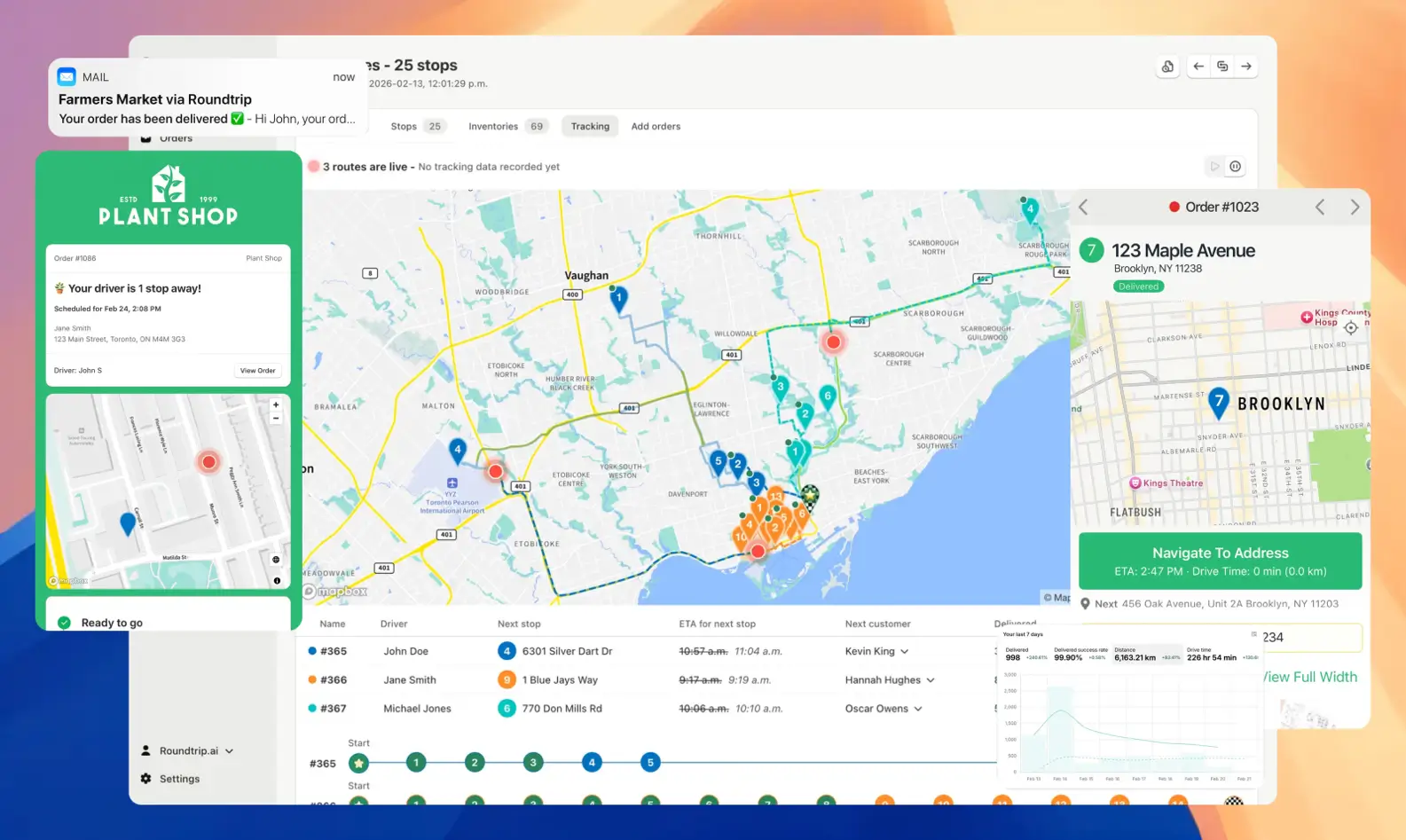
Amazon, UPS, FedEx, and Walmart each attack the last mile from a different angle — the stop, the route, the network, and the store — but they all win the same way: smarter routing, better data, flexible capacity, and real-time visibility. Those principles scale down just as well as they scale up, and the gap between a billion-dollar logistics arm and a sharp local operator is mostly a matter of tooling.
Ready to deliver like the giants? EasyRoutes gives your business optimized route planning, live tracking, and proof of delivery in one tool — so you can offer a world-class delivery experience at any scale.
EasyRoutes optimizes deliveries using your selected orders, start & end locations, stop time intervals, time windows, and route limits. You can balance routes, respect capacities, and re‑optimize as plans change.
See: Route Options · EasyRoutes 101
Yes. Enable Balance routes to distribute stops as evenly as possible across multiple routes/drivers while respecting other route constraints (like time windows, or item/weight limits).
See: Balance routes · How many routes?
Yes. You can set delivery time windows per stop or import them from supported third‑party date/time apps. EasyRoutes optimizes routes to meet these windows and calculates ETAs accordingly.
Yes. EasyRoutes supports Vehicle Profiles you can configure and assign to routes. EasyRoutes also supports capacity planning via item or weight limits per route. Use these with other options (like time windows, or custom start/end locations) to keep plans realistic and drivers on schedule.
See: Vehicle Profiles · Max items/weight per route · Commercial/GPX Export
Yes. Re‑optimize at any time — after adding or removing stops, changing stop priorities, editing route options, or balancing loads. Drivers can also re-optimize routes delivered out of order, or re‑order stops if enabled from your EasyRoutes Settings.
Yes. If a scheduled start time is set, routes can be auto‑assigned and dispatched to the selected driver when created.
See: Auto‑Dispatch
Yes. Enable Real‑Time Tracking in Settings → Driver settings (Premium/Enterprise subscription plans) to view live driver location and progress in the Tracking tab of any route.
See: Real‑Time Tracking
ETAs use route distance, stop service times, and historical traffic, and they update during the day as drivers progress. Accuracy improves when addresses and time windows are clean.
Yes. Create routes in minutes, add last‑minute stops, and re‑optimize during the day. Dispatch instantly to drivers with live tracking and customer notifications.
See: Re‑optimize · Dispatch
Yes. Turn on settings to avoid toll roads and u‑turns from the Route Options panel. Enable these options before planning a route, or edit the route after creation and re‑optimize to see them reflected in your route.
See: Route Options
EasyRoutes is the AI-native delivery operations platform trusted by 5,000+ businesses across 75+ countries. Plan routes in seconds, dispatch drivers automatically, and delight your customers — from Shopify or any order source. Experience delivery operations that run themselves. Rated 4.8 stars and certified Built for Shopify.
⭐⭐⭐⭐⭐ 4.8 stars • Trusted by 5,000+ Businesses