Retail Fulfillment Models: Click & Mortar to DTC
By Joe SnyderCompare the top retail fulfillment models—click-and-mortar, omnichannel, BOPIS, curbside & DTC shipping—and how to choose and optimize each.

Compare the top retail fulfillment models—click-and-mortar, omnichannel, BOPIS, curbside & DTC shipping—and how to choose and optimize each.
Today’s shoppers don’t think in channels. They discover a product on their phone, check whether the local store has it, buy whichever way is easiest, and expect to pick it up or have it delivered on their terms. Meeting that expectation means choosing the right retail fulfillment model — or, more often, the right combination of models. The good news is that the building blocks are well established: click-and-mortar, omnichannel distribution, click-and-collect, curbside pickup, and direct-to-consumer shipping.
This guide breaks down each of these retail fulfillment models, the data behind their growth, and where each one fits. It also covers how to combine them without creating operational chaos, and the technology — from inventory sync to route optimization — that makes a multi-model strategy actually work.
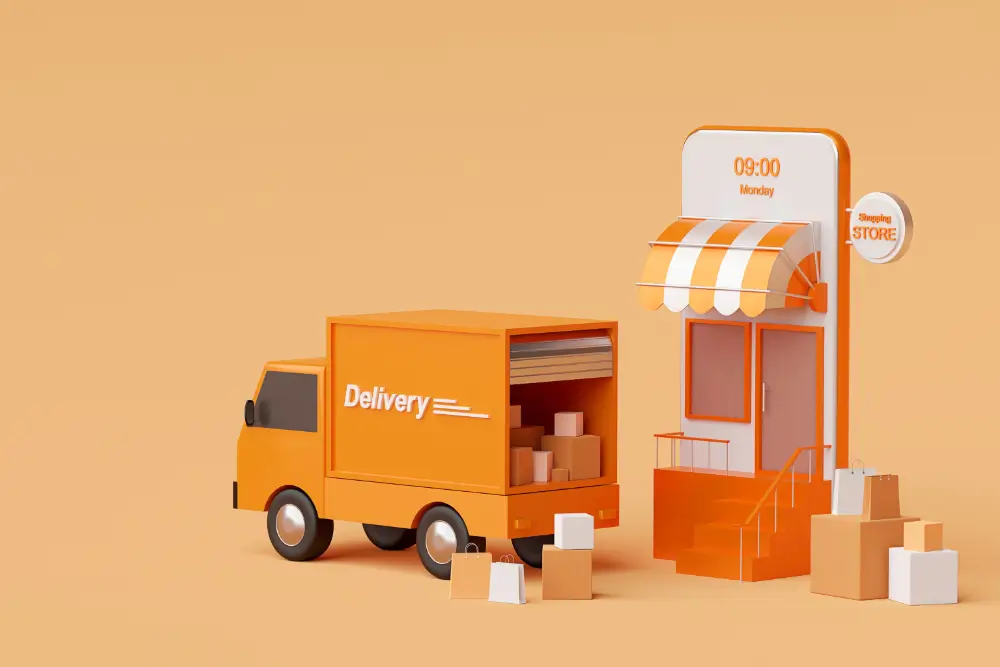
A retail fulfillment model is simply the path a product takes from a customer’s order to their hands. For most of retail history that path was singular: walk into a store, buy, walk out. E-commerce added a second path — order online, wait for a parcel. What defines the modern era is that those paths have multiplied and merged. A single retailer might now fulfill the same SKU by shipping from a warehouse, shipping from a store, handing it over at a pickup counter, or carrying it to a car at the curb.
The models below aren’t mutually exclusive. Click-and-mortar describes the broad strategy of running online and physical channels together; omnichannel is the discipline of making those channels feel like one; and click-and-collect, curbside, and DTC shipping are the specific fulfillment methods that strategy enables. Understanding how they relate is the first step to deciding which ones your business actually needs. For a deeper look at the mechanics underneath all of them, see our complete guide to order fulfillment.

“Click-and-mortar” describes a business that maintains both an online (click) presence and a physical (mortar) one, and treats them as two halves of the same operation rather than separate businesses. Customers can browse online and buy in-store, buy online and pick up in person, or buy online and have an order delivered — and they can return items through whichever channel is most convenient.
That flexibility is the model’s entire value proposition. A pure e-commerce brand can’t offer instant in-person pickup or frictionless returns; a pure brick-and-mortar store can’t reach beyond its local catchment. By running both, a click-and-mortar retailer widens its market, uses store inventory as forward-deployed fulfillment stock, and gives shoppers control over how they receive their orders. The physical footprint also becomes a competitive asset rather than a cost center — stores double as showrooms, pickup points, and return desks.
If click-and-mortar is the structure, omnichannel distribution is the execution standard. Omnichannel means selling across many touchpoints — website, mobile app, social commerce, marketplaces, and physical stores — while keeping inventory, pricing, customer data, and the experience consistent across all of them. The goal is a single, continuous customer journey: discover on social, research on the site, buy in the app, pick up in-store, and never feel a seam.
The payoff is measurable. Shoppers who engage across multiple channels carry roughly 30% higher lifetime value than single-channel shoppers, and Forrester data found that 44% of U.S. online adults say the ability to buy online and pick up in-store significantly influences which retailer they choose. The long-cited Aberdeen Group benchmark — that companies with strong omnichannel engagement retain about 89% of customers versus 33% for those with weak engagement — still gets quoted because the directional truth holds: integration drives retention.
The catch is complexity. Synchronizing inventory, order status, and customer records across every channel demands real integration, not bolted-together systems — and it raises real data-governance and security obligations. Retailers that win at omnichannel invest in the connective technology first. Strong fulfillment also feeds loyalty directly; our guide to customer retention for delivery businesses digs into how the post-purchase experience keeps shoppers coming back.

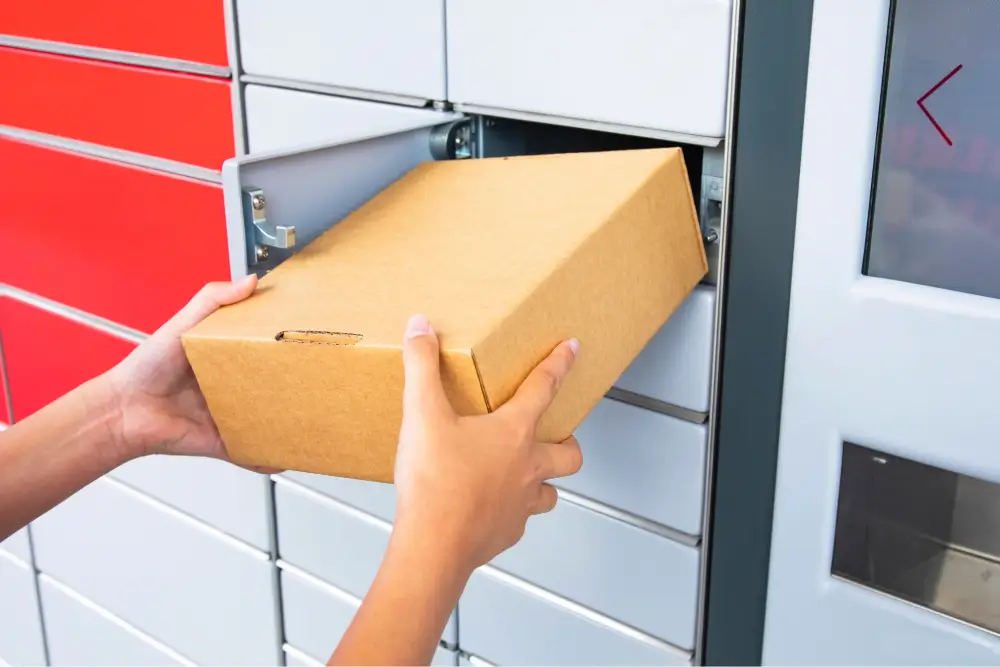
Click-and-collect — the umbrella term for buying online and picking up at a store, a dedicated counter, or a locker — is the fastest-growing bridge between digital and physical retail. Its in-store variant, BOPIS (Buy Online, Pick Up In-Store), has moved from pandemic-era convenience to a permanent fixture. U.S. click-and-collect retail sales are projected to reach roughly $177.9 billion in 2026, up about 15% year over year and accounting for roughly 11% of all U.S. e-commerce sales. Forrester expects U.S. click-and-collect volume to double by 2028 to exceed $200 billion, around 12% of online retail.
For retailers, the appeal is twofold. First, it strips out the most expensive part of e-commerce — last-mile shipping — while still capturing the online sale. Second, it drives incremental revenue at the counter: 85% of U.S. BOPIS shoppers report making an additional purchase when they come in to collect an order. That foot traffic turns a fulfillment method into a merchandising opportunity.
Implementing it well comes down to a few essentials: designate clearly marked pickup points, keep inventory counts accurate in real time so you never accept an order you can’t fill, notify customers the moment an order is ready, and train staff to retrieve and hand off orders quickly. The biggest failure mode is the cancelled or delayed pickup, which erodes the convenience the customer came for. Retailers that run click-and-collect alongside local delivery give shoppers the full menu of fast, low-cost options.

Curbside pickup is click-and-collect without leaving the car: the customer orders ahead, parks in a designated spot, and an employee brings the order out. It surged during the pandemic as a contactless option and never went away — roughly 72 million Americans, about 25% of U.S. consumers, used curbside pickup over a recent 12-month period. It’s especially popular with grocery, big-box, and quick-service retailers, and with any shopper juggling kids, mobility constraints, or a tight schedule.
For the business, curbside often costs less to run than home delivery — no fuel, no driver wages, no failed-delivery re-attempts — while still delivering a premium-feeling convenience. The operational keys are tight communication and timing: the customer should be able to signal arrival from their phone, and staff should be able to match a car to an order in seconds. Pairing curbside with contactless delivery lets a retailer cover both the “I’ll come to you” and “bring it to me” ends of the convenience spectrum.
The direct-to-consumer model flips the script: brands sell straight to shoppers through their own sites and apps, bypassing wholesalers and retailers entirely. That direct line gives brands control over pricing, the unboxing experience, and — most valuably — first-party customer data they can use to personalize and retain. DTC is now a meaningful slice of the market, with U.S. direct-to-consumer e-commerce reaching roughly 19% of all U.S. retail e-commerce sales.
But the narrative has matured. After the pandemic boom, DTC’s share is expected to plateau around that 19% level through 2028, as rising customer-acquisition costs and intensifying competition push brands to treat DTC as one strategic channel rather than the whole business. The brands still winning at it pair the model with disciplined logistics: independent fulfillment means owning warehousing, shipping economics, returns, and the customer’s expectation of fast, often free delivery. Getting free-delivery economics right — setting order-value thresholds and controlling per-order cost — is frequently what separates a profitable DTC line from a leaky one. Meeting the speed bar matters too, since a growing share of shoppers now expect same-day or next-day delivery.
No single model is “best.” The right mix depends on what you sell, where your customers are, and what infrastructure you already own. A few practical guidelines:
Most growing retailers end up running several of these at once. The differentiator isn’t which models you offer — it’s how cleanly they’re stitched together behind the scenes.
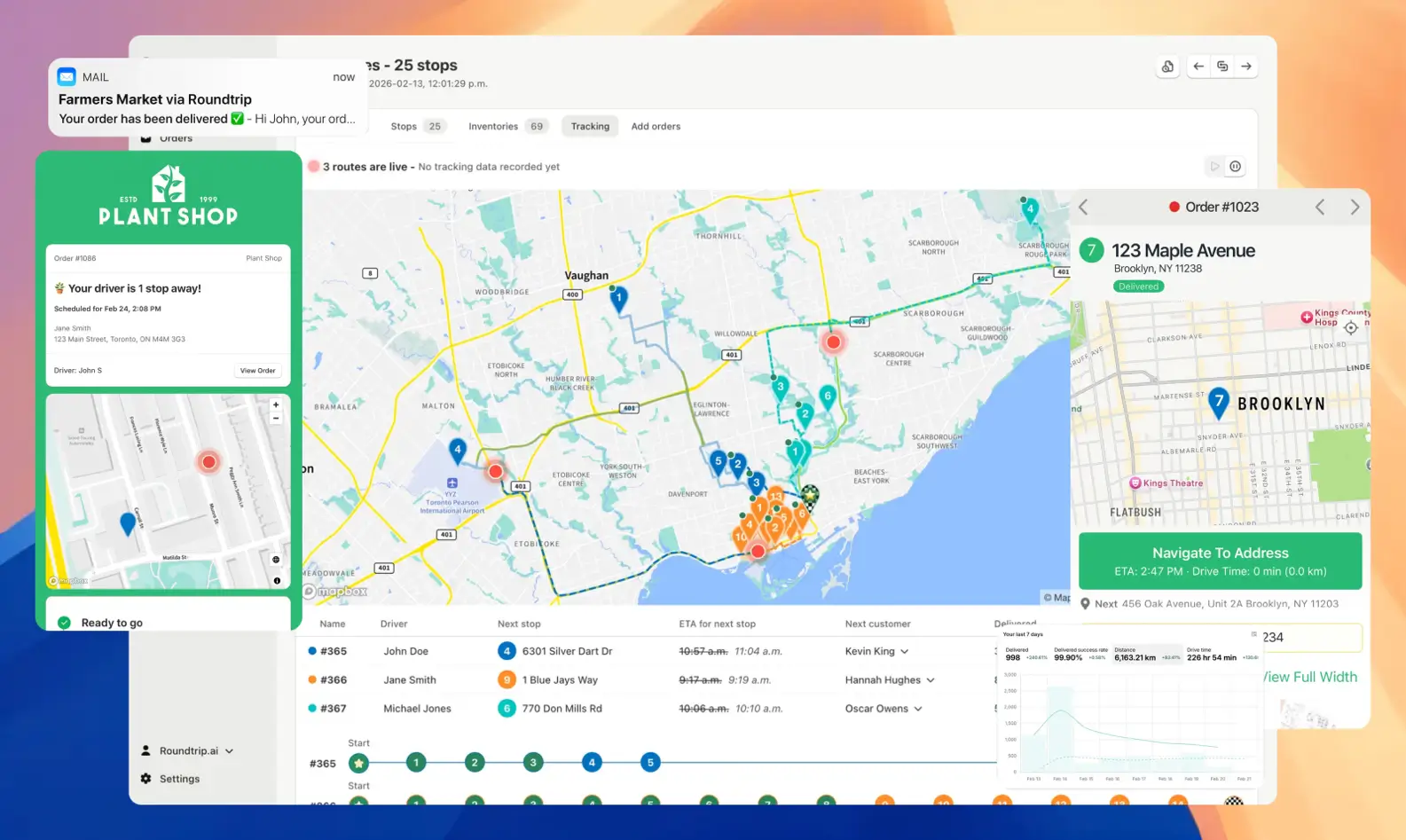
Every model above depends on the same operational spine: accurate inventory, clear customer communication, and efficient movement of goods. Unified inventory management lets you promise pickup or delivery against stock you can actually see. Real-time customer communication closes the loop — and it matters more than ever, with 88% of consumers calling real-time delivery tracking critical to a positive experience and 92% weighing delivery windows when they decide whether to buy. Proactive updates also cut down the “where is my order?” inquiries that otherwise swamp support teams.
For the delivery and store-transfer side of the equation, this is where EasyRoutes fits. It plugs into your e-commerce platform and turns orders into optimized driver routes, so home deliveries, local-delivery lanes, and inter-store transfers all run on the shortest practical path. Drivers get turn-by-turn navigation; dispatchers can auto-assign and re-optimize routes on the fly; and customers receive automated SMS or email notifications with live tracking and accurate ETAs — the same proactive communication that keeps a click-and-collect or DTC promise from breaking. EasyRoutes can also route Shopify Local Delivery and Pickup orders, so pickup and delivery fulfillment live in one workflow. For shoppers who want eyes on their order, real-time tracking and notifications turn a delivery into a reassuring, on-brand experience.
Retail fulfillment is no longer a single road from shelf to doorstep — it’s a network of options that shoppers expect to mix and match. Click-and-mortar provides the structure, omnichannel keeps it coherent, and click-and-collect, curbside, and DTC shipping give customers the specific choices they want. The retailers who thrive aren’t the ones offering the most models; they’re the ones whose models work together seamlessly behind the scenes. If delivery and pickup are part of your mix, tools like EasyRoutes can streamline the logistics — optimizing routes, automating customer updates, and helping every fulfillment promise land on time.
Yes. EasyRoutes supports Shopify Local Delivery and can include Pickup orders on routes when you need a driver or staff task at your store or pickup point. Local Delivery instructions appear directly on the stop when available.
Yes. Create pickup‑only routes or mix pickups and deliveries. Use your store or pickup point as the address, and include any notes/requirements for staff reference.
See: Pickup Orders
EasyRoutes optimizes deliveries using your selected orders, start & end locations, stop time intervals, time windows, and route limits. You can balance routes, respect capacities, and re‑optimize as plans change.
See: Route Options · EasyRoutes 101
Yes. With the Premium plan and above, fully customize email/SMS: add your logo and colors, edit copy/variables, and choose which events send. Works for Shopify orders and imported/manual stops.
Yes. Schedule routes for specific dates/times, and ETAs will be calculated for each stop on a route. These ETAs can be shared via customer tracking links and email/SMS delivery notifications.
Yes. Create routes in minutes, add last‑minute stops, and re‑optimize during the day. Dispatch instantly to drivers with live tracking and customer notifications.
See: Re‑optimize · Dispatch
EasyRoutes is the AI-native delivery operations platform trusted by 5,000+ businesses across 75+ countries. Plan routes in seconds, dispatch drivers automatically, and delight your customers — from Shopify or any order source. Experience delivery operations that run themselves. Rated 4.9 stars and certified Built for Shopify.
⭐⭐⭐⭐⭐ 4.9 stars • Trusted by 5,000+ Businesses