Driver & Vehicle Tracking: 2026 Delivery Guide
By Joe SnyderLearn how driver and vehicle tracking works in 2026: GPS basics, real-time monitoring, route optimization, fuel savings, and how to roll it out.

Learn how driver and vehicle tracking works in 2026: GPS basics, real-time monitoring, route optimization, fuel savings, and how to roll it out.

In 2026, driver and vehicle tracking has moved from a 'nice to have' to a baseline expectation for any business that runs deliveries. Whether you ship meal kits, flowers, groceries, or pet supplies, knowing where your drivers are — and being able to tell your customers — is now central to running an efficient, trustworthy operation. The global fleet management market reflects that shift: it is projected to grow from roughly $30.1 billion in 2026 to $122.3 billion by 2035, a clear signal that real-time visibility is becoming standard practice. This guide explains what driver and vehicle tracking is, how it works, the features that matter, the benefits and trade-offs, and how to roll it out in your own delivery business.
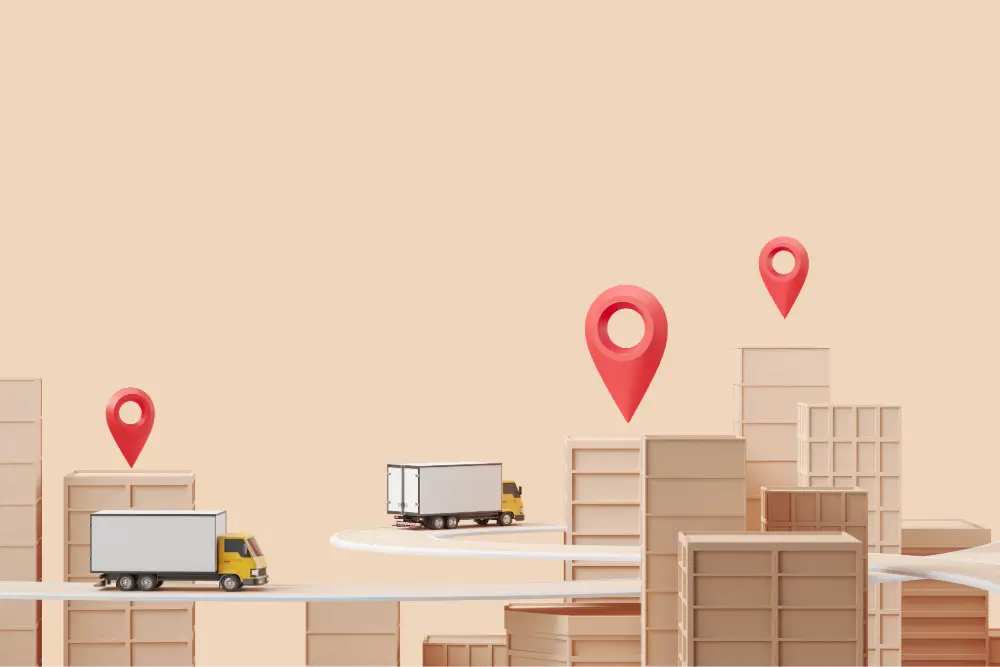
Driver tracking is the use of GPS technology to monitor the real-time location, movement, and progress of delivery drivers. Vehicle tracking is closely related: it pairs GPS with telematics — data drawn from the vehicle itself — to monitor location, speed, and status across one van or an entire fleet. GPS (Global Positioning System) tracking works through a network of satellites that transmit signals to a receiver, which calculates a precise position based on how long those signals take to arrive. In a delivery context, that means continuous, accurate insight into where each driver is, how a route is unfolding, and when each stop is likely to be completed.
The distinction between the two terms is mostly about emphasis. 'Driver tracking' centers on the person and their progress through a route; 'vehicle tracking' centers on the asset and its condition. In practice, modern delivery platforms combine both, giving managers a single live view of drivers, vehicles, and stops. This matters most for time-sensitive deliveries — think fresh ingredients, frozen goods, or same-day orders — where a missed window can mean a ruined product or a lost customer.
Tracking systems rely on a combination of GPS, mapping software, and either a mobile app on the driver's phone or hardware installed in the vehicle. As the driver moves, location data is transmitted to a central platform where dispatchers and managers can watch progress unfold. The mobile-app approach has become the default for last-mile delivery because it requires no hardware installation, scales instantly as you add drivers, and ties location directly to the stops on a planned route.
Once that live data is flowing, it powers far more than a dot on a map. The platform can recalculate estimated arrival times, flag stops that are running behind, and feed accurate updates to customer-facing tracking pages. The best results come when tracking is integrated with route optimization, so the planned route and the live execution are part of one system rather than two disconnected tools.

Real-time GPS tracking is the foundation, but a capable system offers much more. When evaluating options, look for the following:
Connecting tracking to customer communication is one of the highest-value features. A dedicated approach to real-time tracking and notifications turns raw location data into the proactive updates that shoppers increasingly expect.

The case for tracking comes down to three areas: efficiency, cost control, and customer experience.
Efficiency and productivity. Live location data lets dispatchers adjust to traffic, resequence stops, and resolve wrong turns or poorly geocoded addresses in the moment. Fewer detours and idle minutes mean more deliveries completed in the same shift.
Cost control. Fuel is one of the largest controllable costs in delivery, and driver behavior is a big lever. According to the U.S. Department of Energy, aggressive driving can lower fuel economy by 15% to 30% at highway speeds and by 10% to 40% in stop-and-go traffic. Idling is another quiet drain: recent fleet analysis from Geotab found that idle time costs roughly $2,360 per vehicle per year for a typical heavy-duty truck. Tracking makes these patterns visible so you can coach drivers, trim idling, and keep vehicles on efficient routes — savings that also support greener, lower-emission operations.
Better fleet management. Real-time data on where vehicles are and how they are performing lets you manage assets proactively rather than reactively. You can schedule maintenance during natural downtime, catch small issues before they become roadside breakdowns, and keep the whole fleet in working order so delivery schedules are not derailed by an avoidable mechanical failure. Over time, this oversight extends vehicle life and smooths out the unpredictable costs that come with running delivery vehicles hard.
Customer experience. Visibility has become non-negotiable for shoppers. In recent research, 88% of consumers said real-time delivery tracking is critical to a positive experience, and Forrester found that 65% of online shoppers wish they had more information about an order before it arrives. Sharing accurate ETAs and a live driver pin builds trust, reduces 'Where is my order?' inquiries, and encourages repeat business.
Tracking is powerful, but it is not free of trade-offs, and being clear-eyed about them helps you plan a smoother rollout.
Rolling out tracking successfully is less about the technology and more about the process around it.
Choose the right system. Match the tool to your fleet size, route complexity, and the level of reporting you need. A growing delivery business is usually better served by an app-based platform that pairs tracking with planning. If you are still comparing options, a ranked overview of the leading route planning and tracking tools is a useful starting point.
Train drivers and dispatchers. Show drivers how to start routes, grant the right permissions, and use in-app navigation; show dispatchers how to read the live view and behavior reports. Be candid about the benefits — safety, fewer disputes, fairer workloads — to win buy-in from drivers who may be wary of monitoring.
Integrate with the rest of your stack. Tracking delivers the most value when it connects to your order management, route planning, and customer communication. Tying it into your broader delivery management software creates one continuous flow from order to doorstep instead of a patchwork of tools.
Review and refine. Treat the first few weeks as a learning period. Use historical route data and analytics to spot what is working, then adjust routes, training, and settings as your operation evolves.
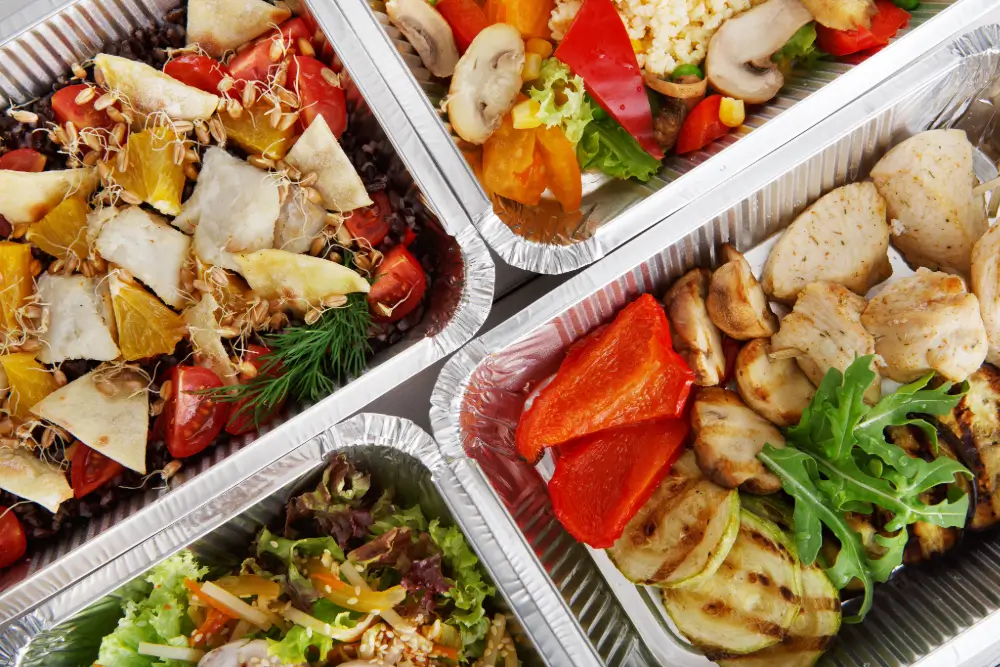
Donovan's Dish to Door uses EasyRoutes' driver tracking to manage its chef-prepared meal deliveries. With real-time tracking and route optimization working together, the team reduced delivery times and helped ensure meals arrived fresh and on schedule — essential for protecting product quality and customer trust. Just as importantly, dispatchers can watch driver locations live, which means wrong turns and poorly geocoded addresses get resolved quickly instead of derailing the rest of the route. It is a clear illustration of how tracking pays off when it is tied directly to planning and execution.
The next wave of tracking is being shaped by artificial intelligence and the Internet of Things. AI and machine learning can analyze large volumes of tracking data to anticipate traffic, refine routes, and predict potential delays before they happen. IoT sensors, meanwhile, are turning vehicles into connected devices that report on health, driving behavior, and even cargo conditions in real time. For delivery businesses, the practical upshot is the same direction of travel: more accurate ETAs, fewer surprises, and tracking that increasingly prevents problems rather than just recording them.
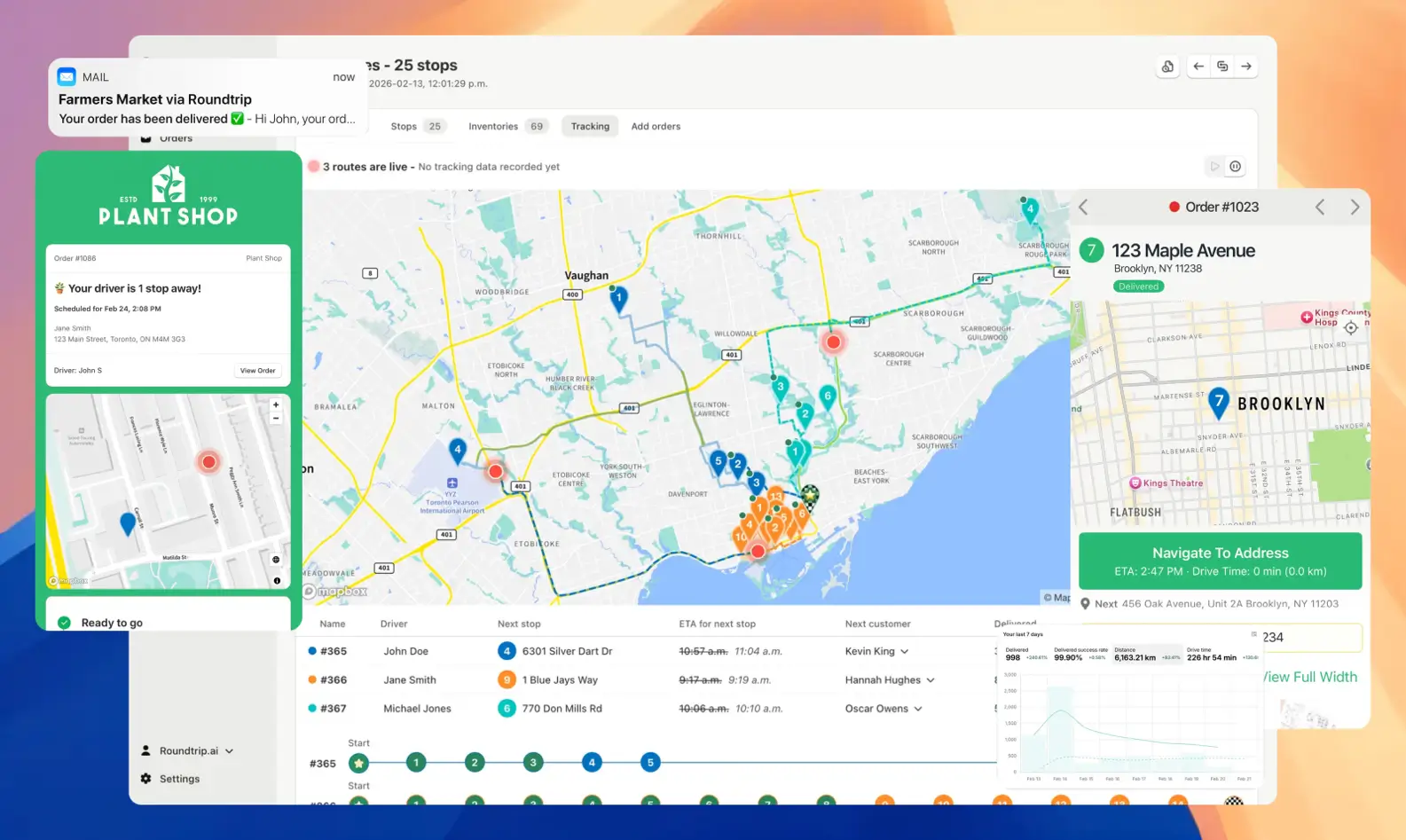
EasyRoutes brings driver tracking, route optimization, and customer notifications together in one platform built for Shopify and other commerce stores. With real-time tracking enabled, dispatchers see a live GPS pin, a breadcrumb path, the current and next stop, and live status updates on each route's tracking tab — and they can monitor multiple drivers at once. On the customer side, EasyRoutes can share an anonymized live driver pin and accurate ETAs through tracking and notifications, cutting down on 'Where is my order?' messages. Beyond live tracking, EasyRoutes turns delivery data into analytics you can use to plan better routes and improve performance over time.
Driver and vehicle tracking is no longer a luxury reserved for large fleets — it is a practical, accessible tool that helps delivery businesses of every size run leaner and serve customers better. By making location and behavior visible, tracking lets you optimize routes, cut fuel and idling waste, keep customers informed, and make decisions based on real data rather than guesswork. If you are ready to bring tracking and route optimization together, EasyRoutes offers a complete solution to streamline every step from dispatch to doorstep.
Yes. Enable Real‑Time Tracking in Settings → Driver settings (Premium/Enterprise subscription plans) to view live driver location and progress in the Tracking tab of any route.
See: Real‑Time Tracking
Go to your EasyRoutes Settings → Driver settings, and enable real‑time tracking. Have drivers allow location Always + Precise location in the EasyRoutes Delivery Driver app and their mobile device's settings.
Yes. On Premium/Enterprise plans you can display a live driver pin on tracking pages when the driver is 1–10 stops away.
The route’s Tracking tab shows live driver location, recent path, next/current stop, and real‑time stop status, completion times, and proof of delivery events.
Yes. Delivery Analytics reports completion rates, average delivery times, and success rates; filter by driver or date and export to CSV.
See: Analytics
Real-time driver tracking is currently available on Premium and Enterprise plans for both EasyRoutes for Shopify and EasyRoutes for Web. Enable it in EasyRoutes Settings → Driver settings.
See: Real-Time Driver Location Tracking · Pricing & Plans FAQ
EasyRoutes is the AI-native delivery operations platform trusted by 5,000+ businesses across 75+ countries. Plan routes in seconds, dispatch drivers automatically, and delight your customers — from Shopify or any order source. Experience delivery operations that run themselves. Rated 4.8 stars and certified Built for Shopify.
⭐⭐⭐⭐⭐ 4.9 stars • Trusted by 5,000+ Businesses