8 Common Delivery Mistakes to Avoid in 2026
By Joe SnyderThe 8 most common delivery mistakes that quietly cost you customers and profit, from bad addresses to skipped tracking, plus how to fix each one.

The 8 most common delivery mistakes that quietly cost you customers and profit, from bad addresses to skipped tracking, plus how to fix each one.
Running a delivery operation is a game of margins. Every late drop-off, wrong address, or “Where is my order?” call chips away at both your profit and your reputation. And the stakes keep climbing: the last mile now accounts for 53% of total shipping costs, up from 41% in 2018, making the final leg of delivery the single most expensive — and most error-prone — part of the journey.
The good news is that most delivery problems aren’t bad luck. They’re avoidable mistakes that compound as you grow. Below are the eight most common delivery mistakes we see, why each one quietly drains your business, and exactly how to fix it.
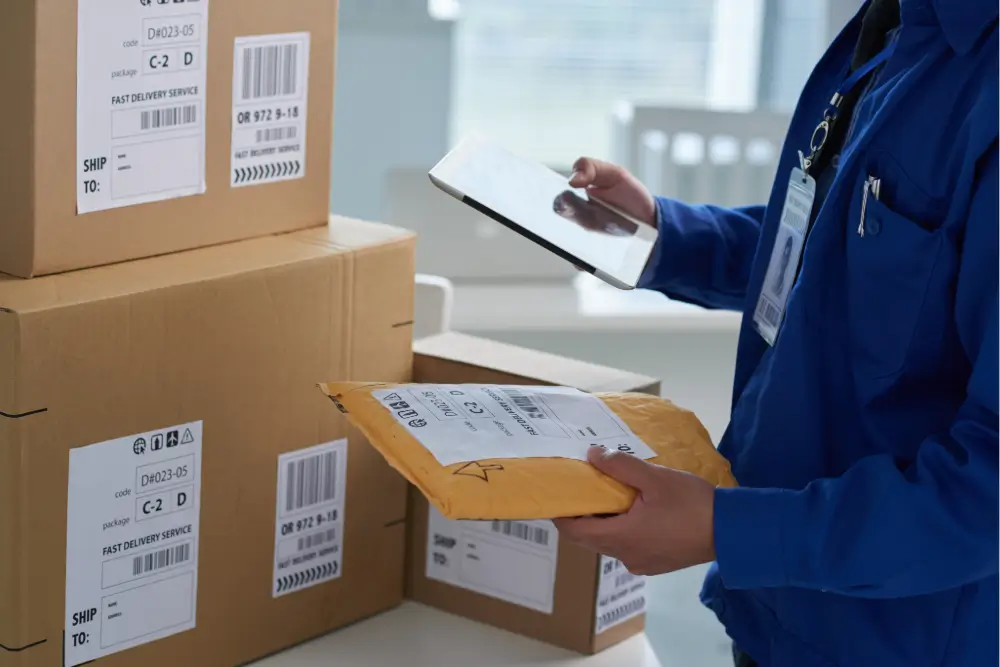
A driver who starts the day with a bad address is already behind. Wrong or incomplete addresses are one of the most common reasons a delivery fails outright — and the cost is real. Roughly 5% of deliveries fail on the first attempt at an average of $17.78 per package, with address errors causing about 45% of those failures.
Bad addresses creep in from everywhere: a customer fat-fingers their unit number at checkout, or a dispatcher hand-keying orders types “2882” instead of “2828.” One small slip makes a driver late to that stop — and every stop after it, since delays compound across a route.
How to beat it: stop entering addresses by hand. When your orders flow straight from Shopify into your routing tool, there’s no re-typing and no transcription errors. A good planner also runs address verification before the route is built, flagging anything that looks wrong so you can fix it before a driver ever pulls out of the lot.
Spreadsheets, map pins, and highlighters have a certain charm — until you have thirty stops and twenty minutes to dispatch. Manual planning works right up until it doesn’t, and by the time it breaks you’ve already lost hours and annoyed customers.
The deeper problem is that hand-built routes are almost never efficient. You can’t mentally juggle traffic, delivery windows, vehicle capacity, and stop order all at once, so drivers end up zig-zagging across town. If you’re still routing by hand, our guide on when to switch from manual planning to software lays out the tipping points to watch for.
How to beat it: let an algorithm do the sequencing. Modern route planning software factors in distance, traffic, and time windows to produce an optimized multi-stop route in seconds rather than hours — see our complete guide to multi-stop route planning for how the process works end to end. The payoff grows with you: the same system that saves you twenty minutes today is what lets you double your order volume next holiday season without doubling your dispatch headache.

Even businesses that have ditched paper can fall into this trap, sequencing stops with no real logic. Every unnecessary mile burns fuel, adds wear, and eats driver hours. Improved routing can cut mileage by up to 20%, and that mileage is expensive in concrete terms: the 2026 IRS standard mileage rate is 72.5 cents per mile, which covers fuel, maintenance, and depreciation. Trim 150 miles a week and you’re saving over $100 weekly before you even count labor.
How to beat it: use true route optimization rather than basic point-to-point directions, so every route is the shortest practical path through all your stops. The fuel savings alone are usually enough to justify the switch — we break the math down further in our guide to cutting fuel costs in your delivery business.
Stacking a driver’s day with “just a few more” stops feels efficient, but it usually backfires. Overloaded drivers rush, skip steps, and arrive late — and burnout costs you far more than rerouting or adding a second vehicle ever would. In complex categories like medical or grocery delivery, those extra minutes per stop add up fast.
There’s also a human cost that’s easy to ignore. Driver fatigue isn’t just a morale issue — a tired driver is a slower, less careful, and less safe driver, and that shows up in damaged packages, missed stops, and accidents. Protecting your drivers’ well-being is protecting your service quality.
How to beat it: balance load against route distance and respect realistic capacity. The best planners let you cap stops per route, account for different vehicle sizes, and build in driver breaks, so schedules are demanding but achievable. Pair that with regular breaks and reasonable shift lengths, and you’ll keep drivers fresh and routes reliable — which keeps both your team and your customers happy.
A decade ago, customers were content if an order showed up within a day or two of the promised date. Today they expect to know exactly where their order is and when it will arrive. Silence doesn’t just frustrate them — it generates work: each “Where is my order?” (WISMO) inquiry costs a brand roughly $5 to answer and resolve, and at a few thousand orders a month those calls add up quickly.
The downside of getting it wrong is steep. Around 23% of consumers say they won’t reorder after a failed delivery, so a single bungled, uncommunicated delivery can end a customer relationship for good.
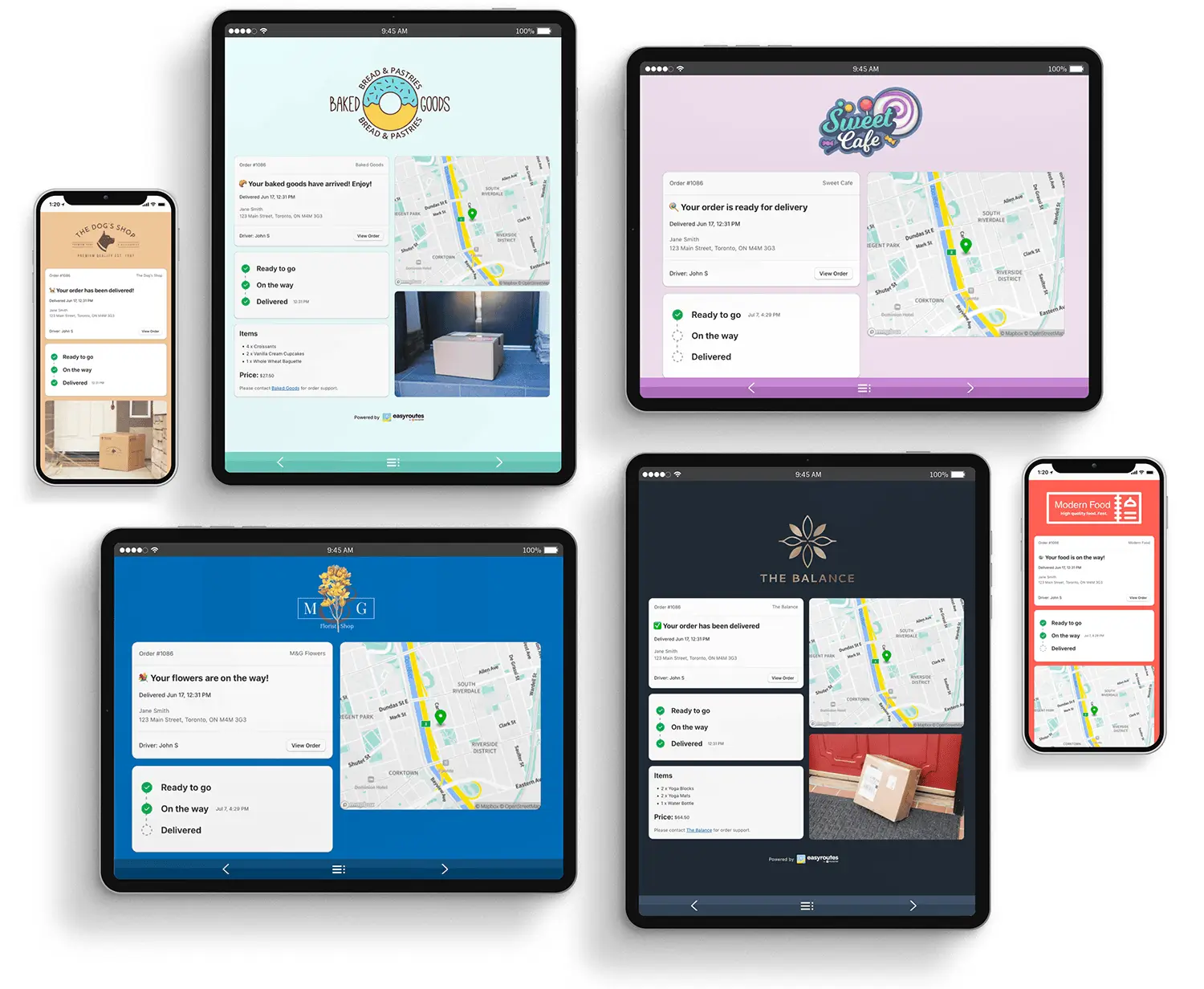
How to beat it: automate the updates. Send a notification when a driver is on the way and again when the order arrives, and proactively flag delays before the customer notices. Our pillar on keeping customers informed with real-time tracking covers how to set this up without adding work for your team.
Once drivers hit the road, you shouldn’t be guessing. Without live visibility, you can’t tell where your team is, whether they’re on schedule, or when something has gone sideways — which means you can’t react until a customer complains.
How to beat it: use a dispatcher dashboard that shows every active route live. Real-time tracking lets you spot a lagging route, reroute on the fly, and give customers an accurate ETA instead of a vague window. It’s the same data feed that powers customer notifications, so you solve two mistakes with one system.
Live visibility also helps you handle the one variable no plan can fully predict: traffic. Congestion, accidents, and road closures will always disrupt a schedule, but routing tools that fold in real-time traffic data let drivers reroute around jams instead of sitting in them. The result is fewer blown delivery windows on exactly the days when things go wrong.
Pen-and-paper delivery confirmations are easy to lose and impossible to trust under pressure. When a customer disputes a delivery and the signed slip has vanished, you’re forced to either side with the driver and alienate the customer, or side with the customer and alienate the driver. Neither ends well.
How to beat it: capture digital proof of delivery — a photo, a signature, or a timestamped geolocation — automatically attached to each stop. It’s nearly impossible to misplace, and it settles disputes in seconds. Our guide to proof of delivery benefits and implementation walks through how to roll it out across your team.
Not all delivery software is created equal. Some platforms are bloated with features you’ll never touch; others are too thin to handle real-world complexity. A close cousin of this mistake is clinging to on-premises software installed on a single office computer — one fire, flood, or power outage and your data is gone, and scaling up means buying more hardware. Cloud-based tools you can reach from anywhere solve both problems.
The other half of this mistake is treating delivery as “set it and forget it.” The job isn’t done when the last package drops. If you never review which routes ran late, which stops failed, and where time leaks out, you’ll repeat the same mistakes tomorrow.
How to beat it: pick a tool that’s easy to onboard, integrates with your e-commerce platform, and surfaces post-delivery analytics so you can keep improving. Our ranked comparison of the best route planning tools is a good place to start narrowing the field.
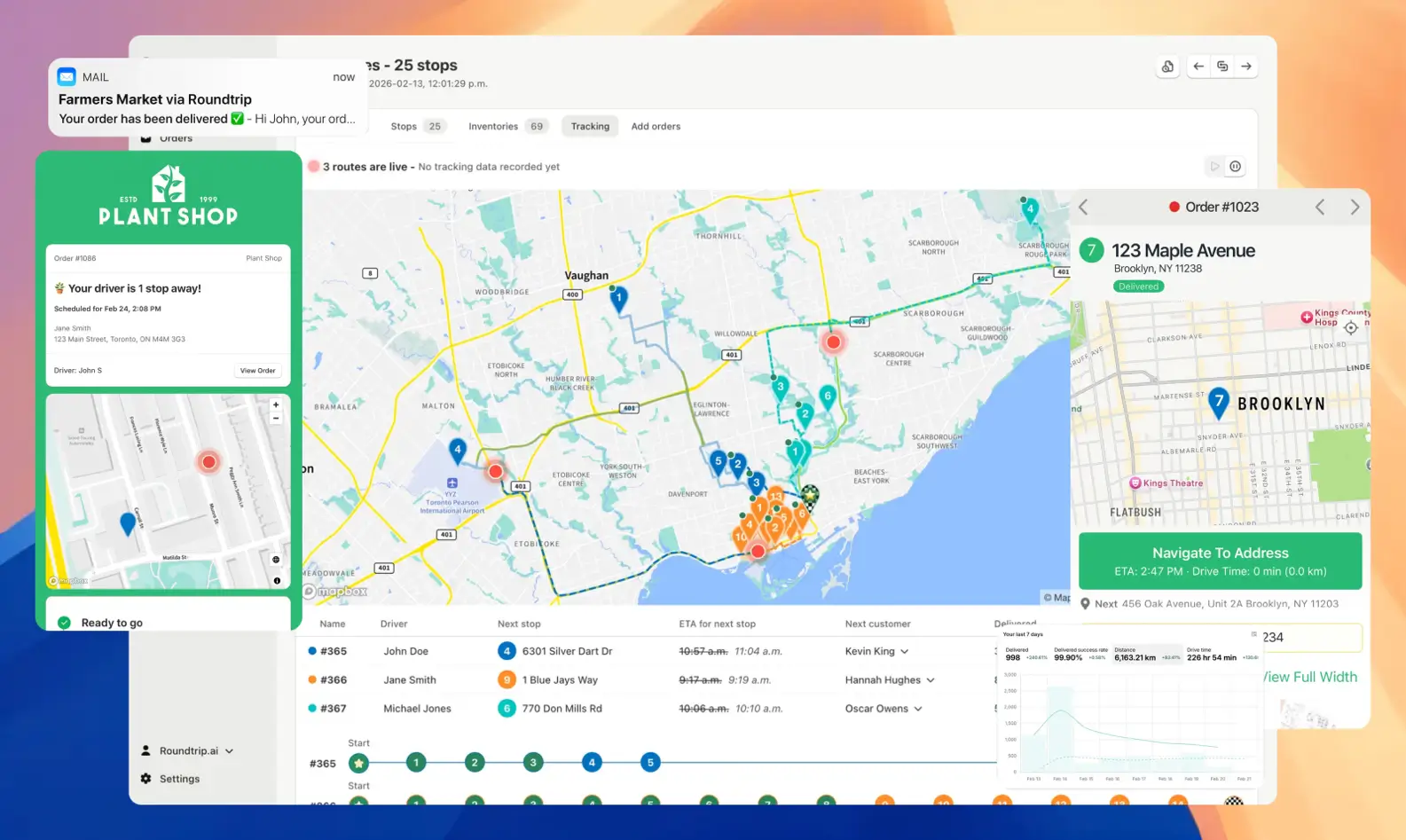
EasyRoutes is a delivery route planner built for local and last-mile delivery that ties these fixes together in one place. Because it’s integrated directly with Shopify, your orders flow in without manual data entry — eliminating the address-typing errors behind mistake one. Select the orders you want to deliver and EasyRoutes builds the most efficient multi-stop route automatically, with full editing tools to add, reorder, or split stops.
From there, automated customer notifications, real-time driver tracking, and digital proof of delivery are built in, so the communication, visibility, and accountability gaps above are covered by default. And because everything lives in the cloud, you can dispatch and monitor from anywhere and scale at the push of a button. Choosing well here isn’t only good for your operation — it’s good for the planet, too, and that matters to buyers: 82% of consumers say eco-friendly options are at least somewhat important when choosing products, and fewer miles means lower emissions.
Most delivery problems don’t come from a lack of effort — they come from avoidable mistakes that quietly compound as your volume grows. Tighten up your addresses, automate your routing and communication, capture proof digitally, and actually review your numbers, and you’ll deliver faster, spend less, and keep more customers coming back.
Ready to put these fixes in place? Give EasyRoutes a try free for your first 14 days by installing it from the Shopify App Store or creating an account on our standalone web app today.
EasyRoutes flags any orders that are missing a shipping address so you can add or correct the address before routing. For pickup orders, use your store or pickup location as the address.
EasyRoutes optimizes deliveries using your selected orders, start & end locations, stop time intervals, time windows, and route limits. You can balance routes, respect capacities, and re‑optimize as plans change.
See: Route Options · EasyRoutes 101
Yes. Re‑optimize at any time — after adding or removing stops, changing stop priorities, editing route options, or balancing loads. Drivers can also re-optimize routes delivered out of order, or re‑order stops if enabled from your EasyRoutes Settings.
Yes. With the Premium plan and above, fully customize email/SMS: add your logo and colors, edit copy/variables, and choose which events send. Works for Shopify orders and imported/manual stops.
Yes. Use the customizable Rescheduled notification (email/SMS) to explain delays, provide a new ETA/date, and include the tracking link.
Yes. Enable Real‑Time Tracking in Settings → Driver settings (Premium/Enterprise subscription plans) to view live driver location and progress in the Tracking tab of any route.
See: Real‑Time Tracking
EasyRoutes supports delivery photos, e‑signature, driver notes, and automatic timestamps (with GPS location when available) to provide a complete delivery record.
See: Proof of Delivery
Absolutely. Plan with item and weight limits to reflect the capacities of your fleet. Configure and assign Vehicle Profiles for an additional indicator for routes that have specific restrictions by vehicle.
Yes. Delivery Analytics reports completion rates, average delivery times, and success rates; filter by driver or date and export to CSV.
See: Analytics
EasyRoutes is the AI-native delivery operations platform trusted by 5,000+ businesses across 75+ countries. Plan routes in seconds, dispatch drivers automatically, and delight your customers — from Shopify or any order source. Experience delivery operations that run themselves. Rated 4.9 stars and certified Built for Shopify.
⭐⭐⭐⭐⭐ 4.9 stars • Trusted by 5,000+ Businesses