Coffee is a daily habit, and most of it now happens at home. That makes the bag of beans on the counter one of the most regular purchases your customers make, and it gives roasters a reason to show up at the door on a schedule. Local delivery lets you sell fresher coffee than a grocery shelf can, skip rising shipping costs, and turn one-time buyers into subscribers. This guide covers the market data shaping coffee in 2026, the trends worth building around, how roast days and subscription cycles drive demand, and a practical playbook for getting freshly roasted beans to your customers on time.
The State of the Coffee Market in 2026
Coffee remains the drink Americans reach for most. In the National Coffee Association’s Fall 2026 National Coffee Data Trends report, 66% of American adults drank coffee in the past day, and 83% of those past-day drinkers had coffee at home. Quality is climbing, too: 48% had specialty coffee in the past day, a record, and more Americans now drink specialty coffee than traditional coffee.
That shift toward better beans shows up in the market forecasts. Grand View Research expects the U.S. specialty coffee market to reach $81.8 billion by 2030, growing 9.5% a year from 2025, and it credits eCommerce and direct-to-consumer models with helping smaller roasters reach customers well beyond their café. The global coffee market as a whole is growing more slowly, at a projected 5.4% a year from 2026 to 2033.
Where people buy coffee for home is also changing. The same NCA report found grocery stores’ share of at-home coffee purchases fell from 42% in January 2026 to 35% that summer, while mass merchandisers rose from 23% to 28%. That is an opening for any roaster who makes buying direct just as easy.
Price is the other big story. Retail prices have hit record levels: the U.S. average price of a pound of ground coffee reached $9.72 in April 2026, the highest since the Bureau of Labor Statistics began tracking it in 1980 and up 29% over the past year. When supermarket coffee costs this much, a freshly roasted bag delivered to the door is an easier sell, as long as your own delivery costs stay under control.
“WOW! What an outstanding app. EasyRoutes is very easy to use for both our admins as well as our drivers. The integration with Shopify seems to be flawless.”

Four Trends Shaping Coffee Delivery
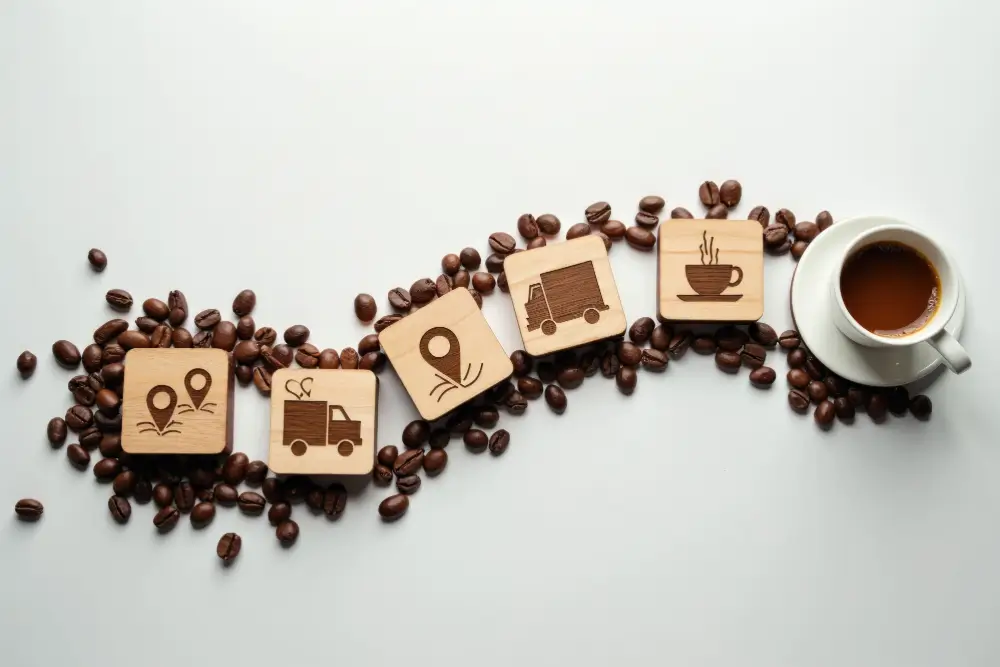
1. Home Brewing Is the Main Event
With more than four in five daily coffee drinkers brewing at home, the home kitchen is the biggest café in the country. In the NCA’s spring 2026 survey, the at-home figure reached 85%, the highest since 2012. Home brewers buy by the bag, reorder on a rhythm and care about freshness and roast date, which makes them ideal delivery customers.
2. Subscriptions Keep Growing Faster Than Coffee Itself
Coffee subscriptions were no pandemic fad. Fact.MR puts the global coffee subscription market at $934 million in 2025 and projects it will reach $2.68 billion by 2035, growing 11.1% a year. That is roughly twice the growth rate of the coffee market overall. The same research found that monthly plans make up 56% of the market. For a roaster, that is predictable revenue and predictable volume: you know what to roast, what to pack and which neighbourhoods your drivers will visit before the week begins. Building one from scratch? See our guide to switching to a subscription model.
3. Sustainability Shapes the Buying Decision
Coffee buyers pay attention to where their beans come from, and increasingly to how they arrive. In Blue Yonder’s 2025 consumer sustainability survey of more than 5,000 shoppers, 78% said sustainability is somewhat or very important when choosing what to buy or where to shop, and food and beverage was the category they focused on most (48%). Nearly half were willing to pay 5–9.9% more for sustainable products.
Ethical sourcing is only half of that story. The trip from roaster to doorstep counts as well. A tight local delivery area, optimized routes and lighter vehicles all cut the emissions per bag. Coffee is compact enough that many roasters deliver by bike, cargo eBike, scooter or electric vehicle. For more ideas, see our guide to sustainable delivery best practices.
4. Local Delivery Beats Shipping on Cost and Speed
Shipping costs weigh heavily on online orders. AlixPartners’ 2026 home delivery survey found that 94% of consumers say free shipping affects their purchase decisions, and two in three abandon their cart when shipping fees exceed about $10. With a bag of specialty coffee already costing more than it did a year ago, adding a carrier fee on top is a quick way to lose the sale.
Delivering locally changes the math. Your own driver can drop a dozen bags in one neighbourhood for less than it costs to ship them individually, and the coffee arrives days fresher. Ohio roaster Third Day Coffee Roasters uses exactly this approach, routing nearby orders onto its own delivery runs instead of sending them through the mail. Shopify makes it simple to set up local delivery as a checkout option, with its own delivery area and pricing.
“We can now add manually created orders to our delivery list along with orders that the customer marked for free shipping, but is in our local delivery area. We can get the product to the customer faster than USPS.”
Roast Days, Subscription Cycles and Seasonal Peaks
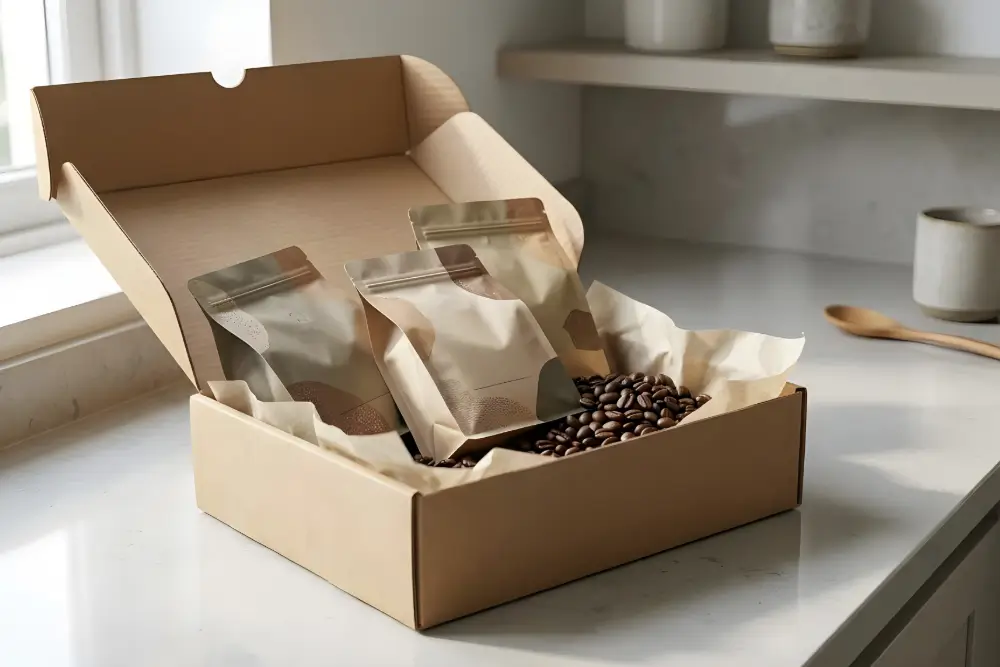
Coffee demand has a rhythm of its own, and much of it is set by you.
Roast days. Many roasters roast on set days and deliver within a day or two, so volume bunches up right after each roast. That makes roast day the anchor of your delivery calendar.
Subscription cycles. With most subscribers on monthly plans, orders tend to cluster around renewal dates. Deliver every subscription on the first Friday of the month and you have one very busy day followed by three quieter weeks.
Seasons. The menu changes with the weather. The NCA found that 21% of past-day coffee drinkers had cold coffee in summer 2026, up from 17% in January, so cold brew concentrate and iced blends carry more of the load when it’s warm, while holiday blends and gift sets take over in the fall.
The gifting season. Coffee is an easy gift, and the holidays are big business: the National Retail Federation forecast that U.S. holiday sales in November and December 2025 would reach between $1.01 trillion and $1.02 trillion, topping $1 trillion for the first time. Gift boxes, holiday blends and corporate orders swell December volume, often to addresses you have never delivered to before. Our peak-season delivery playbook walks through how to prepare.
“It has allowed us to easily adjust routes to changing circumstances like product shortages, bad weather, driver changes and illnesses, and made it possible to incorporate a large number of new customers into our routes.”
Why Coffee Delivery Is Harder Than It Looks
Coffee travels well, but delivering it profitably has challenges of its own:
- Freshness has a window. Freshly roasted beans need a few days to degas and are at their best for a few weeks after that. Deliveries have to follow the roast schedule so customers get coffee at its peak, not a week past it.
- Orders come from everywhere. A single run can mix Shopify subscriptions, one-off web orders, phone orders, wholesale drops for cafés and offices, and orders that checked out with shipping but sit inside your delivery area. Getting them all onto one route by hand eats hours.
- Volume is lumpy. Renewal dates and roast days pack a week’s worth of deliveries into one or two days, which is hard to plan with a map and a spreadsheet.
- Margins are tight. With coffee prices at record levels, every extra kilometre driven and every failed delivery comes straight out of profit.
- Customers are often out. Home subscribers are at work when your driver arrives, so drop-offs need clear notes, notifications and proof that the bag was left in the right place.
- Routes change constantly. New subscribers join, others pause, drivers call in sick and winter weather closes roads. Last month’s route is rarely right for this month.
Handled manually, these add up to long planning sessions, missed drops and drivers criss-crossing town.
“By far the best route planner out there, and we've tested a few. Very responsive tech support team too.”
How to Build (or Scale) Coffee Delivery in 5 Steps
1. Define Your Delivery Area
Start with how far your drivers can reasonably go on a delivery day, then draw your local delivery area around your roastery or café. Split it into zones by neighbourhood or direction, so each driver works familiar streets and you can set different delivery days or minimums for farther areas. Customers outside the area can still order with shipping.
2. Schedule Delivery Days Around Your Roast
Pick delivery days that follow your roast days, publish them clearly and set order cutoffs that give you time to roast, rest and pack. Letting customers choose their delivery date at checkout sets expectations and spreads the load. EasyRoutes works with date-picker apps such as Zapiet, Bird and Buunto, so the dates customers choose flow straight into your planning.
3. Put Subscriptions on Autopilot
Recurring orders are the easiest deliveries to automate. Build routes for your subscription days once, then let them build themselves each cycle, with delivery notes such as drop-off spots and access codes on each stop. Add one-off and wholesale orders around that core rather than planning every run from scratch.
4. Keep Customers in the Loop
A subscriber who knows when to expect their bag is a subscriber who stays, and one who misses a delivery may not stay long: AlixPartners found that more than half of consumers would boycott a retailer after just one or two missed deliveries. Send a notification when the route starts, share a tracking link with a live ETA, and capture photo proof of delivery at the door. Branded delivery notifications and proof of delivery also cut down on “where is my order?” emails, which frees up your team for roasting.
5. Choose the Right Vehicles for the Job
Coffee is small and light enough that a car isn’t always the best option. In dense neighbourhoods, a bike or cargo eBike can outpace a van, avoid parking headaches and reinforce your sustainability story. Save the van for heavier wholesale runs, and track mileage and fuel to see what each option really costs.
“If your goal is to get package from point a to point b whilst keeping the customer notified, with an easy to use app for your drivers then stop looking. This is the one.”

How EasyRoutes Helps Coffee Roasters Deliver
EasyRoutes is route planning and delivery management software built for Shopify and other leading eCommerce platforms, and it is used by coffee roasters and cafés delivering everything from single bags to wholesale orders. Its route optimization engine turns a day’s orders into efficient routes in a few clicks, with options like time spent per stop, avoiding tolls or U-turns and using the minimum number of drivers. Drivers follow their stops and delivery notes in the EasyRoutes Delivery Driver app and navigate with the map app they prefer.
For the challenges that are specific to coffee:
- Subscription drops: Autopilot builds routes on the schedule you set, so each subscription cycle is routed and ready to dispatch without starting from a blank map.
- Orders from every channel: Order sync brings in Shopify orders automatically, including subscription orders, while spreadsheet imports and custom stops cover phone, wholesale and off-platform orders.
- Local delivery areas: Delivery Zones keep each route inside its territory, so drivers stay in the neighbourhoods they know.
- Busy renewal days and holidays: Flexible driver seats that you can add and remove as needed let you bring on extra drivers for a big delivery day and scale back afterwards.
- Customer confidence: Automated email and SMS notifications, live tracking and photo or eSignature proof of delivery tell subscribers when their coffee is coming and confirm when it has arrived.
The difference shows up in planning time. At Velasquez Family Coffee in St. Paul, Minnesota, planning a month of home and subscription deliveries could take days: new customers meant printing maps and squeezing them into old routes by hand. With EasyRoutes, the whole month now takes a couple of hours, and the family-run roaster hand-delivers its shade-grown Honduran coffee across the Twin Cities on the second Friday of every month.
Final Thoughts
Coffee in 2026 rewards roasters who make freshness convenient. Home brewing hit its highest level since 2012 this spring, specialty coffee has overtaken traditional, and subscriptions are growing about twice as fast as the market. At the same time, record bean prices and costly shipping make every delivery count. The roasters who come out ahead treat delivery as part of the product: they schedule it around the roast, automate the recurring runs, keep customers informed and choose the leanest way to reach each doorstep. Ready to get your beans to customers while they’re still at their best? Try EasyRoutes free: every feature is yours for 14 days, starting with your next roast day.