For delivery drivers, tracking mileage accurately is far more than busywork — it is how you protect your earnings. Every business mile you drive is money toward a tax deduction or a reimbursement, but only if you have records that hold up. With the U.S. last-mile delivery market projected to reach roughly $181.6 billion in 2026 and more drivers than ever earning a living behind the wheel, the right GPS mileage tracking app has become an essential piece of equipment. This guide breaks down why mileage tracking matters, the features that separate a great app from a frustrating one, the best apps to consider in 2026, and how to pick the one that fits the way you work.
Why GPS Mileage Tracking Matters for Delivery Drivers

Keeping an accurate mileage record serves three purposes at once. First, it underpins your taxes. Most delivery drivers who use their own vehicle are independent contractors, and for the self-employed the standard mileage deduction is one of the largest write-offs available. Miss the records and you forfeit the deduction — a contemporaneous log created at or near the time of each trip is exactly what the IRS expects to see in an audit.
Second, mileage data feeds smarter operations. When you can see how far each route actually runs, you can spot inefficient patterns, trim backtracking, and lean on route optimization to cover more stops in fewer miles. That translates directly into lower fuel spend and less wear on your vehicle. Third, if you drive for a company that reimburses mileage, precise logs are what get you paid fairly and on time. Whether you are filing your own return or submitting an expense report, the numbers have to be defensible — and a good app makes them so without you thinking about it.
The 2026 IRS Mileage Rate and What It Means for You
The single most important number for any driver changed at the start of the year. The IRS set the 2026 standard mileage rate at 72.5 cents per business mile, up 2.5 cents from the 70-cent rate that applied in 2025. It is the highest business rate the agency has ever published, reflecting the rising cost of fuel, depreciation, insurance, and maintenance baked into operating a vehicle.
The math adds up quickly. At 72.5 cents a mile, a driver logging 15,000 business miles in a year is looking at roughly $10,875 in potential deductions — but every untracked mile is money left on the table. One caveat worth knowing: under current law, employees who are reimbursed through a W-2 job generally cannot claim unreimbursed vehicle expenses as an itemized deduction, so the standard rate is most valuable to self-employed and 1099 drivers. If you are weighing whether driving makes financial sense, understanding both the deduction and your real last-mile delivery costs is the place to start, and it is one reason so many people explore contract delivery jobs with eyes open.
Key Features to Look for in a Mileage Tracking App
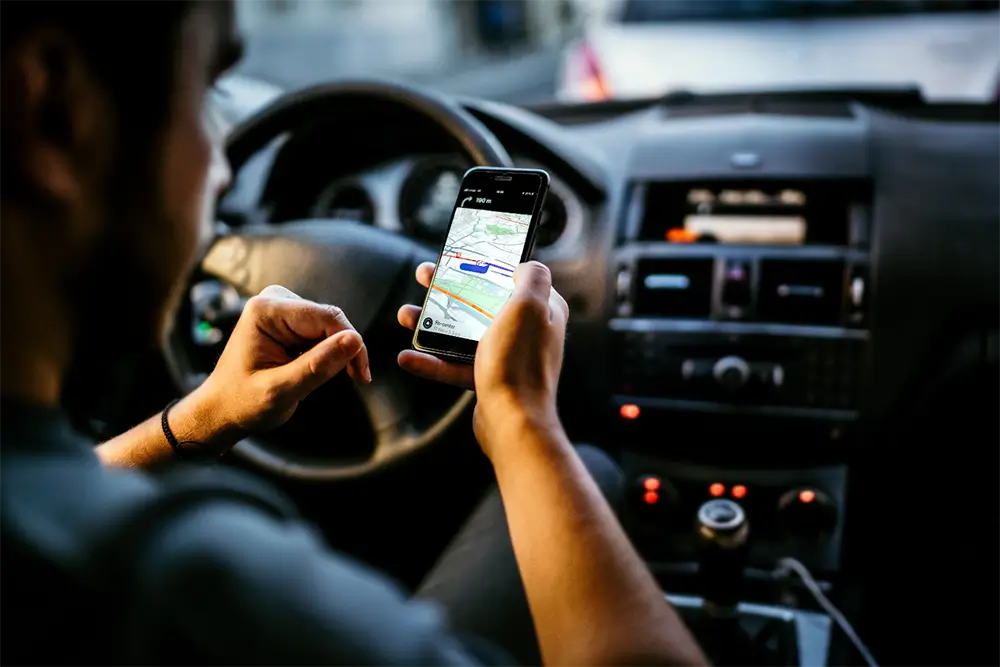
Not every app earns its place on your phone. These are the features that make the real difference on a working day:
- Automatic trip detection. The best apps sense when you start driving and log the trip in the background, so you never lose a mile to a forgotten tap. This is the single most valuable feature for drivers making dozens of stops.
- Battery-friendly GPS. Always-on tracking is useless if it drains your phone by mid-shift. Look for apps tuned to capture accurate routes without killing your battery.
- Easy classification. A simple swipe to mark a drive as business or personal keeps your log clean and audit-ready with minimal effort.
- Expense tracking. Logging fuel, tolls, and maintenance alongside your miles gives you a complete financial picture and helps you cut fuel costs across the year.
- IRS-compliant reports. Exportable PDF or CSV reports that match IRS requirements are what turn raw data into a usable tax document or reimbursement claim.
If you also rely on your phone to find addresses, it is worth pairing your tracker with one of the better navigation apps for Android and iOS rather than expecting one tool to do everything well.
The Best GPS Mileage Tracking Apps in 2026

The mileage-tracking landscape shifted noticeably over the past year, with several apps raising prices and others making automatic tracking free. Here are five that stand out in 2026:
- MileIQ: Still the benchmark for simplicity, MileIQ automatically detects every drive and lets you classify it with a swipe. Its free tier covers 40 drives per month; note that its paid plan saw price increases in 2026, so heavy drivers should compare the annual cost against the alternatives.
- Everlance: An all-in-one option that pairs automatic mileage tracking with expense logging, bank and card integration, and 1099 tax tools. The free plan includes automatic trip detection, and it is a strong fit for drivers who want miles and money managed in one place.
- TripLog: Feature-rich and built to scale, TripLog offers automatic tracking plus integrations with accounting platforms like QuickBooks. In 2026 it positioned free unlimited automatic tracking as a headline feature, making it appealing to drivers and small fleets alike.
- Hurdlr: Designed for gig workers and the self-employed, Hurdlr layers real-time tax estimates on top of mileage and expense tracking, connecting to thousands of banks and payment platforms to surface deductions automatically.
- Stride: Completely free, Stride is a favorite among gig and delivery drivers who want IRS-compliant mileage logs and basic expense tracking without a subscription. It trades some automation for a clean, no-cost experience.
A note on a name you may remember: SherpaShare, long marketed to rideshare and delivery drivers, has become unreliable, with conflicting reports about whether it is still actively maintained. If you are choosing a tool today, favor one of the actively updated options above so your logs stay accurate and your reports stay compliant.
How to Choose the Right App for Your Needs
The best app is the one that matches how you actually drive. Weigh four factors before you commit:
- Ease of use. If an app is fiddly, you will stop using it. MileIQ and Stride win points for getting out of your way.
- Feature depth. Need integrated expenses and tax estimates? Everlance or Hurdlr. Want to scale toward a small fleet? TripLog.
- Cost versus value. Free tiers are generous in 2026, but limits on monthly drives can quietly cap a busy driver. Run the numbers: if a paid plan captures even a few hundred extra deductible miles, it usually pays for itself many times over.
- Compatibility. Make sure the app exports to whatever your accountant or tax software expects, and that it plays nicely with your phone and any other tools you use.
Whichever you pick, building the habit of reviewing your numbers is what separates a good delivery driver from a great one. Many drivers track the same data their employers do — the kind of delivery metrics that reveal where time and fuel are actually going.
Pairing Mileage Tracking with Route Optimization
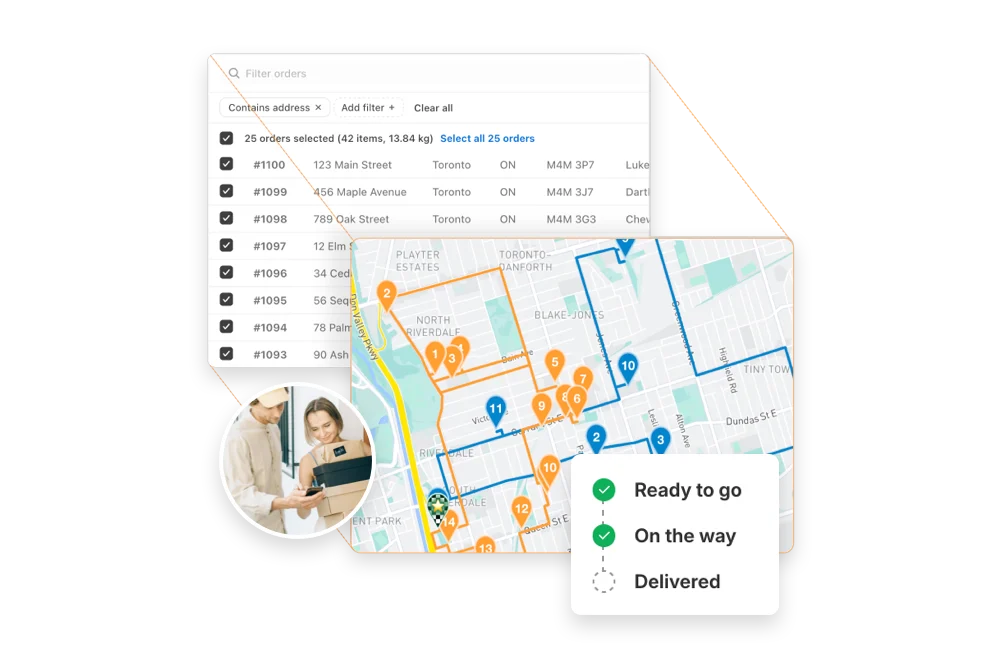
Tracking miles tells you what you drove; optimizing routes changes how much you have to drive in the first place. For delivery businesses running multiple stops, the bigger win is usually fewer total miles, not just better records of them. That is where a purpose-built delivery platform like EasyRoutes comes in. It plans the most efficient multi-stop routes, shows the route distance and duration up front, and dispatches turn-by-turn directions to drivers — so the miles you do log are the miles you actually needed to drive.
EasyRoutes also handles the operational layer a standalone mileage app cannot: real-time GPS driver tracking, accurate customer ETAs, delivery notifications, and proof of delivery, all tied to the same optimized routes. For owner-operators thinking about growth, that overlaps naturally with fleet management software — and if you are still comparing options, our guide to choosing a driving route app walks through the trade-offs. The result is a system where mileage records, fuel savings, and customer experience reinforce one another instead of living in separate apps.
Final Thoughts
A reliable GPS mileage tracking app is no longer optional for delivery drivers — it is how you defend your deductions, control your costs, and prove your work. With the 2026 IRS rate at 72.5 cents per mile, the value of capturing every business mile has never been higher. Choose a tracker that fits your driving style, build the habit of reviewing your data, and pair it with smart routing to get the most out of every trip.
If you are ready to go beyond logging miles and start cutting them, see how EasyRoutes brings route optimization, live tracking, and proof of delivery together at the EasyRoutes website.