How to Start a Mobile Pet Grooming Business: 5 Steps
By Joe SnyderLearn how to start a mobile pet grooming business in 5 steps: market research, business plan, equipment, licensing, and marketing, with 2026 data.

Learn how to start a mobile pet grooming business in 5 steps: market research, business plan, equipment, licensing, and marketing, with 2026 data.
Starting a mobile pet grooming business is one of the most appealing ways for animal lovers to turn a passion for pets into a profitable, independent career. The opportunity has never looked better: U.S. pet owners spent roughly $158 billion on their pets in 2025, and about 71% of U.S. households — some 94 million families — now own a pet. As pets are increasingly treated like family, owners want convenient, low-stress care that comes to them. That demand is fueling rapid growth in mobile grooming specifically: the global mobile grooming services market is projected to climb from $2.2 billion in 2025 to $6.8 billion by 2035, a 12% annual growth rate, with the U.S. expanding at about 11.2% a year.
So how do you actually get on the road? This guide walks you through the five essential steps to launch your mobile pet grooming business, from planning to your first satisfied customer — with up-to-date numbers and the tools that make a route-based operation run smoothly.

Before you buy a single clipper, understand your market. Who are your potential customers, what do they need, and how can you serve them better than the options they have today? Thorough market research helps you pin down your target audience and gauge real demand for mobile grooming in your area. This matters because the pet-care space is large and varied, and a well-chosen niche is what sets you apart from everyone else with a van.
Dogs drive the lion’s share of grooming demand — they account for the majority of the market, well ahead of cats — so many new groomers start there. But you can sharpen your focus further. You might specialize in large breeds that are awkward to handle in a traditional salon, anxious or senior pets that benefit from a calm one-on-one setting, cats that many salons won’t take, or eco-friendly, all-natural products for environmentally conscious owners. Defining a niche not only helps you stand out, it lets you market more precisely and often charge more.
Validate that demand before you commit. Survey local pet owners through community Facebook groups and neighborhood apps, asking what services they want and what they would pay. Then map your competition: use Google Maps to find every groomer in your service area — both mobile vans and brick-and-mortar salons, because you compete with both — and note their pricing and offerings to find your angle. If you have ever looked into launching another local, route-based service business such as lawn care, the research playbook is strikingly similar: demand mapping, route density, and pricing for convenience all carry over.

A clear business plan is the backbone of any successful venture, and your mobile grooming service is no exception. It is the roadmap that turns a good idea into a working operation, and it is what lenders will want to see. As with starting any service-based business, begin with your mission and the customer problem you solve, then build outward from there.
Next, define your services and pricing. Will you offer basic baths and trims, or premium packages with teeth brushing, de-shedding, flea treatments, and specialty styling? Mobile groomers typically command a meaningful convenience premium — commonly 10% to 30% more than traditional salons — because you save clients the drive and the wait. Price each service against local competitors and your own costs, then look for natural add-ons to grow your revenue per appointment.
Be honest about startup and operating costs. A realistic single-van launch generally lands somewhere between $25,000 and $71,000 once you account for the vehicle, equipment, licensing, insurance, and a working-capital cushion, with the van itself usually the single biggest line item. Don’t forget recurring expenses such as grooming supplies, vehicle maintenance, and fuel costs, which add up quickly when your business model is built on driving between appointments. Round out the plan with startup costs, monthly expenses, projected revenue, a marketing section, and realistic short- and long-term goals.

Your vehicle is the heart of the business, so invest in one that is reliable and properly outfitted. Most groomers choose a high-roof cargo van or a custom trailer with enough headroom and space for a bathing tub, an adjustable grooming table, fresh and wastewater tanks, a generator for power, and climate control to keep pets comfortable year-round. Quality matters on the tools, too: durable clippers, high-velocity dryers, shears, and brushes will outlast cheap alternatives, and premium, eco-friendly products can become a selling point of their own.
Just as important as the grooming setup is how you manage the driving between clients. A mobile groomer’s profit depends on fitting more appointments into each day without burning the schedule on traffic and backtracking, which is where route optimization earns its keep. Software that helps you plan an efficient multi-stop route can shrink drive time and fuel use so you serve more pets per day, while scheduling appointments into sensible time windows keeps your day predictable. As your van rolls up the miles, treating it like a managed asset — tracking maintenance the way fleets do with vehicle and fleet management tools — protects your single most expensive investment.
This is exactly where a route-and-delivery management platform like EasyRoutes fits a mobile service: it optimizes the order of your stops, estimates accurate arrival times, and sends clients automatic notifications so they are ready when you pull up. The result is fewer wasted miles, fewer missed appointments, and a smoother day on the road.
Running a mobile pet grooming business means staying compliant with local regulations, and the specifics vary widely by city, county, and state. At minimum you will likely need a general business license; many areas also require an animal-handling or health-department permit for grooming operations, and some neighborhoods restrict where a commercial vehicle can park. Check with your local government or small business office early, and start applications while your van is being outfitted so paperwork doesn’t delay your launch.
Insurance is non-negotiable for a business that handles animals and operates a vehicle all day. A comprehensive plan typically bundles professional and general liability (in case a pet is injured during grooming), commercial auto coverage for the van, and inland marine coverage for your tools and equipment. Expect to pay roughly $2,500 to $5,000 a year for a comprehensive policy with at least $1 million in liability coverage. Working with an agent who specializes in pet-care risks usually beats a general provider and helps you avoid coverage gaps.
Finally, consider professional certification. It is not required everywhere, but it reassures clients about your skill and safety standards — a real advantage when someone is deciding whether to let you handle a nervous or senior pet.
With the plan set, the van ready, and the paperwork sorted, it is time to fill your calendar. Start with a professional, mobile-friendly website where customers can see your services and service area, read reviews, and book online. Lean into local SEO with phrases like “mobile dog grooming near me” so you surface when nearby owners search, and make sure your business is listed on Google Maps.
Social media is a natural fit for grooming because the work is so visual. Post before-and-after photos, short clips, and pet-care tips, and remember that younger owners increasingly discover services on TikTok, YouTube, and Instagram. Your vehicle wrap doubles as a moving billboard, so design it well. Word of mouth carries enormous weight in the pet world, so encourage happy clients to leave reviews and refer friends, perhaps with a referral discount. Holding onto the clients you win is just as valuable as finding new ones, and the same principles that drive customer retention for any local delivery or service business apply here: reliability, communication, and a consistently great experience.
Operationally, a little technology goes a long way. A CRM keeps appointments, customer preferences, and follow-ups organized, while real-time tracking and arrival notifications tell clients exactly when you will arrive — cutting down on no-shows and the dreaded “where are you?” calls. As your reputation grows, you can add services, raise prices, or even add a second van and hire groomers to expand your coverage.
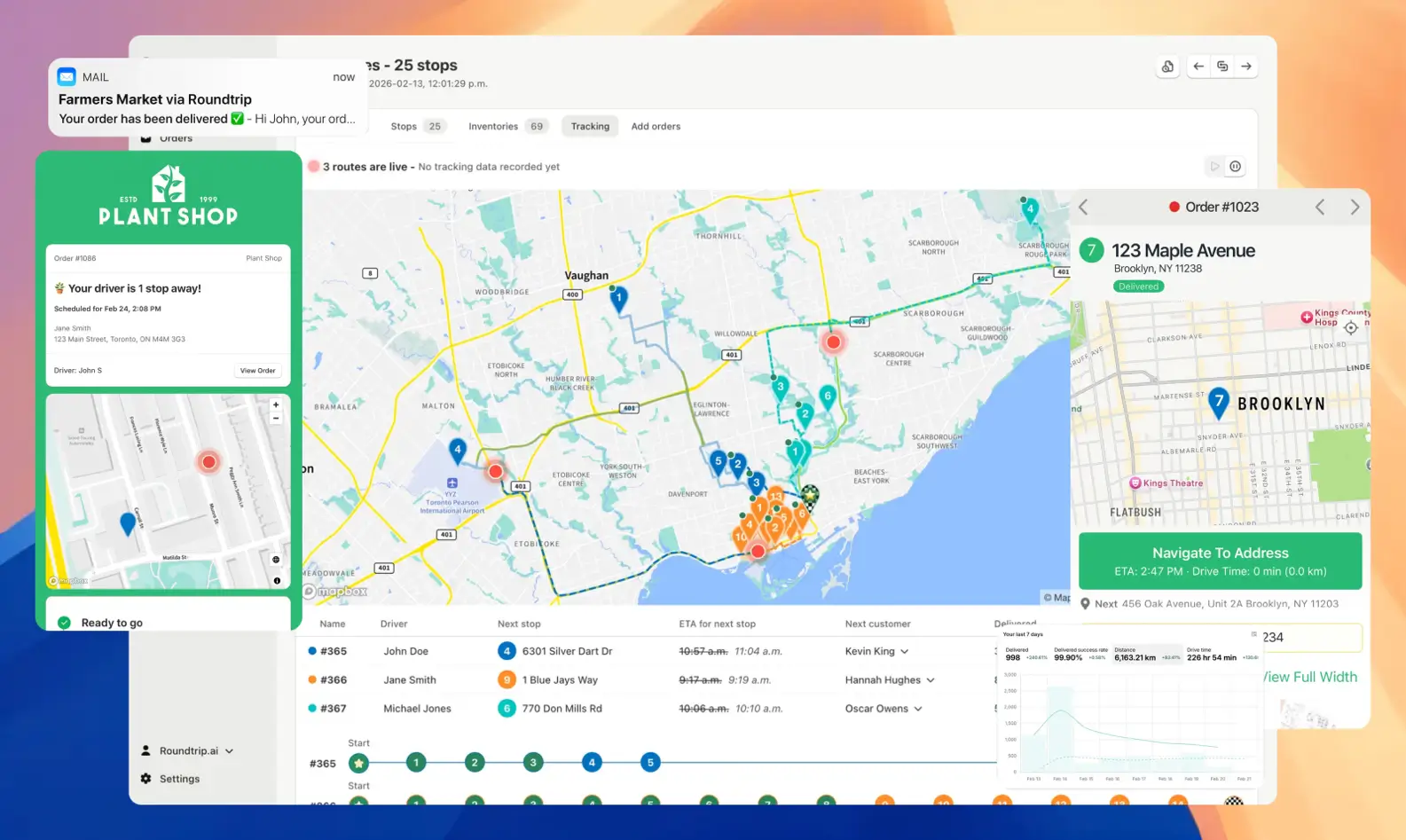
A mobile grooming business lives and dies by its schedule. Every minute lost to inefficient driving is a minute you could have spent grooming — or at home. EasyRoutes is built to take that friction off your plate. It optimizes your stops into the most efficient order, calculates realistic arrival times, and automatically keeps customers informed by text or email so they are ready when you arrive. You can track your day in real time, fit more appointments into each shift, and trim the fuel costs that eat into a route-based business’s margins. For a one-van operator or a growing fleet alike, that efficiency translates directly into more grooms, happier clients, and a healthier bottom line.
Starting a mobile pet grooming business is a genuinely rewarding path for animal lovers with an entrepreneurial streak — and the timing is strong, with pet spending at record highs and mobile grooming among the fastest-growing corners of the industry. Work through these five steps — research your market, build a solid plan, invest in the right van and equipment, get properly licensed and insured, and promote relentlessly — and you will be well on your way to a business that pet owners in your community come to rely on. When you are ready to make your days on the road as efficient as possible, tools like EasyRoutes can help you optimize routes, keep customers informed, and focus on what you love: making pets look and feel their best.
EasyRoutes optimizes deliveries using your selected orders, start & end locations, stop time intervals, time windows, and route limits. You can balance routes, respect capacities, and re‑optimize as plans change.
See: Route Options · EasyRoutes 101
Yes. Schedule routes for specific dates/times, and ETAs will be calculated for each stop on a route. These ETAs can be shared via customer tracking links and email/SMS delivery notifications.
Yes. You can set delivery time windows per stop or import them from supported third‑party date/time apps. EasyRoutes optimizes routes to meet these windows and calculates ETAs accordingly.
Yes. EasyRoutes supports Vehicle Profiles you can configure and assign to routes. EasyRoutes also supports capacity planning via item or weight limits per route. Use these with other options (like time windows, or custom start/end locations) to keep plans realistic and drivers on schedule.
See: Vehicle Profiles · Max items/weight per route · Commercial/GPX Export
Yes. Enable Real‑Time Tracking in Settings → Driver settings (Premium/Enterprise subscription plans) to view live driver location and progress in the Tracking tab of any route.
See: Real‑Time Tracking
Yes. EasyRoutes Premium and Enterprise plans support branded SMS notifications with usage‑based pricing per message segment. Configure templates and funding in Settings.
Yes. Use the customizable Rescheduled notification (email/SMS) to explain delays, provide a new ETA/date, and include the tracking link.
Yes. Drivers can launch directions via Google Maps, Apple Maps, or Waze from each stop, and pick a default navigation app in their mobile app settings.
Absolutely. Drivers can add photos, collect an e‑signature, and record notes at each stop; these appear in the route and customer tracking (if enabled).
See: Proof of Delivery
Yes. With the Premium plan and above, fully customize email/SMS: add your logo and colors, edit copy/variables, and choose which events send. Works for Shopify orders and imported/manual stops.
EasyRoutes is the AI-native delivery operations platform trusted by 5,000+ businesses across 75+ countries. Plan routes in seconds, dispatch drivers automatically, and delight your customers — from Shopify or any order source. Experience delivery operations that run themselves. Rated 4.8 stars and certified Built for Shopify.
⭐⭐⭐⭐⭐ 4.9 stars • Trusted by 5,000+ Businesses