How to Start a Lawn Care Business in 2026
By Joe SnyderLearn how to start a lawn care business in 2026: market outlook, startup costs, equipment, pricing, marketing, and routing tools to protect margins.

Learn how to start a lawn care business in 2026: market outlook, startup costs, equipment, pricing, marketing, and routing tools to protect margins.
Starting a lawn care business in 2026 is one of the most accessible ways to build a profitable, recurring-revenue operation. Demand is steady, startup costs are low compared with most trades, and homeowners and property managers are outsourcing maintenance at record rates. But the operators who pull ahead this year are not simply mowing more lawns — they are running tighter, more measurable, more efficient businesses. This guide walks you through the market, the legal and financial setup, the equipment, pricing, marketing, and the operations systems that turn a one-person mowing route into a scalable company.
The numbers behind lawn care are encouraging for anyone thinking about launching this year. The U.S. lawn care market was valued at roughly $62.9 billion in 2026 and is projected to reach about $79.7 billion by 2031, growing at a 4.85% compound annual rate. Crucially, demand is shifting away from do-it-yourself care toward professional services: industry research shows services account for roughly 64% of market revenue, driven by aging homeowners, dual-income households short on time, and a cultural focus on curb appeal and outdoor living.
That demand sits on top of a large, fragmented industry where no single company controls more than about 5% of the market — which means there is real room for a sharp local operator to win business. It is also a sizable employer: roughly 1.3 million people work in landscaping and grounds maintenance across the U.S. At the same time, the work is evolving fast. Battery-powered equipment has overtaken gas as the dominant new-sale category, the robotic mower market is expected to climb from about $9.3 billion in 2025 toward $22 billion by 2033, and more than 200 municipalities have introduced restrictions on gas-powered lawn equipment. Understanding where the market is heading helps you decide which niche to serve and which equipment to buy.
If you are weighing this against other service-business options, it is worth browsing a range of service and delivery business ideas before committing — lawn care rewards operators who pick a focused niche and execute consistently.

A business plan does not need to be a fifty-page document, but it should force you to make decisions before you spend money. Start by defining the services you will offer and the customers you will serve. Residential clients typically want recurring mowing, edging, trimming, and seasonal cleanups, while commercial clients — offices, retail centers, HOAs — need broader grounds maintenance, heavier equipment, and higher insurance limits. Commercial and industrial sites generate over half of all lawn care revenue, but they also demand more capital and more rigorous scheduling, so most new operators start residential and add commercial accounts once their systems and cash flow are stable.
Your plan should also map out higher-margin add-ons. Basic mowing gets you in the door, but services like fertilization, aeration and overseeding, mulching, and seasonal cleanups command better prices and help smooth out seasonal revenue swings. Sketch a simple break-even calculation, too: if your startup equipment costs $5,000 and you net $40 per lawn, you know roughly how many recurring accounts you need to recover your investment. If you are starting wider than lawn care alone, our guide to starting and scaling a service business covers the same planning fundamentals in more depth.
Setting up properly protects you, your customers, and your income. Requirements vary by state and municipality, but most lawn care businesses need a few common things: a registered business name (an LLC or a DBA), a basic business license, and a business bank account to keep finances clean. A business license typically costs between $50 and $200. If you plan to apply fertilizers, herbicides, or pesticides, most states require a separate pesticide-applicator license or certification, so check with your state Department of Agriculture before offering chemical services.
Insurance is the line item new owners most often underestimate, and it is not optional. General liability coverage, plus commercial auto and equipment coverage, commonly runs in the low thousands of dollars per year before you mow a single lawn. It protects you against property damage, injury claims, and stolen or damaged equipment — any one of which could end a young business that is not covered.

One of lawn care’s biggest advantages is how lean you can start. If you already own a truck with towing capacity and buy quality used equipment, you can launch for under $5,000. Buy everything new — a zero-turn mower, a new trailer, and a wrapped truck — and you are easily looking at $30,000 or more. Most operators land somewhere in between, in the $5,000 to $20,000 range for a professional-but-practical setup.
The smart move is to start lean and let customer demand justify each upgrade. Budget realistically for the hidden, recurring costs that catch new owners off guard: fuel, which fluctuates and adds up fast; equipment maintenance like blade sharpening and belt replacement; scheduling and invoicing software (often $30 to $100 per month); and labor once you stop working solo. The single largest startup cost is almost always the vehicle, so if you can avoid financing a new truck on day one, do.
Your equipment list should match the services you sell and the properties you target. At minimum, a professional residential setup includes a commercial-grade mower, a string trimmer, an edger, and a blower. A commercial walk-behind mower handles most residential yards, fits through standard gates, and costs far less than a zero-turn — which you can add later when you are routinely servicing larger lots.
Pay attention to the power-source shift. Battery and electric equipment is now the fastest-growing category, and in a growing number of cities, gas-equipment restrictions and noise ordinances are nudging operators toward cordless gear. Electric mowers cut fuel costs and run quietly enough to work in noise-restricted neighborhoods, though battery management matters for full-day routes. You will also need reliable transportation and secure storage: a truck or trailer that fits your equipment, plus a locked space when it is not in use. As your fleet grows, fleet management software can help you track vehicle maintenance, fuel, and utilization so equipment costs do not quietly erode your margins.

Pricing is where many new operators undercut themselves and then struggle to recover. Calculate your true cost to operate first — equipment, fuel, labor, insurance, and overhead per hour — then price above it. Most lawn care businesses charge in the range of $45 to $75 for a standard quarter-acre lawn, with a minimum charge of $35 to $50 to cover travel. Whatever model you choose — per job, per hour, per square foot, or a flat monthly seasonal rate — aim for a net profit margin of roughly 18% to 35% after all costs.
Two pricing habits separate profitable operators from busy ones. First, price by the job, not strictly by the hour, so that becoming faster and more efficient rewards you instead of penalizing you. Second, build recurring revenue with weekly or biweekly contracts, often with a small discount to lock customers in — predictable monthly revenue is what makes a lawn care business financeable and saleable. Spending on professional lawn care is an easy sell to homeowners, too: standard lawn service is consistently one of the highest-ROI outdoor investments, with a cost-recovery value above 200% according to National Association of Realtors and NALP data.
Marketing a local service business is about consistency more than budget — most operators set aside roughly 2% to 5% of revenue. Start with the basics that compound. Claim a free Google Business Profile so nearby homeowners find you in local search and on Maps. Build a simple, professional website (you can do this for a few hundred dollars) that lists your services, service area, and a few before-and-after photos. Optimize for local keywords like “lawn care services in [your city]” so you show up when neighbours search.
Then lean into the channels that drive lawn care specifically. Door hangers and yard signs target the exact neighborhoods you already work in, which keeps your routes dense. Word of mouth and online reviews remain the strongest lead source in this industry, so make asking for reviews a routine part of finishing a job, and offer a small referral discount to turn happy customers into a sales force. As you grow, our guide to proven strategies to grow service revenue covers pricing, online reputation, upselling, and retention economics in detail. And because winning a customer costs far more than keeping one, treat customer retention as a core marketing channel, not an afterthought.

Here is the single biggest shift in lawn care this year: profitability now depends more on operational efficiency than on raw revenue growth. Every extra mile your crew drives between jobs burns fuel and eats billable hours, so how you sequence your stops directly determines your margin. This is where route optimization earns its keep — clustering jobs by geography and ordering them efficiently can dramatically cut drive time and fuel spend across a full day of stops.
For a growing operation, the routing challenge gets harder fast. You are not planning one trip; you are planning recurring weekly and biweekly visits across multiple crews. A dedicated multi-stop route planner handles this far better than a spreadsheet or memory, balancing stops across drivers, respecting time windows, and re-sequencing on the fly. Because so much of a lawn care business’s recurring schedule repeats, tools that support scheduled, recurring visits save hours of admin every week. And since fuel is one of your largest variable costs, it pays to study how to cut fuel costs through tighter routes, better driver habits, and fleet maintenance.
Labor is the other half of operations. The industry runs tight on workers and carries a high turnover rate, so hiring well and keeping good crew members is a competitive advantage. When you are ready to add your first employees, our guide to hiring and onboarding field crews walks through where to find candidates, how to screen them, and how to train them so quality stays consistent as you scale.
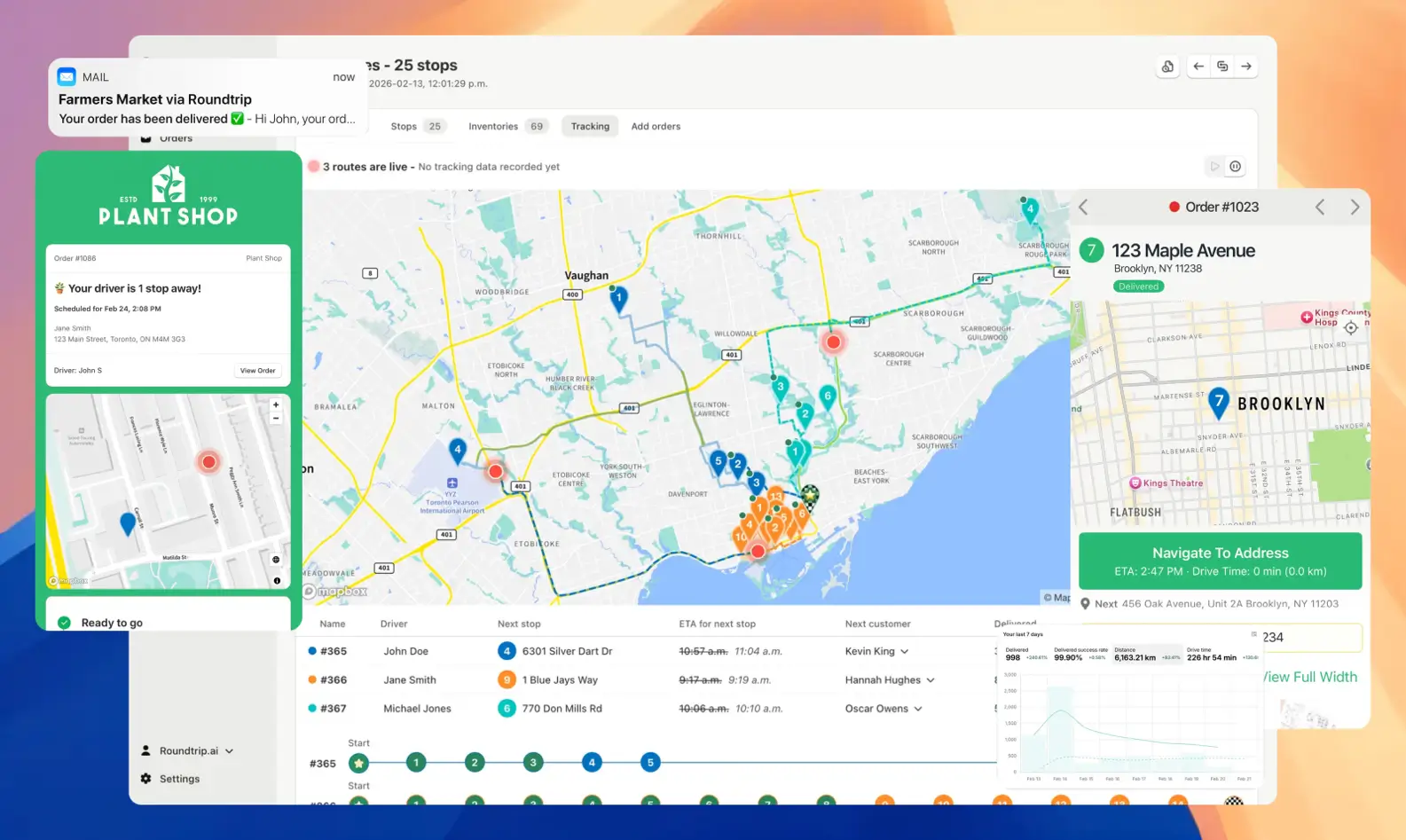
EasyRoutes brings the routing, scheduling, and customer-communication pieces together in one place. You can optimize multi-stop routes in seconds, balance stops evenly across multiple crews, set per-route stop limits and built-in breaks so days are realistic, and lock in recurring visits for weekly and biweekly accounts. Customers get automatic ETAs and notifications, and you get real-time tracking of where your crews are — the kind of professional, on-time experience that earns reviews and referrals. As your route density grows, that operational polish is what protects your margins while you scale.
Starting a lawn care business in 2026 is a genuinely promising venture: demand is strong and growing, professional services are displacing DIY, and the barrier to entry is low enough that a focused operator can launch lean and build steadily. The winners this year will be the ones who plan deliberately, price for profit, market consistently, and — above all — run efficient, measurable operations. Get those fundamentals right and a single mowing route can become a multi-crew company.
If you are ready to make your operations more efficient from day one, consider building your routes with EasyRoutes to optimize your schedule, cut drive time, and deliver a polished, on-time experience your customers will remember.
Yes. Schedule routes across multiple days with configured start times/locations and add an overnight driver break to maintain accurate ETAs.
See: Multi‑Day Scheduling
Yes. Automate with Workflows to create routes on a custom, recurring schedule, or duplicate prior routes and re‑use their settings/stops in just a few clicks.
See: Workflows · Duplicate routes
Yes. Schedule routes for specific dates/times, and ETAs will be calculated for each stop on a route. These ETAs can be shared via customer tracking links and email/SMS delivery notifications.
Yes. Enable Balance routes to distribute stops as evenly as possible across multiple routes/drivers while respecting other route constraints (like time windows, or item/weight limits).
See: Balance routes · How many routes?
Yes. EasyRoutes lets you set limits for maximum route duration, maximum stops per route, and maximum items per route. Configure these constraints in Route Options before planning, or when editing a route.
See: Route Options
Yes. Add scheduled driver breaks to new or existing route, and EasyRoutes will insert a break stop while updating downstream ETAs and total route time.
See: Driver Breaks
No. Each route has one assigned driver at a time. To share the work, split stops across multiple routes or use self‑assign links on separate routes.
See: Driver Assignment
Yes. With the Premium plan and above, fully customize email/SMS: add your logo and colors, edit copy/variables, and choose which events send. Works for Shopify orders and imported/manual stops.
Yes. Use the customizable Rescheduled notification (email/SMS) to explain delays, provide a new ETA/date, and include the tracking link.
Yes. Define custom start and end points per route so planning and ETAs include travel to and from these locations. Supported in EasyRoutes for Shopify and EasyRoutes for Web.
See: Start/End Locations
EasyRoutes is the AI-native delivery operations platform trusted by 5,000+ businesses across 75+ countries. Plan routes in seconds, dispatch drivers automatically, and delight your customers — from Shopify or any order source. Experience delivery operations that run themselves. Rated 4.9 stars and certified Built for Shopify.
⭐⭐⭐⭐⭐ 4.9 stars • Trusted by 5,000+ Businesses